
- Messages
- 7,089
- Location
- South of Nashville
Currently reading Eric Clapton's autobiography and re-reading Robert Palmer's Deep Blues.


 John Lofgren Monkey Boots Shinki Horsebuttt - $1,136 The classic monkey boot silhouette in an incredibly rich Shinki russet horse leather.
  Grant Stone Diesel Boot Dark Olive Chromexcel - $395 Goodyear welted, Horween Chromexcel, classic good looks.
 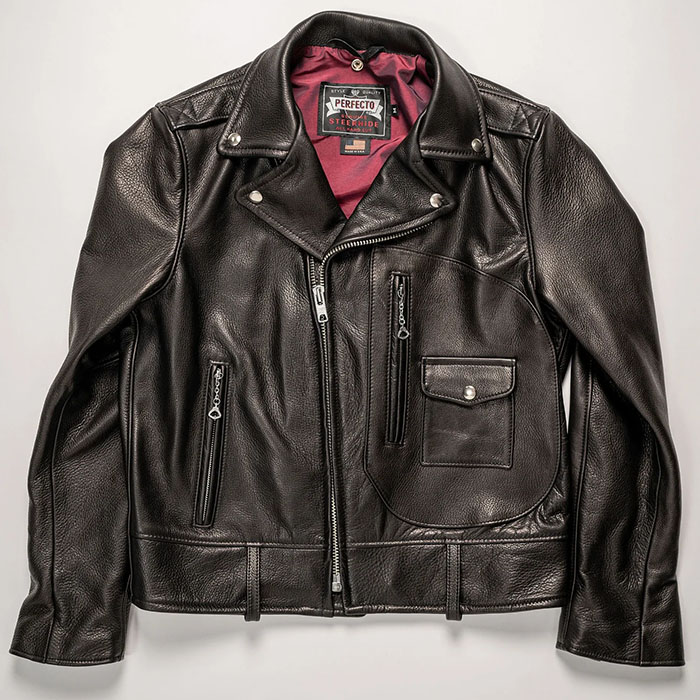 Schott 568 Vandals Jacket - $1,250 The classic Perfecto motorcycle jacket, in a very special limited-edition Schott double rider style.


I read this one two or so years ago and enjoyed it. The pacing was pretty slow, but I enjoyed it.View attachment 734298
On the Beach by Nevil Shute, first published in 1957
Author Nevil Shute is a storyteller. He writes intelligent page-turners that aren't "literature," but are keep-you-thinking, keep-you-entertained books. In On the Beach, Shute brings his talents for writing gripping narratives to a dark corner of mid-20th-century angst.
The 1950s through the 1960s were peak Cold War-fear years. Two global superpowers, armed to the teeth with nuclear weapons that could blow up the world several times over, were engaged in a somewhat open and somewhat furtive battle for dominance and survival.
The public was often on edge thinking its life – all life – could end in a literal flash. The books, movies, and newspapers of the time reflect this fear, as tale after tale of some sort of nuclear Armageddon sold copies and tickets. Culture reflects – and can amplify – society's fears.
The right and wrong of these competing ideologies is not Shute's purpose; instead, he looks at the fallout of a massive nuclear war in the northern hemisphere that not only wipes out all human life north of the equator, but creates a cloud of radiation that will slowly wipe out the rest.
Set a few years in the future (from 1957), the war has now been over for about a year. The people still alive in Australia know, based on global weather patterns, their lives will be over in a matter of months when the radiation cloud reaches them as it is slowly progressing south.
Shute’s look at nuclear Armageddon is from that offbeat perspective: not the war itself, but its aftermath. The people of Melbourne know they will die in a matter of months; what to do while waiting is the focus. For intrigue, Shute also includes a hint that some human life might have survived in the north.
You'll either accept his entire premise or not, but the majority of Australians just go on with life as it was. Yes, some have wigged out and gone on benders or worse, but many have decided the best use of their remaining time is to live normally, often including going to work.
A US Navy sub captain who was on patrol near Australia when the war happened (it took all of about a month to nuke the entire northern hemisphere) is part of this group. Realizing the US Navy is gone, he puts his nuclear-powered ship under Australian naval command.
Others include a young Australian naval officer, his wife, and baby daughter; a loner scientist who joins the crew of the sub as a radiation expert; and a single young woman who seems to be trying hard to drink herself into oblivion.
Some feign – or maybe truly are in – complete denial; others accept what is coming but just want to live normally until it happens; and others do the things they always wanted to do, but couldn't because of long-term plans, responsibilities, or funds.
In one fun version of the latter, the loner, cynical, and conservative scientist buys a Ferrari because he always wanted to be a race car driver. On the other end is the older gentleman at the country club, trying all the club's expensive sherries – everyone has his dreams.
While these are not the most developed characters, even by Shute's standards, you will come to care about several of them as you root against the science for them to have some chance. One of those Hail Mary's relates to that hint of, maybe, life in the north.
The submarine goes to investigate that sign of life in the northern hemisphere – it's a random radio signal – which is an engaging sequence showing how a nuclear sub operates and how, ironically, it can safely investigate an area contaminated by radiation.
After that, it's back to Melbourne and waiting for the radiation cloud. Nuclear Armageddon stories are inherently bleak, as that is their point: to, hopefully, warn mankind before it is too late.
Today you read On the Beach because it's a good story that is still relevant at a high level and because Shute is an outstanding storyteller. To be fair, however, unless this topic deeply appeals to you, there are better Shute books to start with.
The other reason to read On the Beach is to feel a connection to the 1950s/1960s – to absorb its zeitgeist, which – contrary to the wildly inaccurate meme that it was a “happy time” – was, like almost all times, full of worry, angst, and fear.
N.B. Shute's novel was turned into a 1959 movie with an impressive cast including Gregory Peck, Ava Gardener, Fred Astaire, and Anthony Perkins.


