Quan_love_leather
Familiar Face
- Messages
- 92
This is a design concept I’ve been working on — aiming to create a jacket that offers European-style range of motion while maintaining the sleekness and fit typical of Asian tailoring.
Before discussing this further with a brand, I’d love to hear your feedback on whether the idea looks solid.
⸻
Leather:
• Black Oil Tanned Wax Finish Horséhide
• If that’s not available, any leather with a high wax pigment content would be acceptable.
• Thickness: 1.2–1.4mm, depending on discussion with the brand.
⸻
Pattern / Form:
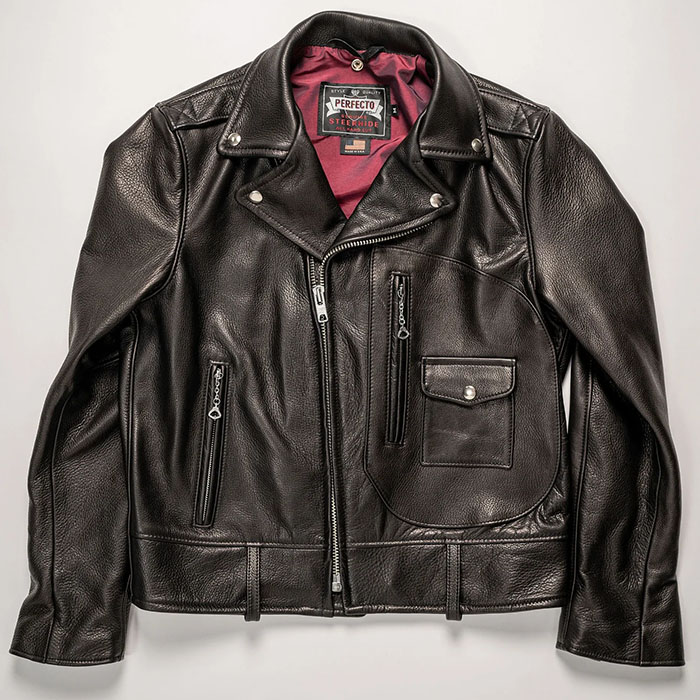
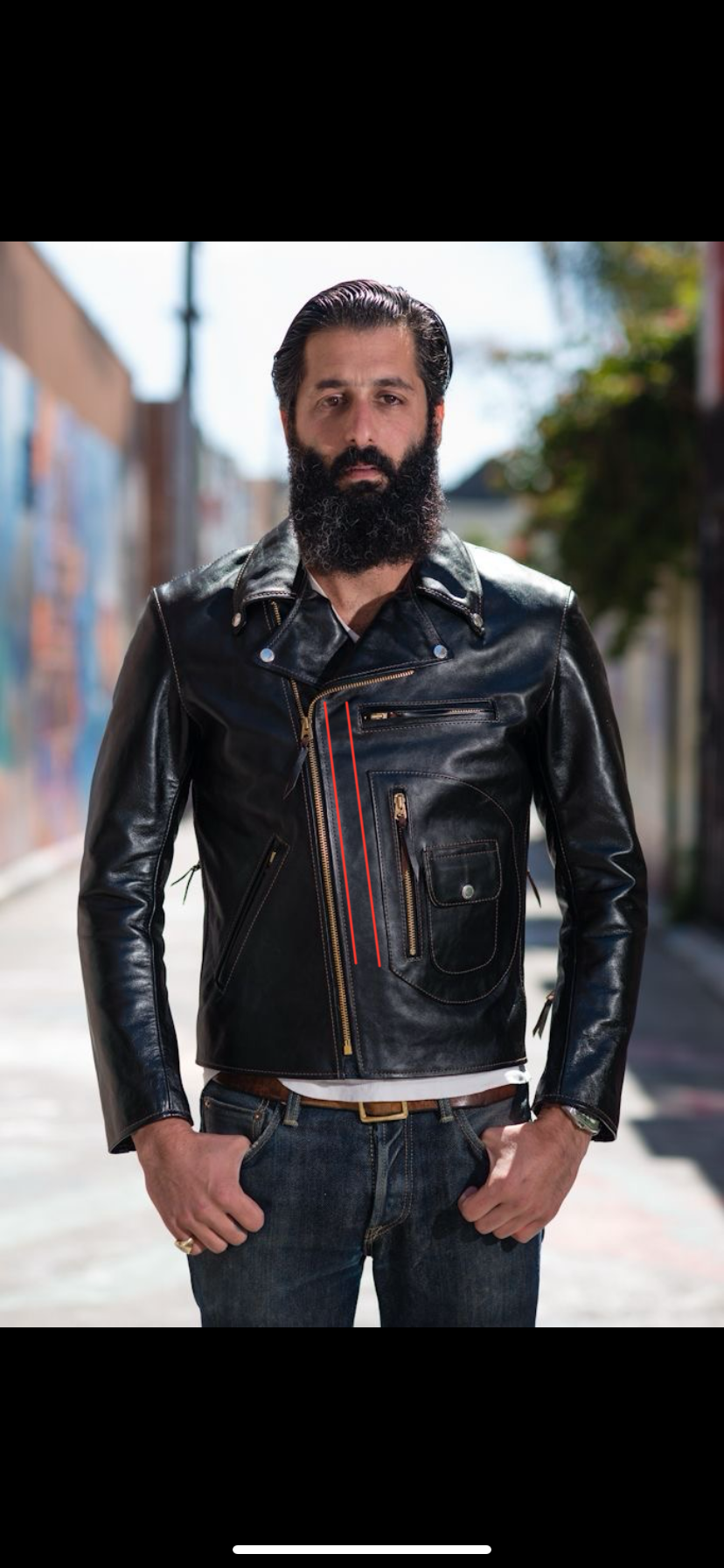
• The base pattern is inspired by the Delraiser or a similar layout.
• The reason I prefer the Delraiser is because I like how the D-pocket and chest pocket run parallel to the main zipper, unlike the layout on the Buco J24.
• I’d also like to add epaulettes and side adjuster tabs at the hem.
Lining:
I’m planning to use quilted satin for the body lining.
⸻
Collar and Fur Lining:
Some members on the forum have suggested options like thermal scarves or neck warmers — I’ve tried those before. In the end, I went with the removable collar/back fur lining from a Schott 184SM and fitted it into my 611H.
It worked surprisingly well, so I’m planning to do something similar for this jacket.
This time, I want to adjust the fur size slightly — instead of using a thick, full-sized panel, I’ll keep the fur just enough to cover the visible collar surface. That way it won’t look too bulky and keeps a balanced visual.
For the body fur lining, here’s the idea:
Since the jacket will have a form somewhere between slim and straight, with a slight taper at the waist, there should still be enough room for the fur lining without making the jacket look overly bulky when worn.
(My Schott is quite snug, yet I was still able to install the 184SM lining and found it worked fine — so I believe this plan is feasible.)
⸻
Functionality:
The back panel of the Delraiser features an action back that extends all the way to the hem, which helps a lot with forward arm movement, especially when bringing the arms up parallel to the ground.
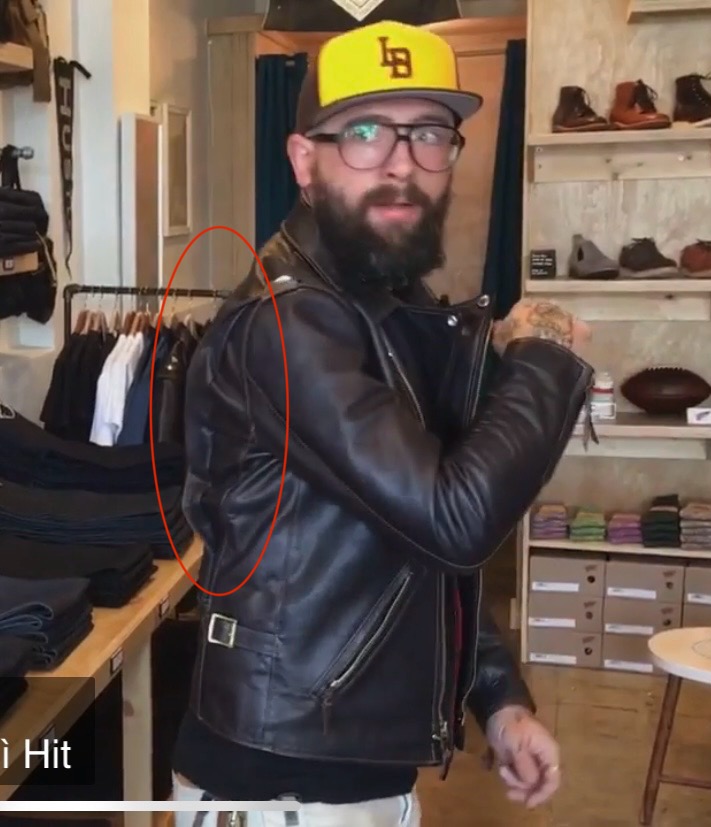
Approach 1:
Raise the armhole to increase upward mobility.
(I believe the gain in range is minimal, but it does improve the overall aesthetic and silhouette.)
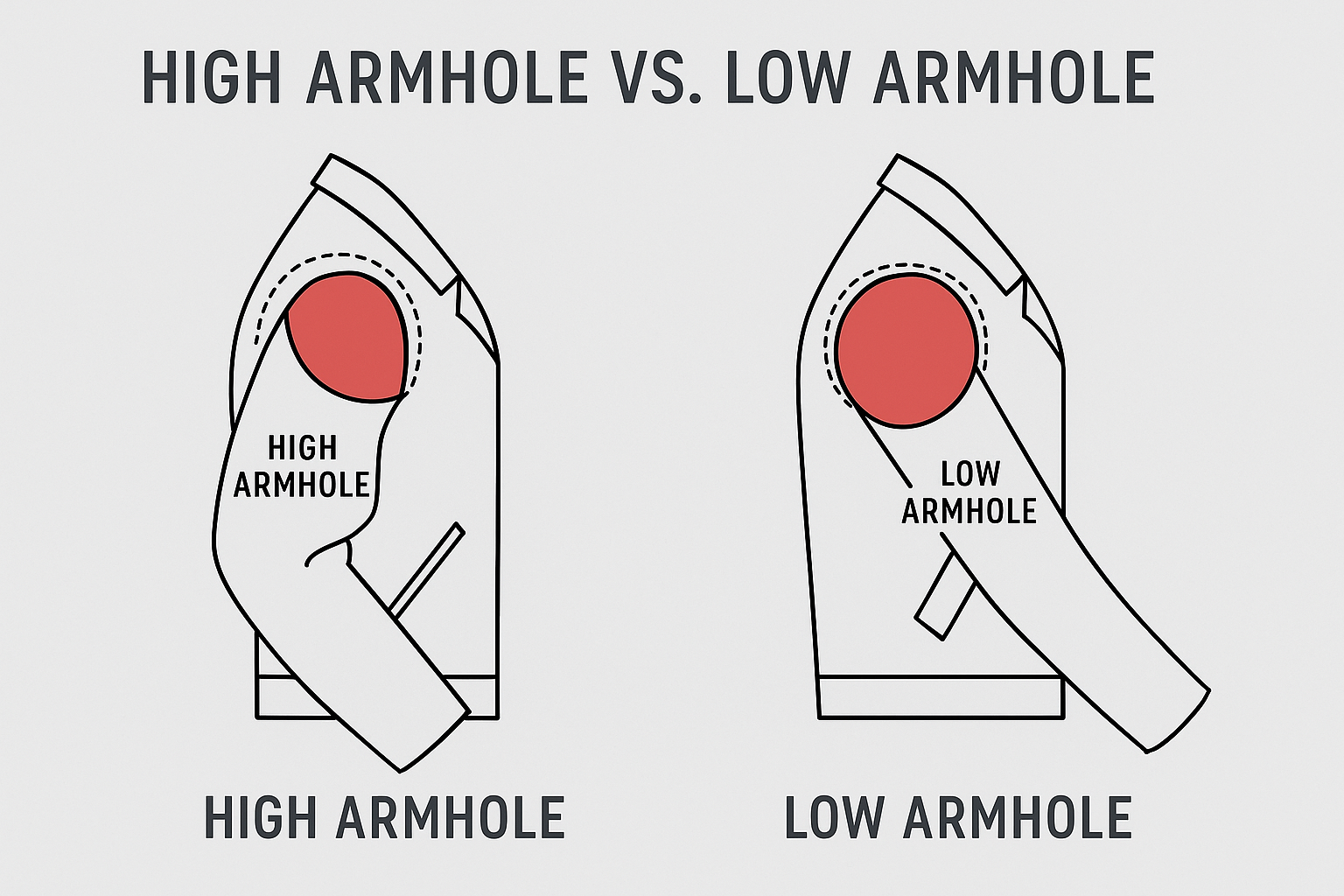
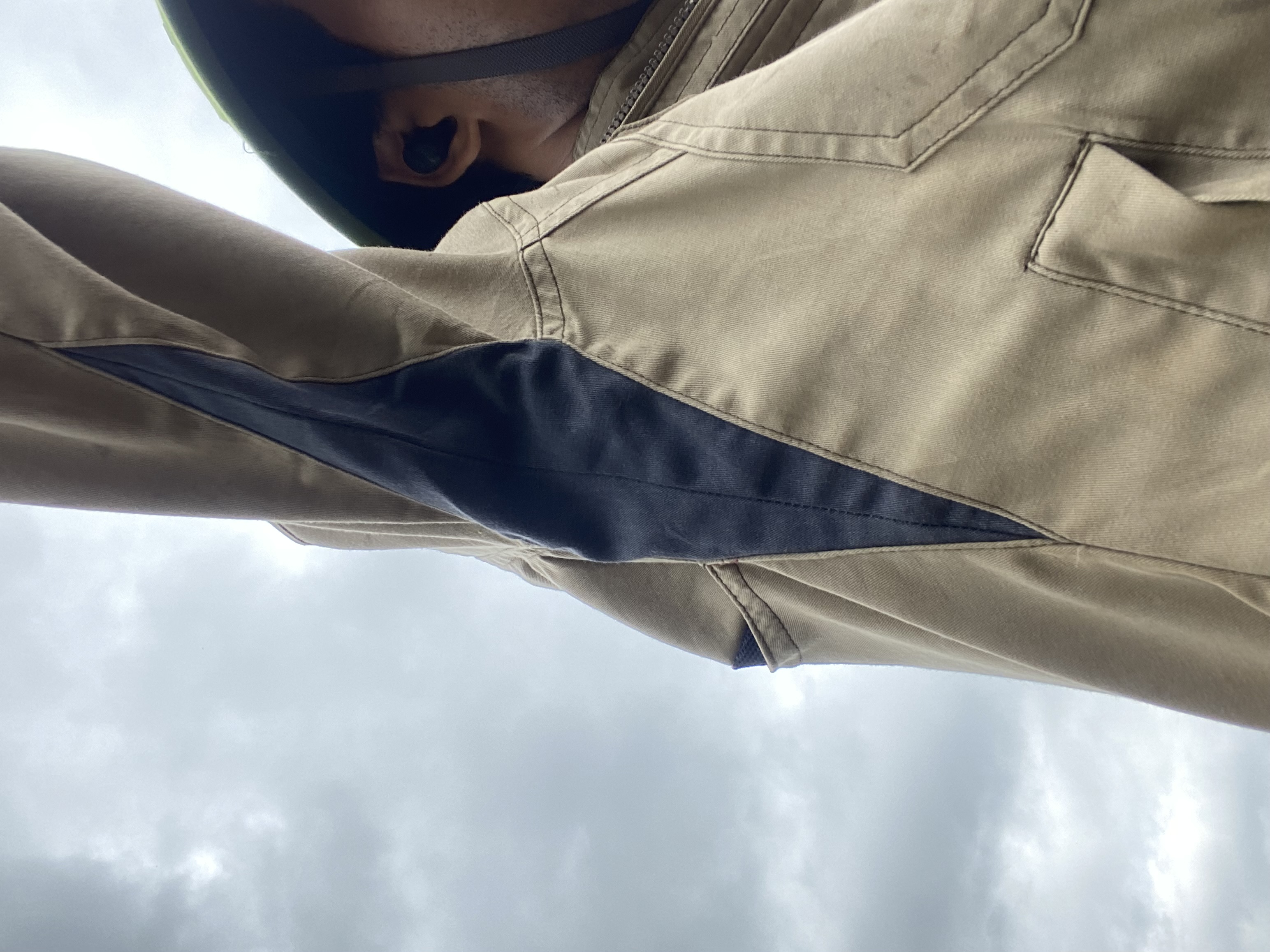
Approach 2:
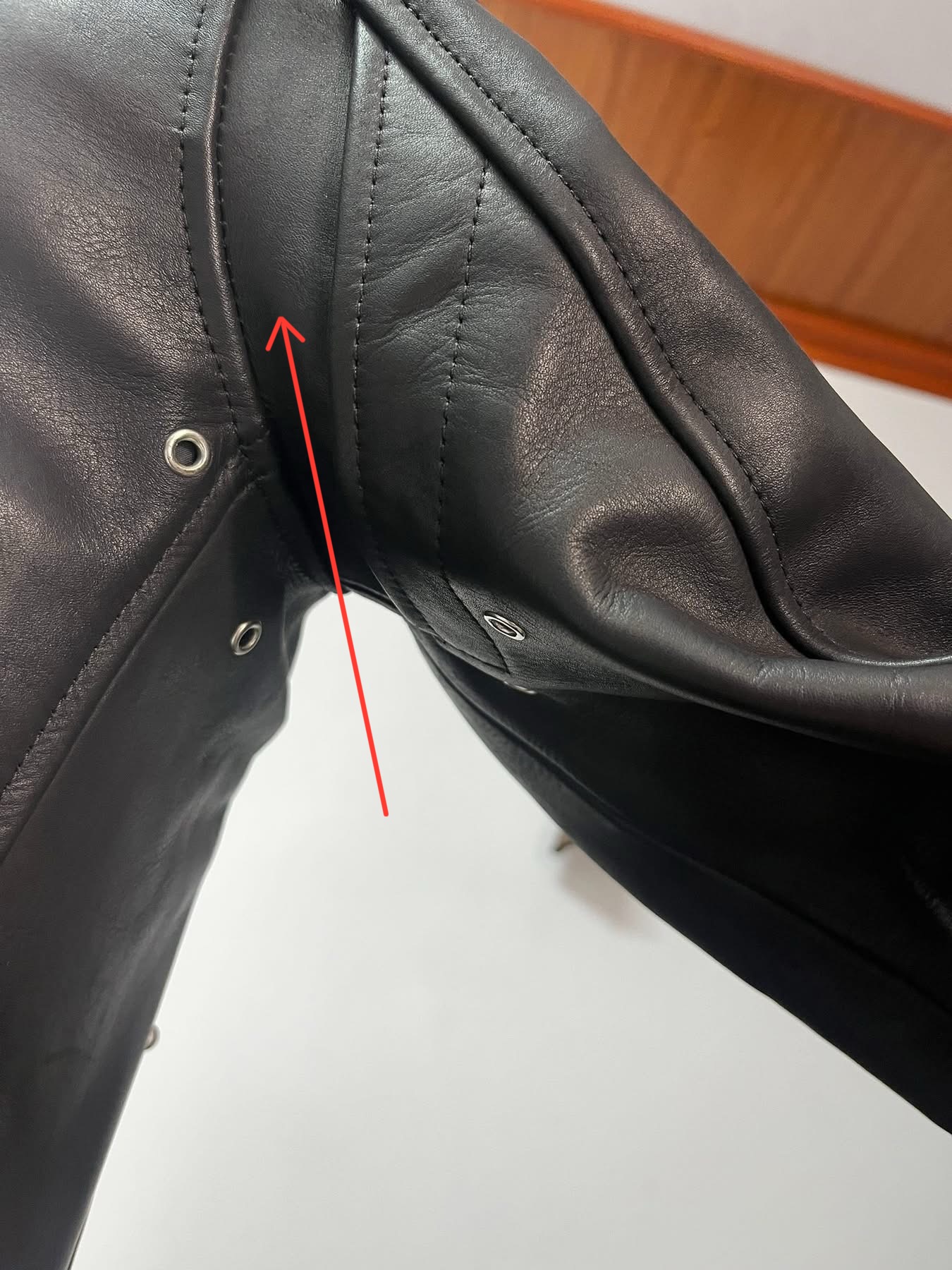
Add a diamond-shaped underarm gusset to further support upward arm movement.
This would help reduce stress on the armhole when lifting the arms, and allow for a more natural range of motion without distorting the jacket’s silhouette.
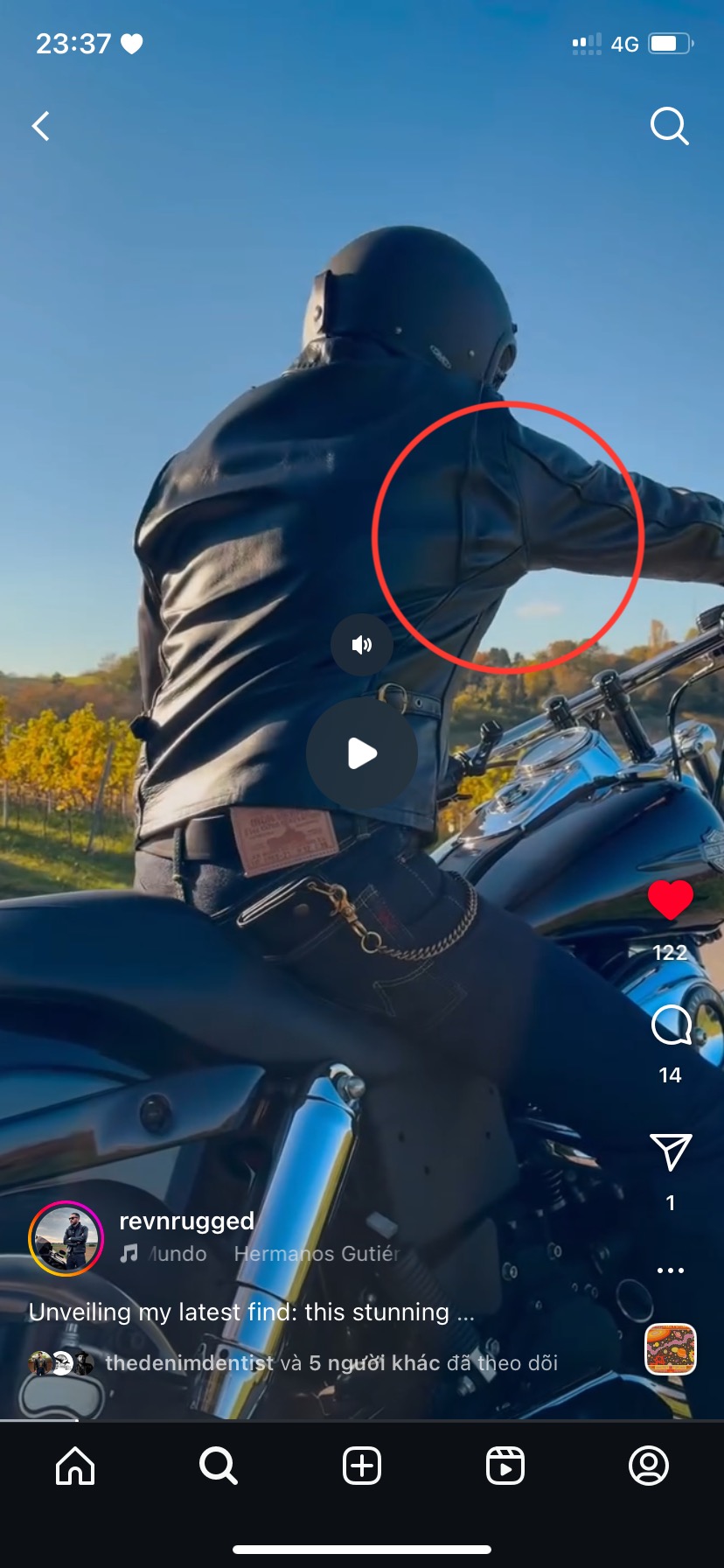
Approach 3:
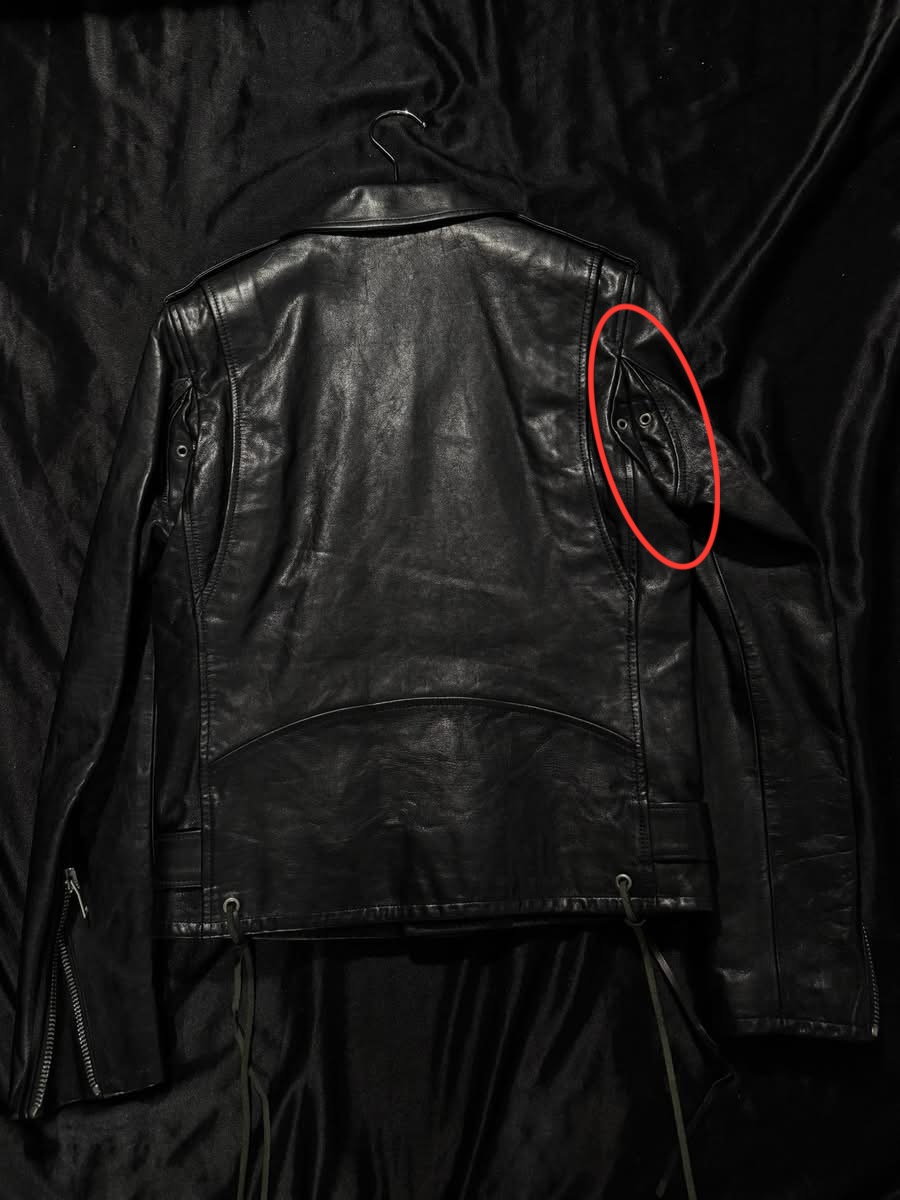
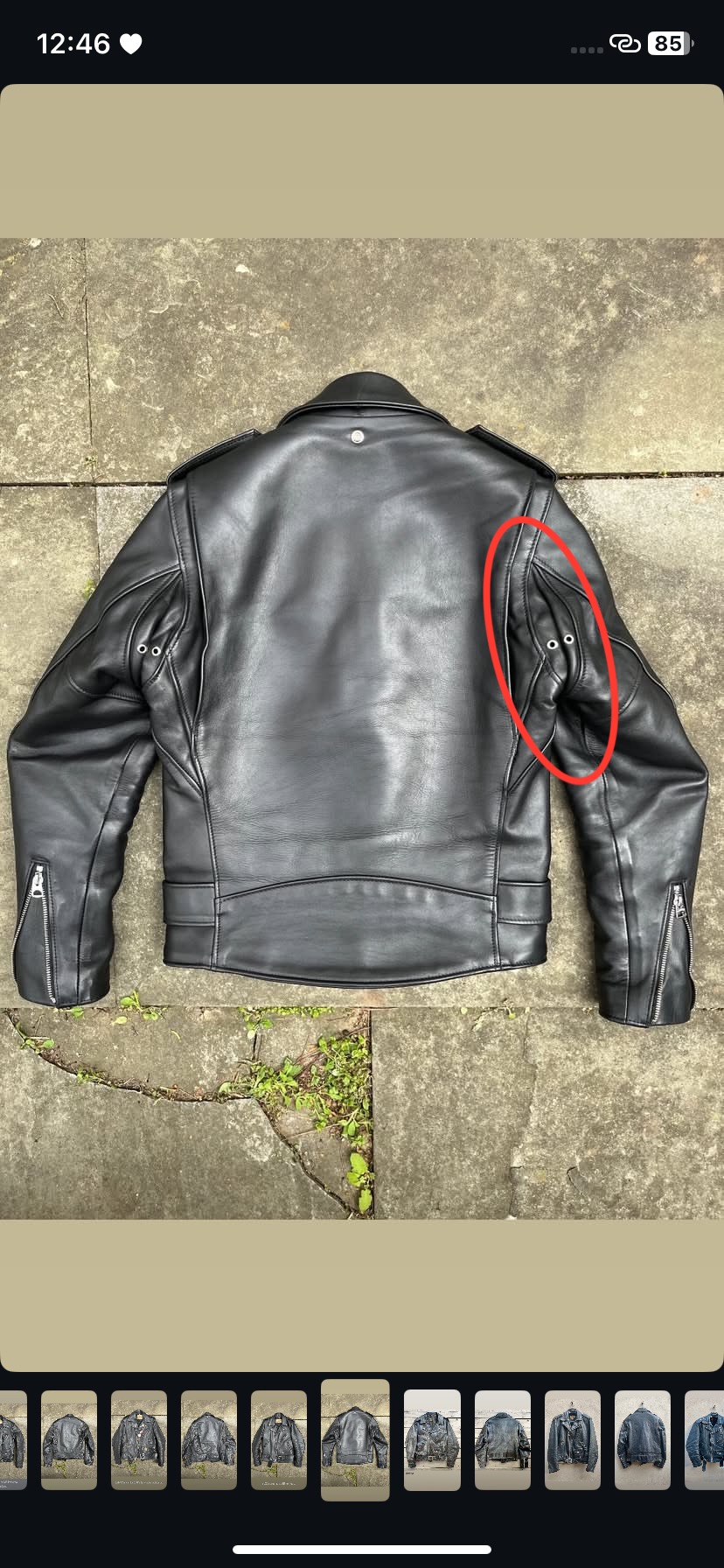
Use a gusset similar to the one found on Schott or the Saint Laurent L17.
This currently seems like the most promising option, though it might be less clean visually.
It allows for easier lateral and overhead movement, partly due to the slightly relaxed fit on those jackets.
However, if applied to a more fitted silhouette, I believe the effectiveness might be noticeably reduced.
Approach 4:
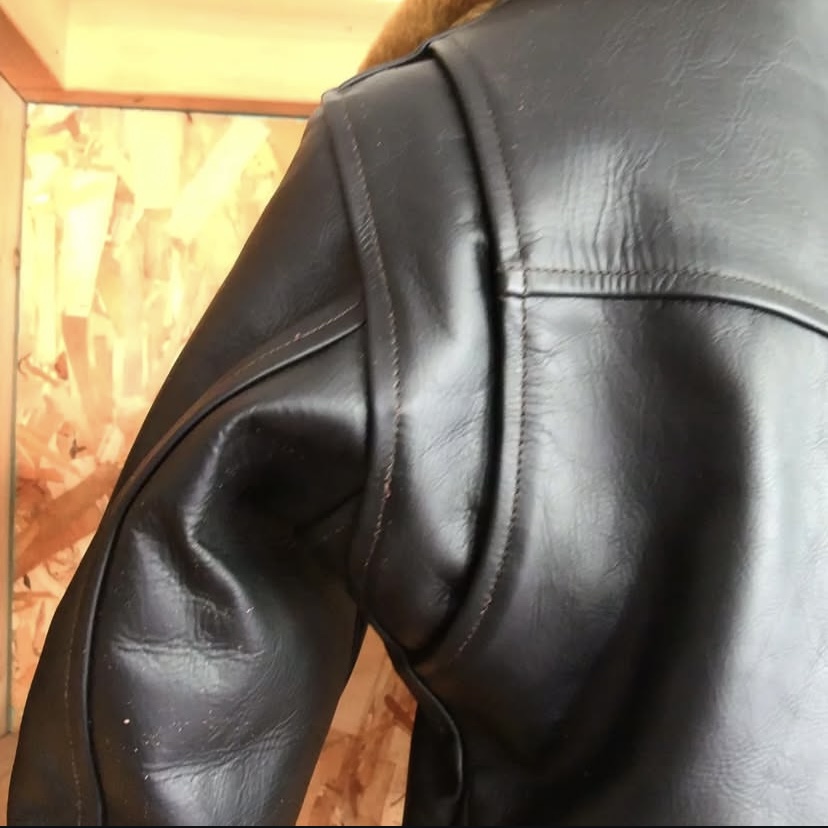
Have them build the sleeve angle to naturally pitch upward at around 70 degrees relative to the ground.
This would create built-in range of motion for lifting the arms.
(When the arms are relaxed and hanging down, they will naturally bend at the elbow — as shown in the illustration.)
Approach 5:
Use a more flexible type of leather in specific areas to take advantage of its natural stretch.
This, combined with a higher armhole, would allow better arm lift.
(Since the leather in this zone is softer than the rest of the jacket, raising the armhole won’t cause discomfort under the armpit.)
The sleeves should be pitched forward at about 20–25°, with a natural elbow bend of roughly 45–60°, to support a relaxed riding posture while still looking balanced when standing.
Before discussing this further with a brand, I’d love to hear your feedback on whether the idea looks solid.
⸻
Leather:
• Black Oil Tanned Wax Finish Horséhide
• If that’s not available, any leather with a high wax pigment content would be acceptable.
• Thickness: 1.2–1.4mm, depending on discussion with the brand.
⸻
Pattern / Form:
• The base pattern is inspired by the Delraiser or a similar layout.
• The reason I prefer the Delraiser is because I like how the D-pocket and chest pocket run parallel to the main zipper, unlike the layout on the Buco J24.
• I’d also like to add epaulettes and side adjuster tabs at the hem.
Lining:
I’m planning to use quilted satin for the body lining.
⸻
Collar and Fur Lining:
Some members on the forum have suggested options like thermal scarves or neck warmers — I’ve tried those before. In the end, I went with the removable collar/back fur lining from a Schott 184SM and fitted it into my 611H.
It worked surprisingly well, so I’m planning to do something similar for this jacket.
This time, I want to adjust the fur size slightly — instead of using a thick, full-sized panel, I’ll keep the fur just enough to cover the visible collar surface. That way it won’t look too bulky and keeps a balanced visual.
For the body fur lining, here’s the idea:
Since the jacket will have a form somewhere between slim and straight, with a slight taper at the waist, there should still be enough room for the fur lining without making the jacket look overly bulky when worn.
(My Schott is quite snug, yet I was still able to install the 184SM lining and found it worked fine — so I believe this plan is feasible.)
⸻
Functionality:
The back panel of the Delraiser features an action back that extends all the way to the hem, which helps a lot with forward arm movement, especially when bringing the arms up parallel to the ground.
Approach 1:
Raise the armhole to increase upward mobility.
(I believe the gain in range is minimal, but it does improve the overall aesthetic and silhouette.)
Approach 2:
Add a diamond-shaped underarm gusset to further support upward arm movement.
This would help reduce stress on the armhole when lifting the arms, and allow for a more natural range of motion without distorting the jacket’s silhouette.
Approach 3:
Use a gusset similar to the one found on Schott or the Saint Laurent L17.
This currently seems like the most promising option, though it might be less clean visually.
It allows for easier lateral and overhead movement, partly due to the slightly relaxed fit on those jackets.
However, if applied to a more fitted silhouette, I believe the effectiveness might be noticeably reduced.
Approach 4:
Have them build the sleeve angle to naturally pitch upward at around 70 degrees relative to the ground.
This would create built-in range of motion for lifting the arms.
(When the arms are relaxed and hanging down, they will naturally bend at the elbow — as shown in the illustration.)
Approach 5:
Use a more flexible type of leather in specific areas to take advantage of its natural stretch.
This, combined with a higher armhole, would allow better arm lift.
(Since the leather in this zone is softer than the rest of the jacket, raising the armhole won’t cause discomfort under the armpit.)
The sleeves should be pitched forward at about 20–25°, with a natural elbow bend of roughly 45–60°, to support a relaxed riding posture while still looking balanced when standing.

 JL seems your best bet.