- Messages
- 14,398
- Location
- Germany


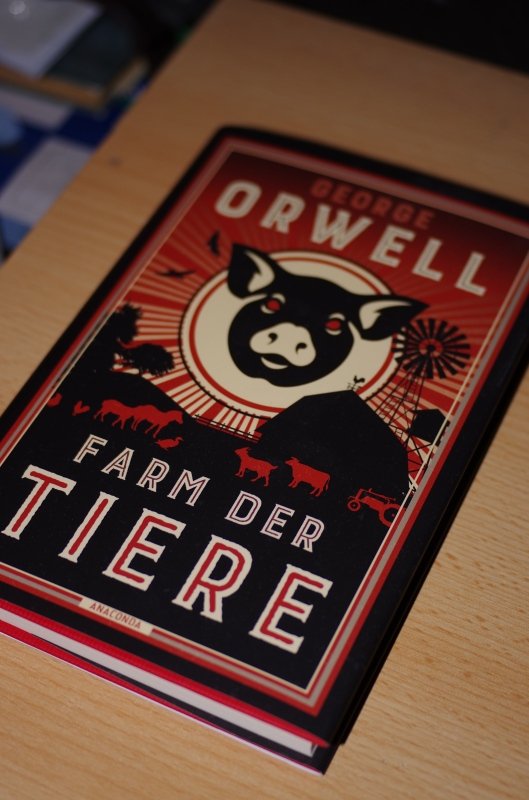
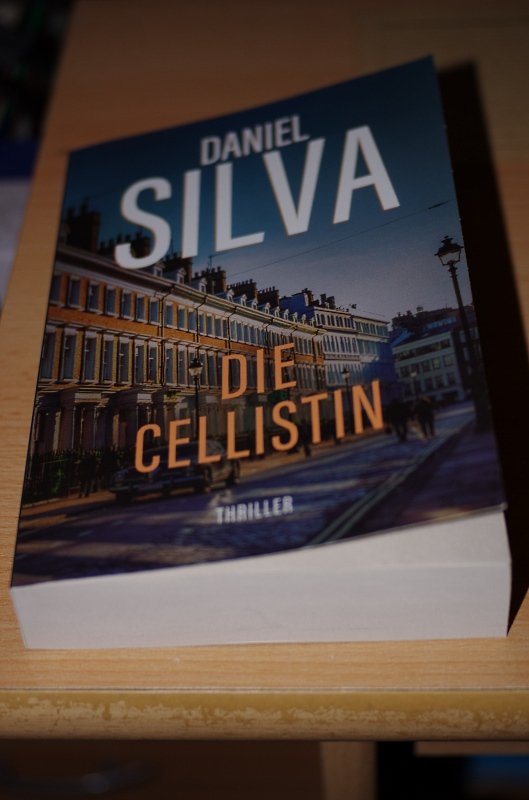
If not already read, might I recommend Albert Camus' The Myth of Sisyphus if you're stuck in a rut.I think, I will abandon it. Anyways, I got it from my grocery store's swap meet and I can bring it back any time.
The story switches between past and present without any markings. And it's boring written.
Also, it's officially recommended to not read it without having read the first four books of the "Detective Konrad - series".
A deft touch review. I remember The Saint series with the late Roger Moore, though only an occasional watch for some reason, probably too young to appreciate its plot settings. Never read any Charteris but this mightView attachment 772199
The Saint Plays with Fire (aka Prelude to War) by Leslie Charteris, first published in 1938
Leslie Charteris wrote thirty-plus Saint books himself, and kicked off a phenomenon that saw over twenty additional ghostwritten books, fifteen-plus featured movies, and a six-season-long TV series in the 1960s starring Roger Moore – and those are just the highlights.
Charteris' creation – the suave, smart, handsome, cocky, womanizing Saint – struck a chord with audiences that few cultural icons have before or since. His pop cultural currency has faded by now, but it was quite a run, and who knows, he could yet make a comeback.
The Saint Plays with Fire is part of the original "canon" – written entirely by Charteris and "classic" in structure, characterization, and plotting. By this book, the Saint is more of a private investigator; whereas, he started out more violent and legally questionable.
Like with most recurring action heroes, the plots matter and they don't. Most readers want a good story, but they don't come for the harrowing escape or espionage plot so much as for the Saint's je ne sais quoi – his cool, irrepressible personality.
They come to see him exchange barbs with his half-friend and half-nemesis Scotland Yard investigator Claude Eustace Teal, a man who really didn't deserve, on a policeman's salary, to have to regularly go toe-to-toe with the Saint.
They come to see the Saint verbally face off against this or that bad guy – here, it's a Frenchman leading an attempted fascist takeover of France at the start of WWII. Sometimes the faceoff is a physical fight, but much more interesting is the verbal sparring.
World philosophy and politics get tossed into the mix as the Saint believes in his own brand of individual freedom. This has him fighting the fascists. He is also, despite all his womanizing, a proto feminist in that he respects women and expects them to make up their own minds.
And the readers come for the witty and prurient exchanges he has with these free-thinking and often beautiful women who – alert to those who don't want to believe this because it challenges their views of the past – are often smart, coolheaded, and able to outwit many of the men.
In this one, the woman is a pretty, young Englishwoman from a humble background who uses her looks, style, and smarts to circulate among the rich society set. She knows, however, her position is tenuous and aiding the Saint, like he wants her to do, won't help her standing one bit.
The one other thing they come for is the cool lifestyle. The Saint drives fast cars, has an extensive and well-tailored wardrobe, dines out at exclusive restaurants, and has an elegant apartment – all at a time when these were genuinely rare, aspirational status items.
Even if you dismiss all the "will the Saint survive" harrowing moments intellectually – Charteris isn't going to kill off his meal ticket – when you're reading it, you can't help wondering, "How the heck will he get out of this one?"
Will the Saint, whose character's real name is Simon Templar, be able to save France by defeating the fascists without getting himself and the pretty Englishwoman killed? Will he be able to expose the entire fascist cabal? Will his suit get wrinkled doing so?
In The Saint Plays with Fire, the ending is a bit rushed, but when you turn the last page, you still feel satisfactorily entertained. And that is a pretty good description of why you would read the Saint books: they're intelligent and engaging escapist entertainment.
It's also why the Saint's calling card – a little stick-figure man with a halo over his head – had cultural currency for a long time.
View attachment 772200
I've been reading it intermittently, it's a good one.If not already read, might I recommend Albert Camus' The Myth of Sisyphus if you're stuck in a rut.
Fantastic read, though. Very few books explore the extremes of a character like the despot in such compelling and exhaustive ways. John Lofgren Monkey Boots Shinki Horsebuttt - $1,136 The classic monkey boot silhouette in an incredibly rich Shinki russet horse leather.
  Grant Stone Diesel Boot Dark Olive Chromexcel - $395 Goodyear welted, Horween Chromexcel, classic good looks.
  Schott 568 Vandals Jacket - $1,250 The classic Perfecto motorcycle jacket, in a very special limited-edition Schott double rider style.
  Sort of.
Speaking of Russian masters, Dostoyevsky's The Brothers Karamazov is the premiere novel of the lastJust started reading Turgenev’s “fathers and children.”
Trying to plug a gap in my experience of the Russian Masters.
Ah, the Russian Soul! 19th Century Russian aristocrats trying to straddle the gap between feudalism and modernity. Mother Russia! The Orthodox Church! Young men coming home from St Petersburg with crazy half-understood ideas of freeing the serfs and an egalitarian heaven on earth. Meanwhile, their fathers are hip deep in the old ways. It’s a powder keg! Great reading.
Me maternal ancestors landed New York City since the British sentenced grandmother's grandfatherView attachment 775279
East of the Hudson by J. Brooks Atkinson, first published in 1931
"Things hummed."
Arguably the best book personalizing the New York City experience is 1948's Here Is New York by E. B. White. White's "musings" capture the essence of the city with such affection, nuance, and feeling that it's often been described as a love letter to the famed metropolis itself.
East of the Hudson, published seventeen years earlier, treads similar ground, but as a series of essays (White's was originally a single essay in Holiday magazine) culled from J. Brooks Atkinson's writings, mainly from his time as a drama critic for The New York Times.
Since they are a series of essays beginning before a young Atkinson even lived in NYC and, of course, continuing into the time he lived there, you get a timeline view at the New York experience of someone "becoming a New Yorker."
Written at different times and for different reasons, there is a disjointed feeling or a bumpy transition now and then, but still you can read through that to take in Atkinson's mainly favorable view of the city, warts and all.
It starts with the longing comments of a young man wanting desperately to live in New York City. It's the kid-looking-in-the-candy-store-window equivalent of early adulthood.
The pull of the City to the youth of the country has been a constant for over a hundred years, as seen in all the books and movies – in every generation – about young people coming to New York City to start "real" adult life.
So much of what he says could still be written today. The following is Atkinson commenting on his first apartment in Greenwich Village (where many back then started because it was cheaper – that era's long since past):
In the course of time, minor inconveniences occasionally upset the sybaritic beauty... Brutal truckmen made the early morning hideous... Sometimes I dislodged mischievous bugs from under my bed. Uptown revelers caroused through the Village streets until early morning... An effeminate youth in the next room had strange predilections; I wondered vaguely; But it was a vivid city. Things hummed.
Tweaked only slightly, this paragraph could have been written up until about the 1990s. Atkinson goes on to talk about the "dramatic contrasts" of ritzy residential districts being only a few blocks away from coal yards, another thing you only have to adjust slightly to still see today.
Later on, Atkinson marvels at the marketplace of goods that exists in New York because it is a port city. While New York today still has incredible markets, this advantage has been diminished owing to the internet, as everyone now has the world's marketplace at his or her fingers.
Atkinson's description of New York at Christmas – "...throughout the city, rows of Christmas trees...walled the sidewalk like a forest...they transfigured the streets completely...Nature dominated every scene into which she was admitted" – is all still true today.
In a book mainly about New York City, liberal Atkinson – a college-educated newspaper man and self-described member of the "intelligentsia" – goes on a long screed against his own politics that sounds oddly modern:
Liberalism had degenerated from a habit of mind into an inbred social claque... The paradox of liberalism as a professed creed was its illiberalism. It was intolerant of any part of you that did not fit its intellectual plan... Nothing was more humiliating than the incompetence of the liberals in any natural circumstances.
After time spent in some of the surrounding areas – the Palisades, Long Island, Westchester – often in a summer or winter rental, which is another perennial New York City tradition to get out into nature, Atkinson returns his essays to the City proper again.
From Trinity Church looking down Wall St. to the much-cherished "pass key" for residents of Gramercy Park, it's fun to see – almost one hundred years later – that many things have not changed.
Coming back from one of his self-imposed rental exiles, Atkinson captured so much of what makes New York, New York and a New Yorker, a New Yorker:
Things were happening there... Sullenness and surliness were subdued under the lash of constructive energy. You could do something with people accustomed to seeing things done. There was everywhere a sense of expectancy... I was impatient to resume the work I had learned how to do.
At the end, Atkinson describes himself, changed by the city:
The velocity of light was hardly fast enough for me; I could not wait that long, my business was so urgent. I had need of all the inventions and improvements and the latest discoveres of scientific management; and I was prepared to pay the highest price for something new... it was a vivid city. Things hummed.
All that is still true, but the internet, as noted, has diffused much of that vibe, that moxie, that "let's get things done" attitude everywhere. Still, with over 8 million people living in New York City, the physical power of the city remains its striving people. Strive or you won't survive.
Here Is New York is still the gold standard of individual "impression" books about New York City, but if you are looking for additional reading, East of the Hudson offers an impressive time capsule that shows how the city evolves over generations, but keeps the same heartbeat.