Want to buy or sell something? Check the classifieds
  • The Fedora Lounge is supported in part by commission earning affiliate links sitewide. Please support us by using them. You may learn more here.

What Was The Last Movie You Watched?

Messages
18,301
Location
New York City
Deluge01.jpg

Deluge from 1933 with Stanley Blackmer and ****y Shannon


A massive earthquake sets off a series of tsunamis that wipes out large swaths of the United States, including New York City and many parts of the east coast, leaving the survivors in a post-apocalyptic landscape to endure and rebuild. Yes, Deluge is a precode disaster film.

The early scenes of the disaster in this B movie are done with models and superimposed footage that are obvious, yet oddly compelling. You know the collapsing buildings are papier-mâché, but for the period and budget, they are well done and reflect much time and effort.

As would become the norm for these movies, we meet a few key characters before the disaster and then follow their struggles as they try to rebuild something of a life afterwards.

Most prominent among them is Sydney Blackmer playing a middle-class, happily married lawyer with two young children who is separated from his family in the flood.

Assuming his family is dead and believing he is alone, he spends his days accumulating whatever items he can in his shack and nearby tunnel until a former long-distance champion swimmer, played by ****y Shannon, washes up disrobed and unconscious one day.

Shannon washed up because she was escaping a man, played by Fred Kohler, who was trying to **** her in the sadly usual way of post-apocalyptic worlds. Time and again, we see that without civilization, women are often at the mercy of a subset of men feral with ***ual desire.

She and Blackmer – a decent person – begin building a life together "as man and woman" until Kohler shows up trying to reclaim "his property." Forget about "the vote" – in this type of world, women need to band together, either with one another or with good men, to survive.

What follows is Blackmer and Shannon's fight with Kohler morphing into a classic series of tribalistic battles that includes a nearby gang of thieves on one side and a community of decent people trying to rebuild civilization on the other.

After those battles are won by the good guys, a bedraggled Blackmer and Shannon stumble into the good guys’ community. Exhausted, they are stunned to find Blackmer’s former wife and children – previously presumed dead – living there and excited to see their father and husband.

Less excited is Shannon who quickly realizes how tenuous her hold on Blackmer now is. The following, very fast, Third Act sees the community trying to form a government and Blackmer attempting to solve the unsolvable problem of having two wives.

As to the former effort, there are a couple of quick economic and political lessons tucked into the Third Act that argue for democracy, capitalism – surprisingly, not communism – and central banking. Blink and you'll miss it, but it's all there, even in Depression Era America.

Next up, though, is the inevitable confrontation between the two wives. Shannon is frank and fiery in her position of not wanting to compromise or become friends. It's a rough-and-honest precode look at an emotional confrontation with no possible good outcome.

Being precode, the movie also has plenty of titillation as Shannon's lithe body is exposed with little clothing in several scenes. Plus, there's a lot of raw ***ual passion in the post-apocalyptic world, including the noted roving bands of desperate and dangerous men.

While Blackmer is serviceable – but no more – in the male lead, Shannon is everything a precode leading lady needs to be. She's ***ually alluring, independent in nature (by 1930s, not modern standards) and smart. It's a shame personal demons cut short her career and life.

This quick, low-budget effort is best enjoyed as a cinematic archaeological find – an early example of the combined disaster and post-apocalyptic genre that Hollywood would never tire of because, well, it’s exciting and intellectually complex storytelling.

It's not that Deluge is a great film – it isn't – but darn it, there's something about it that keeps your attention. Part of it is the campy early sets, part of it is how it hits on many important themes of the genre – and part of it is ****y Shannon.

1933_deluge_026_peggy_shannon.jpg
 
Last edited:
Messages
18,301
Location
New York City
carve her name with pride ev.jpeg

Carve Her Name with Pride (1958) with Virginia McKenna, Paul Scofield, and Jack Warner


Carve Her Name with Pride would be a good movie if it were a fictional tale of a heroic female British spy in WWII (see Charlotte Gray, 2001), but based on the life of an actual WWII British spy, Violette Szabo, it's a gripping and moving story of incredible heroism.

Lead actress Virginia McKenna could not have been better cast as she doesn't overwhelm the character. McKenna, quietly beautiful – as was the real-life Szabo – lets the character's decisions and actions speak to her heroism, without acting bombast or histrionics.

Born to an English father and French mother, the bilingual young woman – athletic, smart, with a husband who died fighting for the French, and despite having a child – was an obvious recruit as a field agent in the Special Operations Executive – or, to the rest of us, a spy.

We've seen the spy training – bumbling recruits, a screaming instructor, women using leverage to flip men, slogging through mud, etc. – so many times since that it's almost perfunctory, but in 1958, it wasn't. Even today, knowing it's based on a real-life story adds meaning.

We’ve also seen the awkwardness and unfairness of a spy having to lie to her parents, of others looking down on her for not being part of the war effort, of kissing her child goodbye while telling her happy lies as she leaves on a mission – but it is quite effective here.

McKenna’s two missions – both to German-occupied France – don’t come until the second half of the picture, but, like everything else in this one, they’re well done and subtle. Risk of capture and then torture haunt every move. Bravery and heroism is the fabric of the mission.

While her life is part of history and the public record, if you don't know it, you'll want to see it unfold fresh in the movie. Director Lewis Gilbert, like McKenna, used an understated style to allow the power of the story – not the tricks of filmmaking – to move you.

Shot in black and white, on location around England, and beautifully restored, the movie is visually appealing in a time-travel way. You almost live and breathe the war for a few hours as the period details are more thoughtfully done than most historical movies from this era.

The supporting cast clearly respected the historical value of the story as well, with Paul Scofield as McKenna's handler in the SOE and Jack Warner as her father both delivering notable performances.

It is, however, Mckenna's movie. Her portrayal of this quietly heroic woman is deliberately restrained. Despite being a lithe, angular, and quite beautiful blonde, McKenna lets Szabo star: it's not Virginia McKenna playing Violette Szabo, it's simply the story of Violette Szabo.

When McKenna is in France matching wits with the Germans, it's gripping storytelling because you know her life is on the line: you feel the young actress' body and facial features tense as she faces the Germans, while she keeps an even disposition. It's impressive acting.

There’s also no movie-star glamour here – McKenna, captured and tortured, is shown without make-up and with her hair tangled and dirty. It's odd and refreshing to see her not looking "done up" – something many stars at the time wouldn't have allowed.

Perhaps Carve Her Name with Pride is not better known today because of its modest approach. The cast and director didn't let vanity take over nor did they "jazz up" the story for action or drama. Made today, McKenna would probably kill more Germans than Patton's third army.

For those who like a good story told honestly – a tale of a genuinely strong and independent woman not created to serve modern politics – this is the movie to see. Sure it's idealized – few are this singularly courageous – but it also aligns with the overall life of a true spy heroine.
 

DogFacePonySoldier

One of the Regulars
Messages
164
Just finished re-watching all the Marvel movies through End Games with my young son. He was amazed when I told him how long I had to wait between each movie and the total amount of time from Iron Man to End Game. Almost as long as he has been alive!
Reminds me of the comic Berserk, it’s still ongoing and is a 30+ year creation from Kentaro Miura, and his mantle is continuing to an ending by his friend. I am waiting for it to end to reread it, his art is outstanding and hits on a primal level. It was known to go months for a single comic to release that would hardly move the needle on the story.

I usually watch a movie at the end of the day and sometimes would call it a night and finish it the next day, I am looking forward to the ending of this one.

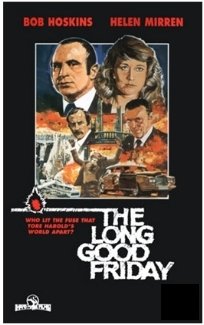
Long Good Friday is a movie from 1980, if you like Guy Ritchie movies ****** and Lock Stock this is a real precursor. London gangsters with its share of slang in a mystery thriller.

I also like its old school painted dramatized promo posters that’s not seen anymore.
 

Attachments

  • IMG_4839.jpeg
    IMG_4839.jpeg
    54.8 KB · Views: 47

aaronharri

New in Town
Messages
34
Location
Hartselle, Al
Reminds me of the comic Berserk, it’s still ongoing and is a 30+ year creation from Kentaro Miura, and his mantle is continuing to an ending by his friend. I am waiting for it to end to reread it, his art is outstanding and hits on a primal level. It was known to go months for a single comic to release that would hardly move the needle on the story.

I usually watch a movie at the end of the day and sometimes would call it a night and finish it the next day, I am looking forward to the ending of this one.

Long Good Friday is a movie from 1980, if you like Guy Ritchie movies ****** and Lock Stock this is a real precursor. London gangsters with its share of slang in a mystery thriller.

I also like its old school painted dramatized promo posters that’s not seen anymore.
I'll have to check out those movies and the comic. I don't recognize the movie poster from Long Good Friday. I tend to recognize most popular movie posters from that era. My parents owned a video rental store in the 80's and 90's. Grew up in a video store/pizzaria! Great way to grow up but watching movies and eating a lot of pizza makes for a chubby kid. lol
 
Messages
18,301
Location
New York City
international-house.jpg

International House (1933)


Plots often have a MacGuffin – an unimportant reason for important things to happen in a movie – but rarely is the plot itself a MacGuffin. Yet in International House, the plot is only an excuse to prove that vaudeville isn't dead, but has moved to offbeat Hollywood movies like this one.

Calling this movie vaudeville is a bit of an exaggeration, but calling it rambunctious camp and farce with plenty of vaudeville isn't. The plot only exists so that several well-known comedians, performers, singers, and zany whatevers have a reason to be in one movie.

Set in China, the tenuous plot involves several representatives of companies and countries assembling at one hotel, the International House in Wu Hu, to bid on a new Chinese invention – a highly advanced television that works without cable or satellite connections.

In theory, the "conflict" is who will win the bidding war, but half the time you forget that is even going on, as the movie is really a bunch of skits and antics woven together. The first involves Stuart Erwin, playing the representative bidding for the American company.

Since the train to Wu Hu isn't running, Erwin decides to drive on China's sketchy roads. He's cajoled by ****y Hopkins Joyce to take her along. Joyce, playing herself, is an early example of someone being famous for being famous and for marrying wealthy men.

Their trip is a bunch of contretemps – breakdowns, clothing mix-ups, etc. – which sets the tone for the entire movie. When they arrive, Joyce's jealous ex-husband, played by Bela Lugosi; a snippy hotel clerk, played by Franklin Pangborn; and many other "characters" are there.

The hotel's doctor and nurse, played by the comedy team of George Burns and Gracie Allen, are also there. They do several vaudeville-like routines that will either appeal to you as kitschy humor or will irritate the heck out of you as an utterly stupid waste of time.

It's hard not to turn these comments into a laundry list as so many entertainers come and go. W. C. Fields is one of the more notable players, portraying a professor and dropping in, literally, in an "autogyro" (a helicopter-airplane kludge) to wreak havoc with the second half of the movie.

He completely plays to his brand as the drunk, "I don't give a hang" ***ist bore that, say what you will, was popular at the time. Fields is a genuinely talented actor, but you won't see much of that here, as it's mainly the irritating parts of his screen persona and "act" amped up.

If an obnoxious man destroying a hotel's registry desk is your idea of funny, then you'll enjoy that Fields "skit." Later, he plays it better when he's claiming a woman's hotel room as his own and they both populate it for a time unaware of the other. The physical comedic timing is well done.

There are also, effectively, a couple of music videos mixed in: one by Rudy Vallee and a truly amazing one with Cab Calloway performing his famous "Reefer Man." It's a stunningly pro-marijuana song proving that precodes really did offer a surprising amount of cultural and artistic freedom.

Those two videos are about the only reasonably sane moments in this "madcapped," antics-filled picture full of people chasing each other, smashing into things, a billion misunderstandings, one funny aside for every twenty tries, and general mayhem.

There are other "one-off" actors and performers who show up, who had modest cultural currency back then, but unless you are well versed in that era's zeitgeist, you probably won’t recognize all of them.

The TV-bidding plot eventually gets "wrapped up," but the climax is a crazy chase at the end with Fields driving a miniature car (a big guy in a small car serves as humor here) with several other characters trying to get to the roof to escape in his autogyro from the angry ex-husband.

International House is seventy minutes long, which will seem way too long or really short depending on whether this 1930s screwball/farce works for you. Even if it's not your thing, as a cultural grab-bag of 1930s comedy and ephemera, it's a darn impressive collection.
 
Messages
18,301
Location
New York City
thefemail animal .jpeg

The Female Animal (1957) with Hedy Lamarr, Jane Powell, George Nadar, and Jan Sterling


Who's going to play the aging actress in all the aging-actress movies but an aging actress? So yes, the role tautologically echoes real life.

In The Female Animal, the aging actress is forty-three-year-old Hedy Lamarr, who looks wonderful for a middle-aged woman, but it's still a step down for someone who had her prepossessing youthful beauty.

There is no fair answer to youth and beauty fading, but whatever the answer is, it's even less fair to ethereal beauties like Lamarr who, to compound their loss, made their living in part by selling youth and beauty to the screen.

Here Lamarr plays a past-her-prime screen goddess acting in a B movie. A setup scene quickly dissolves to a flashback where the rest of the picture takes place until, at the end, the movie catches up with the opening scene. It's a forced construct that adds nothing to the story.

Lamarr starts dating a much younger extra – a handsome man played by George Nader. She gives no ground to any aggressive cougar today: stalking, catching, and keeping her prey with ***, flattery, luxury, and money. It's not subtle, nor is it meant to be. She wants her man.

Lamarr seems to genuinely like Nadar, but it's also clear that there's a version of Empusa at work, as Lamarr feeds off of Nadar's youth and beauty in some warped way that, maybe, in her mind, lets her recapture some of her former allure.

If that isn't messy enough, Lamarr's adopted, alcoholic, insecure, bitter teenage daughter, played by Jane Powell, takes a shine to Nadar – one assumes as a big middle finger to her mother. So yes, there's a little coo-coo-ca-choo at play a decade before The Graduate (1967).

That subplot may read soapy now, but in 1957 – deep in the Code era – a daughter openly competing with her mother for the same man would have been eyebrow-raising stuff, especially with the hint that they both were romping in the sheets with the same man. That's Greek Tragedy level dysfunction.

The last piece of the puzzle is Jan Sterling, playing a contemporary of Lamarr – another aging screen goddess – who understands that she is past her prime. She cold bloodedly "dates" gigolos – Sterling's role here is to show Lamarr her not appealing future.

The plot – occasionally you'll wonder if there even is one – is a combination: will Nadar stay with Lamarr, will Lamarr tire of him, will Nadar end up with Powell in a kick-to-the-teeth for Lamarr, or will some other event reshuffle the deck even more (Sterling pitches herself a few times).

It's soapy melodrama all down the line, sometimes echoing Sunset Boulevard (1950) or even brushing up against All About Eve (1950) - especially when Lamarr does things like buy Nadar a full wardrobe. With a small budget and a smaller plot, you watch it for the actors, especially Lamarr.

Reported to have had plastic surgery, Lamarr's face looks good, but her eyes look a bit "frozen." Still, the screen gets brighter when she's in a scene as, looks aside, she has that something that says "star." Plus – while no Bernhardt, and always with that flat accent – the woman can act.

Nadar is good, but too old to be playing a boy toy – he’s only seven years younger than Lamarr. Still, the guy tries to turn a cliché into a complex character and gets halfway there. All the same things can be said of Powell (fifteen years younger than Lamarr) in her bratty daughter role.

Sterling – oddly, she's Nadar's age but plays someone Lamarr's age – might have kicked things up as a rival to Lamarr, but her character just floats in and out of the story like a busy messenger boy who shows up several times, makes some noise, and then disappears quickly.

Shot mainly on sets, in black and white, and with a short runtime, it feels very B movie 1950s. Today it would have been a made-for-TV effort. None of that is bad, though, as the fun is seeing Lamarr in her last performance – along with a lot of mid-century clothes, cars, and architecture.

Youth, and what beauty one has, slips away with time, but for most of us, it's a sideshow to our lives. However, for a Hollywood actor or actress – in a business that sells youth and beauty – it can be an existential crisis.

The Female Animal is just one of many Hollywood takes on this perennial theme. There are better ones, but for fans of Hedy Lamarr and mid-century kitsch, it's a quick and enjoyable one that also reminds us the Austrian beauty had some acting talent under all that pulchritude.
 

tamoko

One of the Regulars
Messages
125
Location
swiss
Dracula 2025 Luk Besson
Like all his films visual beautiful
Great actors and acting.
Storytelling unfortunately pretty weak. I think it will be a lot of controversy critic.
 
Messages
18,301
Location
New York City
Just in time for Halloween.
blackcat1934.jpeg

The Black Cat (1934) with Boris Karloff, Bela Lugosi, David Manners, and Julie Bishop


"Did you ever hear of Satanism, the worship of the devil, of evil? Herr Poelzig is a great modern priest of that ancient cult. And tonight in dark of the moon the rites of Lucifer are celebrated. And if I'm not mistaken he intends you to play a part in that ritual... a very important part." — Bela Lugosi as Dr. Vitus Verdegast


The Black Cat has earned its status as a cult horror classic the hard way, by doing a lot of things right very early on in the genre's cinematic journey.

It's easy to pick apart these early horror movies, even some cult classics – the plot doesn't hold up, the sets are obvious, the acting wooden. For The Black Cat, that criticism fails on all three fronts.

At a high level, the plot is clear: a satanic cult leader, played by Boris Karloff, is confronted by a man from his past, played by Bela Lugosi. The movie is their often covert battle for survival, with a young couple – and all the history between the men – the weapons in their deadly game.

All of this takes place in a remote mountaintop castle near Vienna, which served as a fort in World War I. It overlooks a battlefield where Karloff, as commander of troops in the war, sold out his Austro-Hungarian soldiers to the Russians – causing tens of thousands of deaths.

Lugosi – a soldier under Karloff – survived but spent the next fifteen years in a Russian POW camp. He has now returned only to discover – he believes – that, in his absence, Karloff killed his wife and daughter. Lugosi has good reason to be none too pleased with Karloff.

The young couple, played by David Manners and Julie Bishop, on their honeymoon, either stumble into the castle by accident or are compelled there by dark forces at Karloff's command. Once there, they are his guest/prisoners; the latter being a status they don't see immediately.

So many of what would become classic elements of the horror genre are here that you lose track: young innocents being "rescued" and taken to a gothic castle on a stormy night; a haunting classical music score; a dungeon of torture and death; and more.

The climax, no spoilers coming, smashes the cult, the young couple, Karloff, and WWI history together in a classically chilling and exciting sequence of psychological warfare, torture, ***fire, murder, and a spectacular explosion. It's an ending worthy of its well-done setup.

To be fair to the critics, none of this story would work without director Edgar G. Ulmer (he even has the name of a horror movie character) creating an early horror atmosphere that blends a gothic setting with high Art Deco/modernist architecture in a powerful juxtaposition.

Equally important are the characters themselves, from the creepy, laconic, and insane-looking servants to Karloff's and Lugosi's iconic performances. Lugosi, in a nuanced bit of acting, shows his theatrical talents playing a tortured man with more humanity than you expect from him.

Karloff creates a character who would be imitated and parodied for decades to come in his highly mannered, taciturn, and deeply insane portrayal of a satanic cult leader, which of course, includes some frighteningly deviant ***ual inclinations (mainly implied here).

Manners and Bishop do their part playing us, the viewers: innocent people who have somehow wandered into this insane world and just want to get out alive. That, though, will be a challenge as any good horror cult needs a constant supply of virgin sacrifices – just noting.

If you don't like horror, the only reason to watch this one is its status as one of the fountainheads of the genre, thanks to its bold blend of psychological horror, modernist design and early-sound era ambition. You might also enjoy the acting talent on display, even if the story doesn't sing to you.

The Black Cat is just over an hour long, but it accomplishes so much that it feels longer – in a good way. We've been acclimated to expect a lot more from our horror movies today, especially if we want to be scared by them – but contemporaneous audiences were scared in 1934. It was, after all, Universal's top-grossing film of 1934.

If you can put yourself in an early 1930s mindset – if you try to appreciate the film in its moment in history – it's an impressive and engrossing contribution to early cinema as it built the foundation of the aborning horror genre.

If movies were museum pieces, The Black Cat would be a heavily studied and viewed exhibit.

BlackCat193423.png
 
Messages
18,301
Location
New York City
s-l400.jpg

Daybreak from 1948 with Eric Portman, Ann Todd and Maxwell Reed


Daybreak is a bit hard to wrap your hands around, as the censors caused a lot of scenes to be cut or truncated, leaving the story vague in spots. It's also just an unreasonably bleak tale, but it's still an engaging movie as the acting and atmosphere are excellent.

Eric Portman plays a co-owner of a small barbershop who is also the executioner at the nearby prison. Death hangs over this man as his job weighs heavily on him.

Some of the movie's confusion comes from Portman using a different last name than his father to, one assumes, hide his identity as the hangman. Early on, he learns his father - whom he clearly hated - has died and left him his successful barge business.

At the same time, Portman meets a pretty woman, played by Ann Todd. He doesn't tell her he's an executioner – that would be the worst pickup line ever. Even more frighteningly, if by chance the line worked on some woman, would you really want her?

Todd, too, seems to be hiding some sadness in her past. It’s probably that she was a prostitute, but the censors allowed only the vaguest hint to survive, so we’re never sure. She’s no cheery soul.

Portman and Todd date a bit and then marry with Portman the more enthusiastic of the two, but they seem okay. At Todd's request, they fix up one of his barges as a houseboat and live on the dreary and isolated waterfront. Little is upbeat in this movie.

From here, the movie allows a tiny moment of sunshine as the newlyweds seem happy. But he has to lie to her all the time as he is committed to his executioner job for six more months, so he keeps telling her he's going away on business when he goes to a hanging.

This gives an opening to one of Portman’s new hires for the barge business, a handsome “Swede” played by Maxwell Reed, to “move in” on Todd. It's confusing because of censoring, but something, maybe or maybe not consensual, goes on between Todd and Maxwell.

The climax – no spoilers coming – picks up the sometimes slow pace of this movie as everything spills out with a fight, a police investigation, a missing body and suicides quickly piling up. It's a dreary end to a dreary tale.

Director Compton Bennett, working with sets and a small budget, does a good job creating a heavy, dark atmosphere with fog and minimal lighting. Even when the sun shines, there's a gloominess to the scenes.

Portman is good as a reserved Englishman who has the polish of the upper class he was born into even if his present life as a barber and hangman is amongst the working class. Being "properly British," you never get to fully know him.

Todd, in one of her better roles but unfortunately in a dour, little-known movie, is also very English reserved. She, like Portman, keeps her past to herself so their marriage never seems truly open and honest.

Reed does an adequate job as the too-handsome, too-confident, and oleaginous pretty boy who messes everything up. You do wonder, though, how Portman couldn’t see this guy as a threat, especially when his wife Todd warns him.

For fans of the arrestingly beautiful Ann Todd, who is forty-one here, but looks ten years younger, you'll see her bounce around the barge in a risque-for-the-time bikini top. The censors probably let that go as they had already butchered the narrative to death.

Daybreak is a good British noir that, at its core, tells the timeless story of two people with shadowy personal histories marrying, each hoping to bury the past. They might have even made it had a lecherous man and fate not intervened, but alas, that is the wont of noir.
 
Messages
18,301
Location
New York City
street-of-women-1932.jpg

Street of Women from 1932 with Kay Francis, Alan Dinehart, Gloria Stuart, Allen Vincent, Roland Young, and Marjorie Gateson


Street of Women borrows a plot that turns up in so many precode movies, you’ll need a mental flowchart to keep track of who's who as the melodrama, recriminations, and declarations of love come flying in – all echoing the characters and twists of many other films.

It's harmless and entertaining, as these types of B movies were the precursors to what would become soap operas. Kay Francis plays a successful, independent dress designer (as in the real world, precodes had successful, independent women) who has been having an affair for years.

She's single, but her lover is a married businessman, played by Alan Dinehart, who hasn't yet asked his wife, played by Marjorie Gateson, for a divorce because he's waiting for his daughter, played by Gloria Stuart, to "make her debut." Yes, it's another precode set among the upper class.

The last major wrinkle – and it's a soap opera humdinger – is that, unbeknownst to Dinehart or Francis, Stuart has fallen in love with Francis' beloved brother, played by Allen Vincent, and they plan to get married. Won't that make family get-togethers interesting?

That's the setup leading into Act Two, where almost everyone fights with someone else, as some behave honorably, some generously, and some selfishly, and some cattily. Vincent runs away; Gateson refuses to divorce Dinehart; and Francis breaks it off with Dinehart for the "good of the kids."

Also tossed in are a few engaging confrontation scenes – Gateson tries to humiliate Francis – along with some sharp, Greek Chorus–style observations and sincere gestures of friendship from everyone's confidant here, played by Roland Young. Still, things are even more twisted heading into Act Three.

Director Archie Mayo knew that Warner Bros. liked to wrap its B-movie precodes up at lightspeed, so Act Three's climax – and its fallout – blasts by, driven once again by some excellent manipulation of others in service to the greater good by Young.

Young is at his best in this one, playing down his usual self-deprecation or, conversely, his superciliousness (he played both types of characters regularly). Instead, he's a smart, likeable guy who quietly pines for Francis while doing everything he can to help the good guys win.

You'll also like Stuart a lot, as she plays the daughter – delightfully nicknamed Dodo – as a smart young woman rather than a flighty debutante, as was the norm for that type of role. Look for the scene where she and her dad, Dinehart, have a heart-to-heart – it's sincere and nuanced acting.

Dinehart, too, is enjoyable at not playing a heavy for a change. He manages to be a good man having an affair – a character type that was allowed to exist in precode Hollywood. Kay Francis, a top actress in the 1930s, also deserves mention as the female lead of the movie.

Francis starred in dozens of melodramas at the time, but she never mailed it in. Her restraint here is understated acting at its best. As seen in the few scenes when Stuart – and then Gateson – angrily confront Francis, Francis wins by being the calm one.

There's not a lot more to this short B-movie, shot entirely on sets, with just some stock footage background framing shots from New York. The sets, probably cobbled together from other Warner Bros. pictures, have a generic "upper-class Art Deco" look overall.

Just like in 1932, you don't watch Street of Women today to be wowed: you watch it as comfort food. You watch it to see a version of a soap opera you've seen before, with stars that you like. It's the same reason soap operas have been successful on TV for so many decades.
 
Messages
18,301
Location
New York City
black-tuesday-45.jpg

Black Tuesday (1954) with Edward G. Robinson, Peter Graves, and Jean Parker


Some movies are better than a summary of their plots, as a factual recounting can miss the complex humanity captured on screen. Black Tuesday is one of those movies – rising above its off-the-shelf sounding story.

A mob kingpin on death row uses his loyal *** moll to escape on the night he is to be executed. During the escape – by plan and by happenstance – he takes along several other death-row inmates and several would-be witnesses to the execution, the latter as hostages.

Up to this point, the movie has a pretty basic noir/crime-drama setup. Then complex humanity – and inhumanity – take over. Reprising his 1930s gangster screen persona as the mob kingpin is Edward G. Robinson, with none of his psychotic gangster energy diminished.

Out but now holed up at a storage warehouse, with a plan to get money and a plane waiting to take him out of the country, things slowly start to unravel in a dramatic second half driven by ***ual passions, intense emotions, Christian eschatology, and cold-blooded murder.

It ends in a storm of betrayals, ***fire, accidental death, murder, and *******. The movie that starts out off the shelf leaves you emotionally exhausted only eighty minutes later.

The movie really asks only one question: what is a life worth – and the answer is frighteningly malleable. With men on death row, that is the only question they have on their minds. When they break out and take hostages, that is the only question any of the hostages have on their minds.

The hostages know Robinson has already been sentenced to the electric chair, so what does he care if he kills again? The prison priest, one of the hostages, tries to reach Robinson's conscience, but good luck with that. Robinson lives in a tribalistic "me" world.

He does care for his girlfriend, played by Jean Parker: she's made it inside the walls of his tribal compound. Parker's performance is riveting. She's a ruthless woman who bet on a strong but losing hand. Her efforts to help Robinson reflect a Hail Mary attempt to turn the tables.

Also circling Robinson is Peter Graves playing another death-row inmate. Graves has $200,000 stashed away from a bank job he pulled, but he will only tell the police where it is in return for having his sentence commuted to life. He rejects all lesser offers.

When Robinson breaks out, he takes Graves along – even after Graves is shot – figuring he'll find a way to get the money from him. Robinson is a sociopath and, like many sociopaths, he can sell a story with what seems like incredible sincerity – but it's always a lie.

That is the magic of the movie: Robinson, despite being a psychotic killer, is fascinating. He can be pleasantly charming one minute and switch to cold-blooded killer a second later. He also has that God-given gift some actors have of showing us when and almost how he's thinking.

We're fascinated as he quickly calculates the odds. When the police surround the warehouse, he flips to a hostage-killing plan to break the will of the police. When internal dissension rises, only Robinson's willpower and dominating personality can hold things together.

Director Hugo Fregonese understood his material. Despite a small budget, he created an atmosphere that combines the rawness of 1930s gangster films with the despair of postwar crime-drama/noir. The result is a movie that looks and feels modern, yet carries a throwback vibe.

You start out thinking you're in "that" movie – a death-row inmate breakout movie – only to find yourself in a tense psychological drama driven by a charismatic psychopath. At some point, you realize you're gripping your armrests really hard.

Shot in and around Los Angeles, Black Tuesday is a revealing time capsule of midcentury L.A. Mainly, though, it's a good story that sneaks in a serious look at complex philosophical questions about death, judgment, heaven, and hell – not bad for a "modest" independent production.

The reason the noir/crime-drama genre gets so much respect is that in a time of the strict Motion Picture Production Code, the construct allowed for a certain freedom of thought and action as long as the "bad" people were punished in the end.

Licentiousness, murder, blasphemy, and a disregard for life are explored in Black Tuesday in a way a romcom, drama, or musical back then could never have attempted. Yes, some of it is palliated, but for the era, the breadth of humanity and inhumanity on display is impressive.
 
Messages
18,301
Location
New York City
tumblr_nbnrvhIVVt1s5o8nro1_1280.jpg

Reunion in Vienna from 1933 with Diana Wynyard, John Barrymore, Frank Morgan, and Henry Travers


There is a really good half hour buried inside Reunion in Vienna, a bloviated, nearly hundred-minute-long picture that never really settles on a style, a story, or consistent characters. Worse, it slips into slapstick when it feels the need to fill time.

The good core story starts with the mistress of a former archduke of the Austro-Hungarian Empire, now a decade later, married to a noted psychiatrist. The former archduke, in exile since the Empire's fall in World War I, is a taxi driver in Paris – even ex-royals need to earn a living.

The former mistress, played by Diana Wynyard, is bored with her safe, secure marriage and has flights of fancy thinking about her old romantic life back in Austria – a fancy that becomes potentially real when she learns of an upcoming reunion of the archduke's former coterie.

Wynyard's nice psychiatrist husband, played by Frank Morgan, is intimidated by the archduke – a man whose prurient aura has haunted his marriage. So when Morgan learns of the reunion, being an egghead, he encourages his wife to go to "purge her silly romantic memories."

After resisting what she really wants to do, Wynyard agrees: so off to the reunion she and her libido traipse, while Morgan stays home to fret. There, she meets the archduke, played by John Barrymore, in full ham mode even for him, reveling in a weekend of being a royal again.

The second half is dominated by Barrymore's full-force style and singular goal: to get Wynyard into bed to prove something to himself, or so that he'll miss not being a royal less – or something like that. This angle is mainly treated as farce and it undermines the integrity of the story.

It all climaxes with the inevitable face-off between Morgan and Barrymore, which, like most of this movie, has a good scene buried inside too much histrionics from Barrymore and, also, too much whining from Henry Travers playing Morgan's always-complaining father.

If you like seeing John Barrymore go full Barrymore, this is the movie for you - he's loud, abrasive, manic, and pompous. He doesn't steal scenes with talent, but instead he drives over other actors like an SUV careening downhill without brakes.

The man can act, so when he stops chomping on the scenery, he gives you several good moments. He's helped here by Morgan and Wynyard, who, as smart actors, realize you can't out-Barrymore, Barrymore, so they both play their parts in a calm, low-key style.

The core story of a woman who, as a young adult, had an exciting *exual romance with a magnetic personality, but is now in a normal marriage to a sedate man – and, probably, a sedate lover – who somewhat bores her is a good one, especially when the old lover returns.

But director Sidney Franklin, either by choice or because of an inability to control Barrymore, made a loud, sometimes boorish movie that never allows the good story room to breathe and reach its full potential.

The characters, too, flip around too much to fully develop and to fully engage the viewer. Barrymore is the prime example, as he's insane one minute and thoughtful the next; but Wynyard and Morgan, too, flip a bit from rational to emotional, to fit the needs of the scene.

What you're left with in Reunion in Vienna is a good core story, some moments of engaging acting, and some characters you care about – all of which get lost in the slapstick extremes of "The John Barrymore" show. Alas, those thirty good minutes of film never stood a chance.
 
Last edited:

Thranmir

Familiar Face
Messages
56
V for vendetta. I've heard of a few cult classics growing up; trainspotting, pulp fiction, and v for vendetta. I never got around to them as I'm mainly a fantasy nerd and to the best of my knowledge none of these films contain elves.

Given the current political climate in the UK I finally felt incentivised to check out this movie. I knew nothing of the plot so it was a happy surprise to see a dystopian future.

I'm not the most learned fellow so I'm going to have to bust out a dictionary for half the words V manages to riff during his rants but I enjoy that. I always need an impetus to expand my knowledge, I don't know what I don't know.

Wholeheartedly enjoyed it, though I can't for the life of me figure out how it was rated an 18+.
 

Forum statistics

Threads
114,750
Messages
3,181,538
Members
58,601
Latest member
kimberly8
Top