Want to buy or sell something? Check the classifieds
-
The Fedora Lounge is supported in part by commission earning affiliate links sitewide. Please support us by using them. You may learn more here.
You are using an out of date browser. It may not display this or other websites correctly.
You should upgrade or use an alternative browser.
You should upgrade or use an alternative browser.
- Status
- Not open for further replies.


raf
One of the Regulars
- Messages
- 256
FWIW, stitching on ages old, but not molested/abused Pigskin satchel was only failure point. Fairly easily repaired using modern polycotton thread and appropriate needles.
I think you're somewhat oversimplifying & generalizing. Shinki has a lot of different leathers in a lot of different finishes.
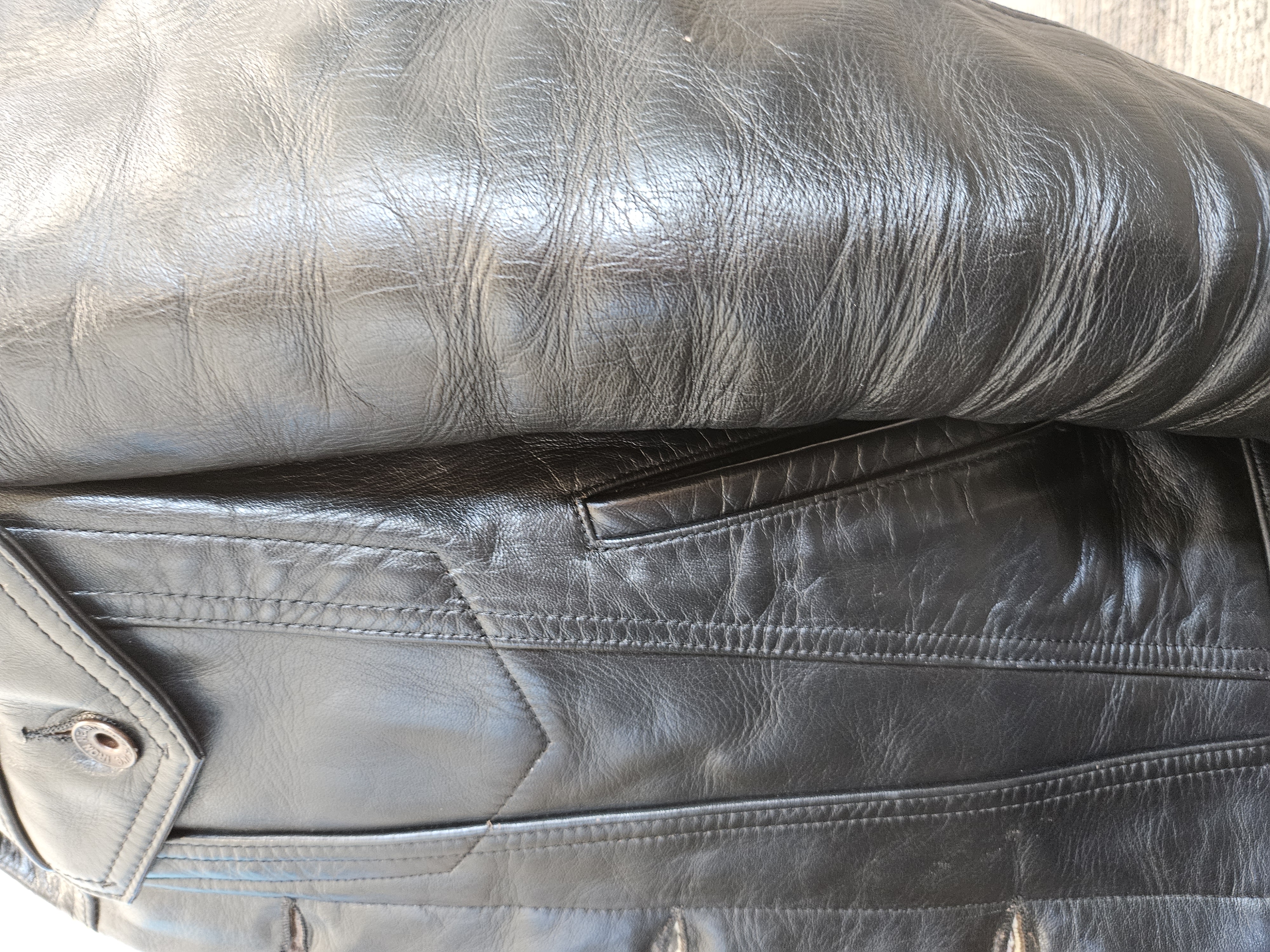
'Heavily processed' might just be 'let's shrink this 10% instead of 5% and see how it looks' or 'let's leave it in the barrel another day'. And a more 'vanilla' looking leather might have a much more complicated finishing process.
Regarding aged leather, I feel like I've had this conversation in other threads, but my personal theory is some of these started out quite grainy. You do see older leathers that have stayed fairly smooth, so its not a universal process.
There are also probably some like these nitta horsehides that start smooth and grain/whisker rapidily.
'Heavily processed' might just be 'let's shrink this 10% instead of 5% and see how it looks' or 'let's leave it in the barrel another day'. And a more 'vanilla' looking leather might have a much more complicated finishing process.
Regarding aged leather, I feel like I've had this conversation in other threads, but my personal theory is some of these started out quite grainy. You do see older leathers that have stayed fairly smooth, so its not a universal process.
There are also probably some like these nitta horsehides that start smooth and grain/whisker rapidily.

Harris HTM
Call Me a Cab
- Messages
- 2,595
- Location
- In the Depths of R'lyeh
Could you please elaborate? As far as I know shinki is a tannery that produces an abundance of different types of hide. The ones I have seen in person look less heavily processed compared to others I have seen.Shinki, like Thedi, is heavily processed hide to make it look vintage
Same for Thedi.
Harris HTM
Call Me a Cab
- Messages
- 2,595
- Location
- In the Depths of R'lyeh
Thedi can offer a washed hide if you ask it. Mine is not washed and does not look like vintage“Processed” is a vague word that could be like @cbez explained above — anything extra done to the hide to achieve an intentional effect. For instance, Thedi does extra stuff (washing and drying?) to their hides after the tanning process to make it look like it’s been used for quite some time—artificial aging if you will.
Below is a quote on artificial aging from CBI of VLJ, maybe Thedi does something similar:
“I own a lot of jackets with only a 5 month weather window were I live to wear them (all A-2's and an A-1). I love these jackets but not a brand new look and not a 60 year old look. Somewhere between 100 and 200 combat flight hours is my preferred look! It takes me a very long time to get to this point/look ‘just’ wearing them. In addition I enjoy painting them and my favorite thing is ………………………. Weathering them, I just love it. Goat is hard to age seeing as it’s so tough so I leave the goats alone (except for painting, actually, I have aged one adding wear using paint). Cow and horse – great! A new jacket arrives, I wear it for a few days, decide for sure all is OK. I then start crinkling up the jacket with my hands, telescoping the arms, pressing them into the ground, etc. Then, using 90% rubbing alcohol, I weather the seams, edges: pockets, collar leather next top knits, etc. This adds a great used look. Done carefully, it takes 4 to 6 hours per jacket with the alcohol. One can also use the harder plastic scrub portion of a sponge but that does actually scratch the leather. I have hot water treated about 15 jackets most of which could be characterized as ‘new’. Some others don’t get the hot water. I use warm to hot water in the tub, let the jacket soak through, wring it out and put it (zipped up) in the dryer ON A REGULAR SETTING not low heat. I then check the jacket every 20-30 minutes. After an hour or so, I turn the jacket inside out (still zipped) and back in the dryer as long as it takes to dry the liner and knits. Then, right side out for the remainder. Its easy to wimp out towards the end (letting it air dry that last little bit so there is no damage) but this is the best part and the final drying with heat really makes the grain pop (removes oils, water, etc). Higher heat - more pop (also more chance of damage but .....) Total time 3 hours+ (that with the checking time thrown in). I have done this with brand new Aeros, ELC, and Goodwears. I have never had any problem doing this, no jacket damage of any kind. Sometimes one can use alcohol on the jacket to add some age (areas other than seams). In regards artwork, I do that after a water treatment if I am planning on really aging before painting. I am not sure I would do all of this heavy weathering after a paint job. I would not do anything to an original but I no longer collect those. For me, my main hobby/challenge if you will with repro A-2’s is seeing how well I can age them. Strange I know but really fun and for me, worth the risk! All of my jackets (painted and unpainted) have some ageing that I have added. Just a little seam work can make a HUGE difference.”
Himel’s video on Shinki hide and their tanning process that separates them from other tanneries:
I watched all 17 mins of the Himel video you posted. Nice video, however, unless ofcourse I missed it, it nowhere says that shinki is "heavily processed so it looks like vintage". However I don't own any shinki jacket so probably you know better.

Edward
Bartender
- Messages
- 26,337
- Location
- London, UK
pig, easily identifiable via the three-dotted pores of hair follicle
1930s-40s Kit Carson
View attachment 743005
Very distinctive look, hogskin. I have a Stetson cap somewhere, manufactured circa 2008, in hog; very good in the wet, has a nice look to it that doesn't look too very when worn with a lather jacket. Commonly used for gloves back in the day, but rarely seen now, at least on this sided of the Atlantic. I've often speculated it would make a nice jean-style jacket, though I've never handled a hogskin jacket in person.

El Marro
My Mail is Forwarded Here
- Messages
- 3,980
- Location
- California
How many Shinki jackets do you own out of curiosity? I own six and no two of them are alike. A couple of them are quite grainy while another couple show almost no grain at all, they still look quite new.Shinki, like Thedi, is heavily processed hide to make it look vintage or like some other type of hide.
Rather than calling this thread a “Guide on Hide” I think “jchance’s totally random thoughts and opinions about leather” would be a far more accurate name.
How many Shinki jackets do you own out of curiosity? I own six and no two of them are alike. A couple of them are quite grainy while another couple show almost no grain at all, they still look quite new.
Rather than calling this thread a “Guide on Hide” I think “jchance’s totally random thoughts and opinions about leather” would be a far more accurate name.
I don’t understand these types of ad hominem argument. The topic is on different types of hide, you’re free to join in the discussion and share your views on hides, to the extent your opinions are different from mine. It’s the free internet and free TFL, yet the speech police are everywhere. I can call it whatever I want and use whatever words I like.
Nor do I understand the ****ing contest you want to engage in. So what if you have 6 shinki leather jackets? Those are just the end products of a tannery, can you tell me anything about their tanning process? What if you own 9 shinki leather jackets? How about just 3 shinki leather jackets? The amount of shinki leather jackets you or I own don’t say anything about their tanning process, whether it was heavily or lightly processed to achieve a certain look.
Last edited:

I gotta agree with El Marro here. The free internet and free TFL doesn't mean much and I just do not see where is the guide here.
I'm not saying there's no value or there's zero interest in seeing a collection of pictures coupled with some thoughts on them, but calling this a guide is far fetched. There's still some that are very easy to differentiate (ostrich, pig, gator family), but others are not as easily identified as it is being implied. You're obviously entitled and welcome to present your findings opinions but at one point it can get dangerously close to misinformation.
I'm not saying there's no value or there's zero interest in seeing a collection of pictures coupled with some thoughts on them, but calling this a guide is far fetched. There's still some that are very easy to differentiate (ostrich, pig, gator family), but others are not as easily identified as it is being implied. You're obviously entitled and welcome to present your findings opinions but at one point it can get dangerously close to misinformation.
I have an opinion A on topic X. Instead of contributing to the discussion on topic X with opinion B, you have an opinion AB on my opinion A and call it “dangerously close to misinformation”? It’s an opinion for god’s sake.
But fine, you win. I withdraw my opinions. You can have a discussion with and among yourself.
Thread closed. Nothing useful to read here. (FWIW I didn’t need to be a mod to delete or edit my own posts. I don’t have to post and can keep my opinions to myself.)
But fine, you win. I withdraw my opinions. You can have a discussion with and among yourself.
Thread closed. Nothing useful to read here. (FWIW I didn’t need to be a mod to delete or edit my own posts. I don’t have to post and can keep my opinions to myself.)
Last edited:
El Marro
My Mail is Forwarded Here
- Messages
- 3,980
- Location
- California
Nope, “delete” isn’t the right name for this thread either…
And I don’t think there is any reason to get mad and take the football home, as you pointed out, this is free Internet and any of us here are welcome to chime in and say whatever we think, within reason.
As to my point about owning Shinki jackets, I wasn’t trying to belittle you or claim that I know, infinitely more about leather from that tannery than you simply because I own the jackets. I was stating that in my own collection, I see a wide variety of grain and texture. to be honest, I was a little confused when I read your post comparing Shinki and Thedi in the same sentence as if they were both makers.
And I don’t think there is any reason to get mad and take the football home, as you pointed out, this is free Internet and any of us here are welcome to chime in and say whatever we think, within reason.
As to my point about owning Shinki jackets, I wasn’t trying to belittle you or claim that I know, infinitely more about leather from that tannery than you simply because I own the jackets. I was stating that in my own collection, I see a wide variety of grain and texture. to be honest, I was a little confused when I read your post comparing Shinki and Thedi in the same sentence as if they were both makers.

The Lost Cowboy
Call Me a Cab
- Messages
- 2,620
- Location
- Southeast Asia
But fine, you win... You can have a discussion with and among yourself...
I've spoken before on one of your threads about how community is what makes TFL so special. The knowledge is great and extremely helpful, but it's the community that is far more meaningful.
I truly don't understand why you keep barrelling forward in an attempt to wiki-fy the Lounge. Does the word "Lounge" not mean anything to you?
Lounge as in "a place to leisurely enjoy common interests with friends"?
A wiki is not a lounge, and I personally would seldom visit "The Fedora Wikipedia."
Again, these threads you are creating would be so much more impactful if they developed communally. Unfortunately, now you are packing up and going home just as soon as community (discourse) actually begins.
Frankly, that strikes me as nothing more than egotism and makes me suspect there is some megalomania behind your threads.
Surely we all have ego, but one of the greatest benefits of TFL for me is meeting it and learning to navigate it more effectively.
To dismiss the community aspect of the Lounge is to miss out on that blessing altogether - and that is a real shame.

ABCD
I'll Lock Up
- Messages
- 7,710
The 'pigskin' example that was shown by jchance most likely wasn't pigskin but printed capeskin. Back in the 30s printed leathers were in vogue.There's still some that are very easy to differentiate (ostrich, pig, gator family)
I have an opinion A on topic X
You lack the knowledge and experience that is needed to judge the information that you have found on the free internet. You read something about some maker or tannery and take that information at face value.
Then you present this information as facts even though it is nothing more than your opinion, an opinion that is based on very limited knowledge and no first hand experience.
As a result you are highly likable to create misinformation.
I said it before and I'll say it again, your approach is very similar to AI.
Edit: typo
Last edited:
Harris HTM
Call Me a Cab
- Messages
- 2,595
- Location
- In the Depths of R'lyeh
As @The Lost Cowboy and @ABCD said: the OP projects his assumptions (which are often not based on factual data) as given truths. And gets upset when people face him with facts and personal experience.
And dude, this Eric Cartman behaviour?

And dude, this Eric Cartman behaviour?
El Marro
My Mail is Forwarded Here
- Messages
- 3,980
- Location
- California
It’s a strange dichotomy. On the one hand he was quick to express his freedom and right to say whatever he wanted here because the internet is free. On the other hand he had very strict ideas about what type of responses or comments were appropriate and allowed on his threads.
raf
One of the Regulars
- Messages
- 256
I am sorry to see that jchance has taken down his original post. Perhaps a better course would have been to have modified it as others supplied verifiable, factual information, while admitting errors as they were pointed out. I don't think most reasonable folks object to opinions if clearly stated as such, but opinions should always be subordinated to verified facts.
OTOH, it's my opinion that some responders in this thread were needlessly harsh. Maybe that was a mistake, too. We all make mistakes.
OTOH, it's my opinion that some responders in this thread were needlessly harsh. Maybe that was a mistake, too. We all make mistakes.
Last edited:

Biff42
One Too Many
- Messages
- 1,093
Im sorry he deleted it too. That said when confronted with facts or other viewpoints we all have to remain curious and avoid digging in on any position.
I do think people piled on Jchance in this thread and we shouldn't do that as forum.
I do think people piled on Jchance in this thread and we shouldn't do that as forum.
Featured products
-
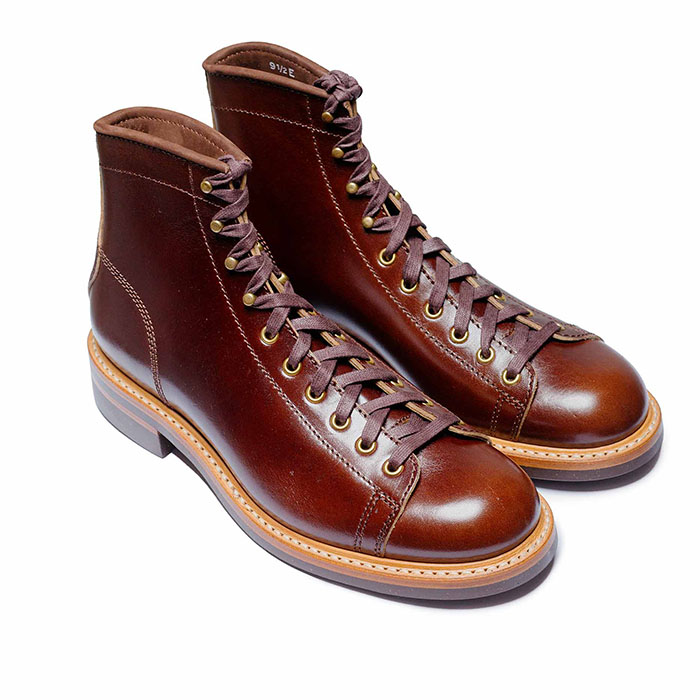 John Lofgren Monkey Boots Shinki Horsebuttt - $1,136 The classic monkey boot silhouette in an incredibly rich Shinki russet horse leather.
 -
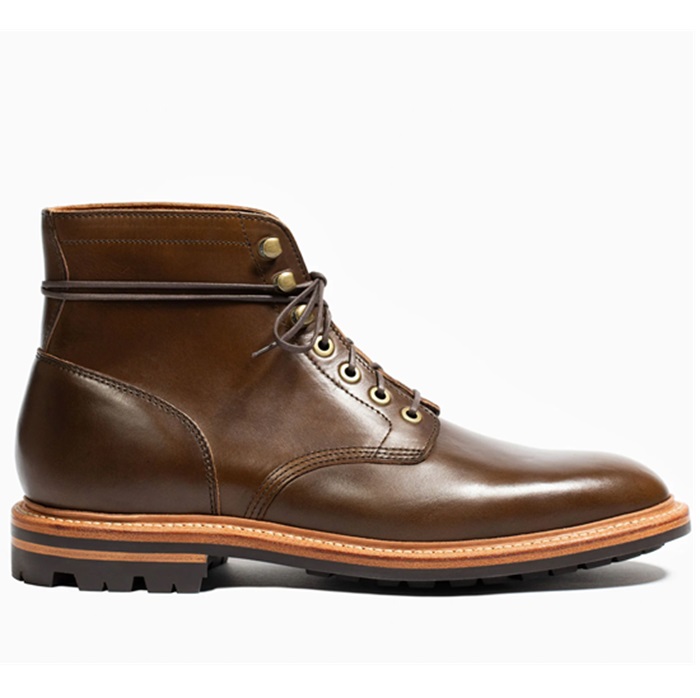 Grant Stone Diesel Boot Dark Olive Chromexcel - $395 Goodyear welted, Horween Chromexcel, classic good looks.
 -
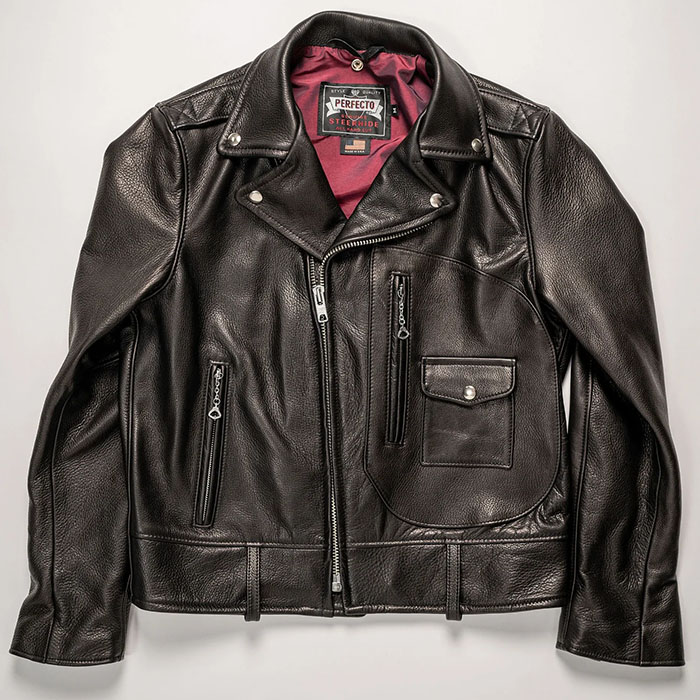 Schott 568 Vandals Jacket - $1,250 The classic Perfecto motorcycle jacket, in a very special limited-edition Schott double rider style.
- Status
- Not open for further replies.
Similar threads
- Replies
- 9
- Views
- 569
- Replies
- 11
- Views
- 1K


