Want to buy or sell something? Check the classifieds
  • The Fedora Lounge is supported in part by commission earning affiliate links sitewide. Please support us by using them. You may learn more here.

What Was The Last Movie You Watched?

Messages
18,301
Location
New York City
hq720.jpg

Woman of Straw (1964) with Sean Connery, Gina Lollobrigida, Ralph Richardson, and Alexander Knox


The best movies draw you in immediately, build to a gripping climax, and end with an emotionally satisfying epilogue. Those are the movies you love. What do you do with the ones that only get some parts of that construct right?

Woman of Straw starts too slowly, builds to a good climax, and then jumps the shark in the epilogue. Its strong cast – including Sean Connery, Gina Lollobrigida, Ralph Richardson, and Alexander Knox – helps, but movies are about stories and characters, not casting.

Richardson plays a tyrannical multimillionaire (when that meant something), who is cruel to his staff, especially to two Black brothers who serve as his factotums. He's also dismissive of his nephew, played by Connery, who acts as a sort of private secretary/business manager for him.

Richardson, in his newly written will, has left Connery only a small amount of his massive fortune. Worse, he taunts Connery over this. Connery, who clearly likes the finer things in life, is none too pleased, but arrogant and selfish himself, he's hardly a sympathetic character.

With Richardson facing a slow terminal illness and unable to keep a nurse – no amount of pay is worth working for an aggressively abusive man – Connery is tasked with finding yet another one, which he does in a middle-aged, comely, and buxom woman played by Lollobrigida.

After too many scenes of Richardson in his English country estate being a jerk to everyone, Connery explains his plan to Lollobrigida: (oversimplified) she's to marry Richardson and, when he dies and she inherits his estate, she's to give him, Connery, one-million pounds.

Finally, the movie picks up steam as we watch an uncertain Lollobrigida and an arrogantly confident Connery manipulate Richardson into marrying her. It’s both not that believable and well done, because sometimes you’re willing to suspend disbelief for the sake of a good cinematic tale.

Act Three – the marriage and Richardson's subsequent death (only a spoiler if you for some insane reason thought the movie wasn't going to turn into an estate battle royale) – is where you're rewarded for sitting through too much repetitive filler.

Now you have death, maybe murder; the police, maybe a double cross; a trial, maybe perjury; and then a post-trial twist that undoes much of the good work built up in Act Three – making this an often engaging movie despite its crawlingly slow start and last-minute fumble.

To tell more is to give the twists away – some of which are good and some of which are ridiculous. The shame is the acting is, overall, outstanding, but in service to a story that needed too much help.

Richardson is excellent as the nasty old man because he imbues him with enough humanity to keep him from becoming a cliché. It's a tough balance to pull off, but Richardson knows exactly when and how to let some decent human feelings and kindness slip out in a believable way.

Connery, showing again he was so much more than Bond, is pitch perfect as the scheming nephew who skillfully deflects blow after blow from his uncle. He looks like Bond in this one – it was just after he made Dr. No – yet he's no complex hero here, just a smooth conman.

Lollobrigida does well, albeit not perfectly, with a difficult role as she has to be a nurse at the same time she's trying to play up to Richardson and respond to Connery's demands. Adding to the complexity, she and Connery begin an affair, while she is trying to come on to Richardson.

The last piece of the puzzle comes in late as Alexander Knox plays the inspector tasked with untangling the old man's death and last will and testament, written, of course, the day he died. In the great tradition of the role of English inspectors, he's calm, unassuming, patient, and whip smart.

All this heavy plotting takes place in a lugubrious and claustrophobic atmosphere despite the wide expanse of the estate. Smartly using tight camera angles and muted hues, director Basil Dearden creates a foreboding atmosphere that makes wealth and luxury look depressing.

Richardson's English estate is so large it feels empty despite being fully furnished – a perfect metaphor for the empty lives these people are living despite their money. The only people who seem truly alive are those who neither live at the estate nor care about Richardson's will.

Beyond the wobbly plot, the movie's other big flaw is the lack of chemistry between Lollobrigida and Connery. The two are supposed to be having a love affair, but all you ever sense is that she despises him. Apparently, they disliked each other intensely on the set.

If you're a fan of faded English wealth, the actors, or the classic English murder mystery, Woman of Straw is worth one watch, despite too many plot flaws and a slow-as-molasses start. It feels a bit like an early Julian Fellowes effort, but without most of the fun stuff.
 

Edward

Bartender
Messages
26,357
Location
London, UK
I want to see the Long Walk coming out next week. It's a King movie.

As a life-long endurance junkie it speaks to me.

Yes, very keen on that myself. The Bachmann novels are among my absolute favourites in King's canon. This one in particularly I'm very excited about. I've long believed it could be filmed and done very well as a postmodern dystopia take on similar territory as (and in a similar format to) The Loneliness of the Long Distance Runner. https://www.imdb.com/title/tt0056194 The rights have been optioned many times before afaik (under King's dollar charge for amateur or college film makers I can't quite recall which but he does do cheaper rights deals for some film makers), however as yet they have come to nothing in terms of an actual film output. Fingers crossed this one works out the trailer looks great!
 

Biff42

One Too Many
Messages
1,100
Yes, very keen on that myself. The Bachmann novels are among my absolute favourites in King's canon. This one in particularly I'm very excited about. I've long believed it could be filmed and done very well as a postmodern dystopia take on similar territory as (and in a similar format to) The Loneliness of the Long Distance Runner. https://www.imdb.com/title/tt0056194 The rights have been optioned many times before afaik (under King's dollar charge for amateur or college film makers I can't quite recall which but he does do cheaper rights deals for some film makers), however as yet they have come to nothing in terms of an actual film output. Fingers crossed this one works out the trailer looks great!
We're in luck because there's also a Running Man remake coming out in November with a decent cast (Glen Powell and Josh Brolin). One of these movies should be good.
 

Edward

Bartender
Messages
26,357
Location
London, UK
We're in luck because there's also a Running Man remake coming out in November with a decent cast (Glen Powell and Josh Brolin). One of these movies should be good.

I have high hopes for that one. I liked the Arnie one, but I hope this one sticks to the book.
 

Worf

I'll Lock Up
Staff member
Bartender
Messages
5,246
Location
Troy, New York, USA
Yes, very keen on that myself. The Bachmann novels are among my absolute favourites in King's canon. This one in particularly I'm very excited about. I've long believed it could be filmed and done very well as a postmodern dystopia take on similar territory as (and in a similar format to) The Loneliness of the Long Distance Runner. https://www.imdb.com/title/tt0056194 The rights have been optioned many times before afaik (under King's dollar charge for amateur or college film makers I can't quite recall which but he does do cheaper rights deals for some film makers), however as yet they have come to nothing in terms of an actual film output. Fingers crossed this one works out the trailer looks great!
Errr I've watched the trailer for "The Long Walk" and I've watched "Loneliness of a Long Distance Runner" in the past. I'm curious as to where you see the connection? The trailer I saw looked like a post-apocalyptic horror not a post war "angry young man" film from Britain. Help me out... here. I never read the King story so I'm lost.

Worf
 
Last edited:
Messages
18,301
Location
New York City
MV5BMjJlNWQ5MTEtZmVmZC00ZTg5LWJlNjUtZmQyMGUwMzY1YzlkXkEyXkFqcGc@._V1_FMjpg_UX1000_.jpg

The Stranger in Between (1952), original title: The Hunted, with Dirk Bogarde, Jon Whiteley, and Kay Walsh


In road-trip movies, the trip is the point. The journey gives the protagonists the opportunity to grow and become better people, even if, as in this one, the larger picture is unfavorable for at least one of the travelers.

In The Stranger in Between – and it takes a bit to put the following together – a man who just murdered his wife's lover, and a six-year-old boy who is fleeing from his abusive adoptive dad form, by chance, an unlikely pair of road-trip buddies.

Dirk Bogarde, never looking more handsome, plays a sailor who returns home from sea to discover his wife has taken a lover. He snaps at the news and kills the lover in a bombed out building in post-war London, where he is accidentally discovered by a six-year-old boy.

Jon Whiteley, a preternaturally gifted child actor, plays that boy. He ran away from home after setting the kitchen curtains on fire. His story takes even longer to be revealed, but as it dribbles out, you understand why he doesn't want to go back home for a guaranteed beating.

It's an intentionally confusing beginning that draws you in, as you initially don't know if Bogarde killed the man or why, nor do you know why this little boy, teddy bear in tow, is alone in this abandoned building.

Bogarde, now on the run from the law, initially takes the kid along only because he can identify him, but then, realizing it's harder to flee the police with a child in tow, he tries to lose the kid. Whiteley, though, is having none of that. So off the two go on their "great" adventure.

Starting in the city with the police very much looking for them, there are several close calls until Bogarde gets them out into the countryside where there's less immediate threat of capture, but food and shelter are harder to come by.

A stop at a boarding house provides the pivotal scene in the movie, as truths are revealed and both characters grow – and grow closer. There's so much good in this sequence that it's hard to single one thing out, but watch for Bogarde telling Whiteley a bed-time story.

Watch also for Kay Walsh playing the kind owner of the boarding house who susses out what is going on. The juxtaposition of her good-hearted mothering of Whiteley and Whiteley's rough on-the-road life with Bogarde is one of the movie's more subtle poignant moments.

Back on the road – rain, cold nights, long hikes, and a few close calls with capture follow as the pair heads for Bogarde's brother's home in the mountains. After an unfriendly welcome there – would you take in your brother wanted for murder, traveling with a strange boy – it's off again.

The climax, no spoilers coming, might not be what you want, but is beautifully filmed – as is the entire movie. Director Charles Crichton shot in that era's gorgeous English black-and-white, letting his camera catch sweeping landscapes, haunting cityscapes, and wonderful small details.

There's more to applaud in this gem of a picture: the police inspector on the case, in the great tradition of British police inspectors, is smart, dedicated, calm in crisis, focused, and relentless. Watch for the scene where he debones Bogarde's licentious wife – you'll be cheering.

Still, it all comes back to Bogarde and Whiteley, as they are the movie and their performances are captivating. Bogarde has you, counterintuitively, rooting for a killer and Whiteley has you praying this little boy gets a better life than he has.

The standard road-trip plot is stretched and pulled a bit here. It's not Thelma and Louise, a powerful movie but a kinda pointless one – nor is it the beloved romcom road trip – it's the "cold-blooded murderer with an abused child he shouldn't have taken along" road-trip movie.

That category doesn't really exist for obvious reasons, but that's what makes the poorly named The Stranger in Between special as the movie took a basic – let's just say it – hackneyed formula and made it fresh and challenging, like good movies do.
 

Biff42

One Too Many
Messages
1,100
Errr I've watched the trailer for "The Long Walk" and I've watched "Loneliness of a Long Distance Runner" in the past. I'm curious as to where you see the connection? The trailer I saw looked like a post-apocalyptic horror not a post war "angry young man" film from Britain. Help me out... here. I never read the King story so I'm lot.

Worf

I can't speak for Edward, but the premise of both films are based around endurance exercise and a powerful figure in each story overseeing each protagonist, the Major in TLW and the Governor in the LOALDR.

The exercise acts as a form of meditation where fleeting thoughts and realizations occur. Though I have not watched LOALDR, in TLW, there are many interactions between the boys on the walk and a central antagonist named Stebbins.
 

Edward

Bartender
Messages
26,357
Location
London, UK
Errr I've watched the trailer for "The Long Walk" and I've watched "Loneliness of a Long Distance Runner" in the past. I'm curious as to where you see the connection? The trailer I saw looked like a post-apocalyptic horror not a post war "angry young man" film from Britain. Help me out... here. I never read the King story so I'm lot.

Worf


That's the unknown from the trailer..

The original novel focuses on a central character and his inner life, with the narrative switching between flashback filling in character backstory and the ongoing narrative in the race; without giving too much away, there's a sort of similarity in the way the lead character in each ultimately refuses to be dictated to by an outside force. The King story does have that element of dystopia, of course - more Hunger Games than LOTLDR. but structurally the two share a common arc imo. It will be interesting to see what the film does with the wider visuals in terms of time period. My recollection of the novel (it's been a few years) is that there was limited detail on the visuals and time period (just a sort of vague "near future dystopia" thing); I hope they keep it fairly timeless a la the Hunger Games. Hard to tell from the trailer exactly how it's played throughout, but I like the look of it from what we have seen.
 

Edward

Bartender
Messages
26,357
Location
London, UK
View attachment 728563
The Stranger in Between (1952), original title: The Hunted, with Dirk Bogarde, Jon Whiteley, and Kay Walsh


In road-trip movies, the trip is the point. The journey gives the protagonists the opportunity to grow and become better people, even if, as in this one, the larger picture is unfavorable for at least one of the travelers.

In The Stranger in Between – and it takes a bit to put the following together – a man who just murdered his wife's lover, and a six-year-old boy who is fleeing from his abusive adoptive dad form, by chance, an unlikely pair of road-trip buddies.

Dirk Bogarde, never looking more handsome, plays a sailor who returns home from sea to discover his wife has taken a lover. He snaps at the news and kills the lover in a bombed out building in post-war London, where he is accidentally discovered by a six-year-old boy.

Jon Whiteley, a preternaturally gifted child actor, plays that boy. He ran away from home after setting the kitchen curtains on fire. His story takes even longer to be revealed, but as it dribbles out, you understand why he doesn't want to go back home for a guaranteed beating.

It's an intentionally confusing beginning that draws you in, as you initially don't know if Bogarde killed the man or why, nor do you know why this little boy, teddy bear in tow, is alone in this abandoned building.

Bogarde, now on the run from the law, initially takes the kid along only because he can identify him, but then, realizing it's harder to flee the police with a child in tow, he tries to lose the kid. Whiteley, though, is having none of that. So off the two go on their "great" adventure.

Starting in the city with the police very much looking for them, there are several close calls until Bogarde gets them out into the countryside where there's less immediate threat of capture, but food and shelter are harder to come by.

A stop at a boarding house provides the pivotal scene in the movie, as truths are revealed and both characters grow – and grow closer. There's so much good in this sequence that it's hard to single one thing out, but watch for Bogarde telling Whiteley a bed-time story.

Watch also for Kay Walsh playing the kind owner of the boarding house who susses out what is going on. The juxtaposition of her good-hearted mothering of Whiteley and Whiteley's rough on-the-road life with Bogarde is one of the movie's more subtle poignant moments.

Back on the road – rain, cold nights, long hikes, and a few close calls with capture follow as the pair heads for Bogarde's brother's home in the mountains. After an unfriendly welcome there – would you take in your brother wanted for murder, traveling with a strange boy – it's off again.

The climax, no spoilers coming, might not be what you want, but is beautifully filmed – as is the entire movie. Director Charles Crichton shot in that era's gorgeous English black-and-white, letting his camera catch sweeping landscapes, haunting cityscapes, and wonderful small details.

There's more to applaud in this gem of a picture: the police inspector on the case, in the great tradition of British police inspectors, is smart, dedicated, calm in crisis, focused, and relentless. Watch for the scene where he debones Bogarde's licentious wife – you'll be cheering.

Still, it all comes back to Bogarde and Whiteley, as they are the movie and their performances are captivating. Bogarde has you, counterintuitively, rooting for a killer and Whiteley has you praying this little boy gets a better life than he has.

The standard road-trip plot is stretched and pulled a bit here. It's not Thelma and Louise, a powerful movie but a kinda pointless one – nor is it the beloved romcom road trip – it's the "cold-blooded murderer with an abused child he shouldn't have taken along" road-trip movie.

That category doesn't really exist for obvious reasons, but that's what makes the poorly named The Stranger in Between special as the movie took a basic – let's just say it – hackneyed formula and made it fresh and challenging, like good movies do.


Sounds interesting. Probably the sort of story that wouldn't, or couldn't, be told today without the story being dominated by even ill-founded accusations of the obvious sort. Sounds worth seeking out.
 
Messages
18,301
Location
New York City
Sounds interesting. Probably the sort of story that wouldn't, or couldn't, be told today without the story being dominated by even ill-founded accusations of the obvious sort. Sounds worth seeking out.

You are spot on. We've been so conditioned to think that way, that it takes a bit to say to yourself, "that is not what is going on here." That era's thinking was so the opposite of our thinking that no one in the movie, not once, questions the relationship between the man and boy in that context, and it is never implied in any way. You'll come to see it as a good relationship, but it takes time for us modern viewers to shift our perspective.
 

Edward

Bartender
Messages
26,357
Location
London, UK
You are spot on. We've been so conditioned to think that way, that it takes a bit to say to yourself, "that is not what is going on here." That era's thinking was so the opposite of our thinking that no one in the movie, not once, questions the relationship between the man and boy in that context, and it is never implied in any way. You'll come to see it as a good relationship, but it takes time for us modern viewers to shift our perspective.

Yip. I mean, I think safeguarding is a good thing and all that, but sometimes I fear we've gone from being rightly vigilant, as a society, to the threat of abuse to being gleefully cynical and seeing it in every corner of entertainment as well. It's a theme that Doubt of course played on very well with those stellar turns by Streep and Hoffman. Folks I know who've seen it are about 50/50 in terms of who thinks he was innocent or guilty, with a notable gender split (the men tended to interpret him as innocent, the women guilty).

I suppose it's another one of those tropes that come along every so often and either have to be worked around or fundamentally change the nature of genre cinema. Like the arrival of the mobile phone for horror, or the internet or GPS location tech in a detective show. If Baz Luhrmann was making Romeo and Juliet now, he'd have to explain away why they didn't just text Romeo the fake death plan details.
 
Messages
12,506
Location
Orange County, California
We're in luck because there's also a Running Man remake coming out in November with a decent cast (Glen Powell and Josh Brolin). One of these movies should be good.

I hope this one will be better than that laughable effort that was released in 1987 with Arnold Strongandbigger. That was truly one of the worst movies I've ever seen.
 

Biff42

One Too Many
Messages
1,100
I hope this one will be better than that laughable effort that was released in 1987 with Arnold Strongandbigger. That was truly one of the worst movies I've ever seen.
I'm a sucker for classic Arnie. I loved the 1987 movie and watched it as a kid.

That said, we all love some movies that were confirmed trash, mostly for nostalgia. Steven King's directorial debut in Maximum Overdrive is another bad movie that I love mainly because I watched it as a kid, too, LOL.
 
Messages
18,301
Location
New York City
MV5BYmYzMmE3NDQtNDQ3ZS00NDQ0LTg5NGYtNTgzY2E0M2VlNDIyXkEyXkFqcGc@._V1_FMjpg_UX519_.jpg

Riptide from 1934 with Norma Shearer, Herbert Marshall, Robert Montgomery, and Mrs. Patrick Campbell


From the silent era into the precode talkies of the early 1930s, Norma Shearer's on-screen brand was that of a soap opera queen, whose relationships and marriages were always being challenged by someone – either she or her partner – wanting or having someone else.

Her movies usually became a "fallout" story – how does everyone deal with the fallout of the affair or suspected affair? The Divorcee (1930) is close to the pinnacle of these efforts while Riptide (1934) feels like a tired attempt to reshuffle the pieces of the formula around a bit.

Still, it is not a bad movie – it has its entertaining moments – but it's not fresh or novel. Here, Shearer plays a Park Avenue party girl who meets a staid English lord, played by Herbert Marshall. It's "opposites attract," but it seems to work as they marry and move to England.

Five years later, their marriage is still solid – until he goes on a business trip, prompting Shearer to join a female friend in the Riviera. There she meets an old New York flame, played by Robert Montgomery, who, with boyish charm masking obnoxious conceit, goes hard after Shearer.

Since Riptide was made on the cusp of enforcement of the Motion Picture Production Code, some of the story is obfuscated, but it's clear – despite Montgomery's efforts and Shearer wavering – nothing happens. The scandal sheets, however, still play it up as an affair.

Upon his return, Marshall tries to hide it, but he is consumed by jealousy and outrage. It is a jealousy and outrage that eventually breaks to the surface and brings their marriage to the brink by dropping Shearer right back into Montgomery's outstretched – umm, uh, we'll say – hands.

Montgomery, like Shearer, is very on-brand on the surface in this one, as his precode career typically involved playing charming but harmless scoundrels who talked women into bed, often followed by him falling in love with them.

Here, though, his character isn't harmless as he has a nasty edge beneath the charm; after all, he's trying to steal a married woman. Marshall is also on-brand in this one, as he often played the stolid, handsome man, but like Montgomery, he too seems angrier than usual.

It's all classic Shearer, though, who quite often played an upper-class bedroom "adventurist." In this one, she flits from continent to continent – from penthouse to country estate – swaddled in furs with servants in tow, making it all seem sophisticated and cosseted.

It's a pretty world, especially for a Depression-era audience to see, yet at its core, it's the age-old story of the fire down below wrecking marriages and lives. Subliminally, it reminded a struggling public that money alone does not make life happy.

Besides the hackneyed-even-for-1934 plot, there's an acrimony stalking several of the narratives that detracts from what is supposed to be the fun of these bedroom dramas. Montgomery, Shearer and Marshall exchange some brutally harsh and bitter dialogue in several unpleasant scenes.

Despite director Edmund Goulding's best efforts to make Riptide fresh and sassy, it has a been-there-done-that-better quality that makes it feel tired and forced. Still, it is a nice time capsule – not of anything real, but of an imagined-by-Hollywood 1930s upper-class world.
 

Worf

I'll Lock Up
Staff member
Bartender
Messages
5,246
Location
Troy, New York, USA
Yip. I mean, I think safeguarding is a good thing and all that, but sometimes I fear we've gone from being rightly vigilant, as a society, to the threat of abuse to being gleefully cynical and seeing it in every corner of entertainment as well. It's a theme that Doubt of course played on very well with those stellar turns by Streep and Hoffman. Folks I know who've seen it are about 50/50 in terms of who thinks he was innocent or guilty, with a notable gender split (the men tended to interpret him as innocent, the women guilty).

I suppose it's another one of those tropes that come along every so often and either have to be worked around or fundamentally change the nature of genre cinema. Like the arrival of the mobile phone for horror, or the internet or GPS location tech in a detective show. If Baz Luhrmann was making Romeo and Juliet now, he'd have to explain away why they didn't just text Romeo the fake death plan details.
As for Doubt, we felt he was guilty through and through. Puddin' wasn't/isn't Catholic but she went to Catholic school in NYC and she often talks of things she saw and experienced there. She was most struck by the extreme poverty that some Nuns fell into once they were too old to serve. Her and her mother took care of one Nun until her death in the 70's.

Worf
 

Doctor Strange

I'll Lock Up
Messages
5,284
Location
Hudson Valley, NY
Re Doubt... Author/director John Patrick Shanley designed his original four-character/one-set play specifically so that the audience would argue about Father Flynn's guilt after leaving the theatre, and that carries into his film adaptation. For me, I adore the film, but I've been happy to let the mystery be and not really decide one way or the other. I tend to flip-flop on each viewing.

TheSmallBackRoom1.jpg

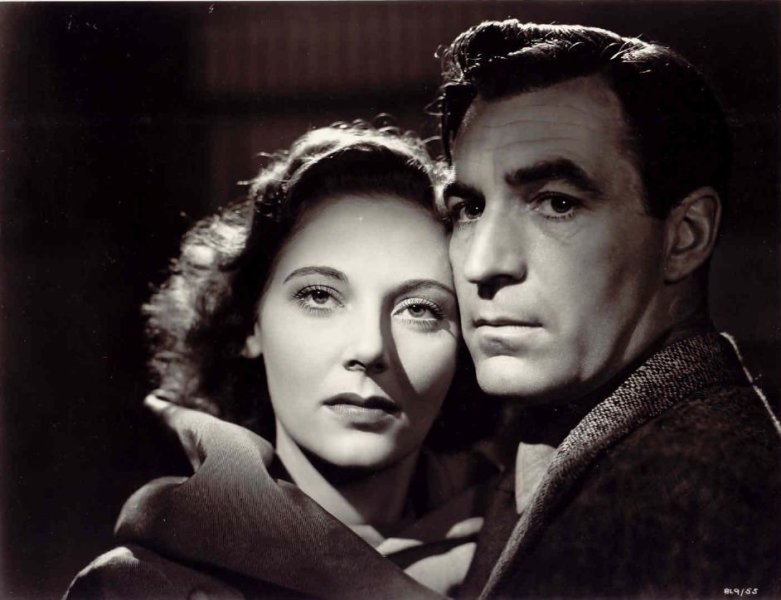
I finally watched The Small Back Room by Powell & Pressburger. Longtime readers will know that I'm a ******** P&P fan, and it's a rare treat for me to see one of their films for the first time after sixty years as a film buff. I had mixed feelings about this one, but it's as fascinating as their other films:

Pros: Some of the most gorgeous b/w cinematography I've ever seen, I was blown away by the film's intense, painterly compositions and its loving lighting on Kathleen Byron. As usual for Powell & Pressburger, the major characters are all distinct, complex individuals who don't fall into common caricatures, and the settings and situations are uncommon and surprising (e.g., a scene shot at Stonehenge).

The in-your-face treatment of lead character David Farrar's postwar trauma - his barely controlled alcoholism, self-pity over his prosthetic foot, reticence to take political control of his team, and inability to fully accept Byron's love and support - was groundbreaking when the film was made. It looks forward to the flawed heroes and antiheroes of later decades. And as with all P&P films, there are brilliant set pieces: Farrar's giant booze-bottle hallucination, the nail-biting bomb defusing sequence on Chesil Beach, the scene on the crowded tube train where Farrar and Byron are together but not together that's suffused with emotion.

Cons: As played, I found Farrar a difficult character to warm to, and Byron a bit too idealized and wonderful to believe. Throughout, the film has significant storytelling and pacing issues, and I don't think it ever quite found a comfortable rhythm or decided what it's main story was. It doesn't have the inevitable logic of its story seen in P&P's full-on masterpieces like A Matter of Life and Death, Black Narcissus, and The Red Shoes (note that they made these three incredible films in a row! right before The Small Back Room).

So... For me as of now, The Small Back Room is not quite top Powell & Pressburger, but it sits comfortably atop their near-masterpiece second-tier films like 49th Parallel, A Canterbury Tale, and The Tales of Hoffmann.
 
Messages
18,301
Location
New York City
MV5BNDYzZWNmOWUtNGUxZi00ZGM2LWI3OWYtMjNiMWM1MDc4MjE0XkEyXkFqcGc@._V1_.jpg

Cheer Boys,Cheer (1939) with Nova Pilbeam, Peter Coke, Edmund Gwenn, and Jimmy O'Dea


A favorite Hallmark plot today is the small family business – run for the love of its customers and employees, with a focus on quality and community, not profit – being threatened with crushing competition or a buyout from a large, impersonal, singularly profit-focused conglomerate.

Hallmark, being Hallmark, will wrap that boilerplate story around a romance, usually between the son of the owner of one of the companies and the daughter of the owner of the other. After a meet cute, they start to fall for each other, until their family-business rivalry pulls them apart.

The rest of the movie is the couple and businesses fighting as the child of the mean company slowly realizes that he or she needs to find a solution that lets the small, nice company survive because it's the right thing to do and it's the only way he or she can get his or her beloved back.

That is also the plot of 1939's Cheer Boys Cheer. Besides dating the formula at least as far back as the 1930s, Cheer Boys Cheer also shows that with acting talent and a professional studio involved, the movie can be a fun romantic farce, even if a bit cringeworthy.

Edmund Gwenn plays the head of Ironside Brewery, the mean company bent on buying up all the small ones. His son, played by Peter Coke, is on board until Coke meets the daughter, played by Nova Pilbeam, of the owner of their latest target, Greenleaf Brewery.

In the movie's best sequence, Coke and Pilbeam have a slow-rolling meet cute as fast-driving Pilbeam keeps smacking her car into Coke's. He responds by swatting her on the bottom, which sounds wrong (and is), but darn it if Pilbeam doesn't turn it into something funny and ***y.

Pay attention as Pilbeam lets you know – insofar as she could sneak it by the censors – that she enjoyed it. That's the kickoff to their relationship, which just like a Hallmark one, also starts off with him fibbing about who he is when he learns that she hates Ironside's.

From there, the plot is straight out of Hallmark, but decades earlier. The firms fight; the little one seems doomed; Coke tries to rescue it; Gwenn tries to crush it; Coke's fib is exposed, and Pilbeam gets mad at him; and then a deus ex machina sorts everything out nicely at the end.

There's a wonderful British charm and quirkiness that enlivens the entire effort. The Greenleaf brewery is run almost for fun by a collection of lovably oddball employees, while Ironsides is run with ruthless and scientific efficiency by a cold-hearted board.

Being just before World War II, the movie makes an oblique comparison of Ironsides to the Germany's WWII-era leaderships – Gwenn is seen reading Mein Kampf – but thankfully never really follows through as the point of these movies is to show the big meanies are really okay guys once they see the light.

Pilbeam and Greenleaf's master brewer, played by Jimmy O'Dea, give the movie the most spark. Pilbeam just lights up the screen as the camera loves her and O'Dea was born to play a likable and bumbling/confused character actor – think England's Frank McHugh.

Peter Coke is fine as the male romantic interest, but like Hallmark today, it's usually the woman who gives the romance its spark. Surprisingly, the very talented Edmund Gwenn is a bit off here – playing a ruthless businessman doesn't fit his usual kind-hearted screen persona.

British cinema in Cheer Boys Cheer shows again what a small budget with talent around it can do. While the cheap sets won't fool anyone, the excellent cast, playful script, and smart directing turn this screwballish romcom into lighthearted fun.

When it gets it right – and it does sometimes – Hallmark is equally successful today with the same story, which only makes it more fun to see one of the progenitors of this perennial TV-movie plot. Plus, you could simply watch it for the wonderfully named Nova Pilbeam.

MV5BODFjMmZkYjAtMzY5ZC00Y2I0LWI2MDQtNWNjMDhiNDUzMzhlXkEyXkFqcGc@._V1_.jpg
 
Last edited:

Biff42

One Too Many
Messages
1,100
That's part of the problem right there. I was 26 years old when I saw The Running Man in '87; no longer a kid, and thought it was just...dumb.
I was in my early 20s when the Harry Potter books came out, and that never resonated with me. My family thinks I'm crazy, but I was more into cars and girls at that time in my life, and wizards weren't either of those.

Sometimes timing is everything.
 
Messages
12,506
Location
Orange County, California
I was in my early 20s when the Harry Potter books came out, and that never resonated with me.

The first Harry Potter book was released a month before my 36th birthday. With advertising and all of the promotional machines at work I was well aware of it, but the subject matter did nothing to attract my attention. Besides, at that time I was still working my way through Edgar Rice Burroughs' 24 Tarzan novels. I eventually made my way through all of them, and I'm glad I did, but I found Burrough's writing uneven at times as though he himself had grown tired of the subject.
 

Forum statistics

Threads
114,750
Messages
3,181,575
Members
58,600
Latest member
kimberly8
Top