PeterHuang
Familiar Face
- Messages
- 63
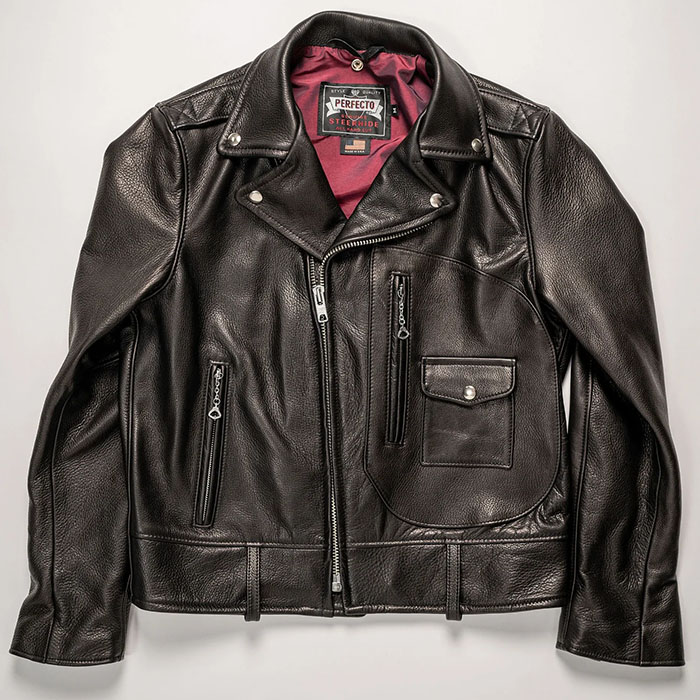
I am ready to splurge on a grail leather jacket (used is fine, just new to me), and I am looking in the 3 to 4k range. The one that keeps haunting me is the Freewheelers Mulholland, mostly because of pure FOMO if I am honest. So I would love to hear from people who actually own or have handled Freewheelers. Is it really worth that kind of money, or is it just another high end piece sitting beside Himel, Field Leathers, Thedi, Lost Worlds, Real McCoy’s, Rainbow Country, and the rest? Basically, am I buying a masterpiece or just an expensive piece of horsehide?
Then there is the dye. Most Shinki horsehide is aniline drum dyed, but Freewheelers has that famous Rude Black which is dyed gray instead of blue underneath. That sounds cool, but I wonder if it actually changes how the jacket fades or if it is more of a bragging detail.
And about the finishing, they say it is all done in house, but does anyone really know how? To get that patina magic later, they would have to layer pigment over the base color. Maybe they have their own recipe that makes it wear more beautifully. I assume they seal it with oil or wax instead of resin or PU so it stays natural and soft.
That said, when design becomes the main reason for the price, it starts to feel more like paying for a designer label. And that is where I hesitate, because a good made to order maker could probably build something with a similar look and vibe.
Leather
Let’s start with the leather. What actually makes Freewheelers horsehide special? I read on @dudewuttheheck’s blog that they use proprietary hides from Shinki and do the finishing in house. But how much difference does that really make in durability or aging? From what I understand, they probably pick better rawhides, thicker and cleaner ones with fewer scars. The tanning process itself should still be pit vegetable like any other Shinki, so I am not sure how “proprietary” it can really get unless they are using some secret Japanese veggie potion in the pits.Then there is the dye. Most Shinki horsehide is aniline drum dyed, but Freewheelers has that famous Rude Black which is dyed gray instead of blue underneath. That sounds cool, but I wonder if it actually changes how the jacket fades or if it is more of a bragging detail.
And about the finishing, they say it is all done in house, but does anyone really know how? To get that patina magic later, they would have to layer pigment over the base color. Maybe they have their own recipe that makes it wear more beautifully. I assume they seal it with oil or wax instead of resin or PU so it stays natural and soft.
Construction
Everyone praises Freewheelers for flawless stitching and high SPI. But honestly, my Real McCoy’s J24 and A2 are also super clean. So while that is impressive, it might not be something that sets them far apart from other top Japanese makers.Hardware and lining
People rarely talk about this part. Do they do anything special with the hardware or the lining? Or is it just solid, period correct stuff like everyone else uses?Design
Now this is probably where Freewheelers really shines. Their jackets carry a strong heritage vibe but do not feel trapped in the past. The founder used to work at Real McCoy’s and left because he was tired of copying old patterns stitch for stitch. Freewheelers became his way to take that heritage spirit and make it cooler and more personal. I have to admit, their designs might be the best in Japan, sharp and full of character.That said, when design becomes the main reason for the price, it starts to feel more like paying for a designer label. And that is where I hesitate, because a good made to order maker could probably build something with a similar look and vibe.