Bfd70
I'll Lock Up
- Messages
- 5,430
- Location
- Traverse city
Wow. That’s the most detailed shakedown I’ve read on TFL.


some people assume that measured jacket size (armpit to pit seams) is generally 2" greater per side than the lable size. for example, a jacket that actually measures 22/44" is a size 42. IMHO, if a jacket measure is the same as the wearer's actual chest measurement, it would be too tight.PART 3:
-- --
Finally, the measurements and "fit".
As I said before, the sizing and measurements of both jackets are relatively the same between the two. But there are two noticeable differences... The collar length being one (the Excelled's collar length was just over 19 inches, and the Cockpit's collar length is just over 21 inches), the second is arm length... The Excelled's sleeve length (measured from shoulder seam to end of leather) is 23 inches, while the Cockpit's sleeve length is one inch longer at 24 inches.
As for the rest, here's the measurements for each:
Excelled G-1 (Size 40R)
Chest (laid flat, zipped up, and measured from pit-to-pit): 22 inches (so it's ACTUALLY a size 44. Remember, you STILL get an additional 4 inches on TOP of that with the extension of the pleated back 2 inches on either side...)
Sleeve Length (from shoulder seem to end of leather, NOT including knit): 23 inches
Waist (laid flat, zipped up, and measured from side to side across waist line): 20 inches (I'd much rather prefer it to be 19 or even 18 inches across, but it's 20...)
Shoulder Width (measured from shoulder seam to shoulder seam straight across back): 19 inches
Back Length (measured from collar seam straight down back to end of leather, NOT including knit): 22 inches
Cockpit G-1 (Size 40R)
Chest (laid flat, zipped up, and measured from pit-to-pit): 22 inches (so it's ACTUALLY a size 44. Remember, you STILL get an additional 4 inches on TOP of that with the extension of the pleated back 2 inches on either side...)
Sleeve Length (from shoulder seem to end of leather, NOT including knit): 24 inches
Waist (laid flat, zipped up, and measured from side to side across waist line): 20 inches (I'd much rather prefer it to be 19 or even 18 inches across, but it's 20...)
Shoulder Width (measured from shoulder seam to shoulder seam straight across back): 18.5 inches
Back Length (measured from collar seam straight down back to end of leather, NOT including knit): 21.5 inches (might actually be 22 inches, but need to wait until waist band relaxes for a more accurate measurement).
-- --
Pictures:
Chest:
View attachment 80821
View attachment 80822
Waist:
View attachment 80823
View attachment 80824
Sleeve:
View attachment 80825
View attachment 80826
Shoulder:
View attachment 80827
View attachment 80828
Back:
View attachment 80829
View attachment 80830
To be continued in Part 4
some people assume that measured jacket size (armpit to pit seams) is generally 2" greater per side than the lable size. for example, a jacket that actually measures 22/44" is a size 42. IMHO, if a jacket measure is the same as the wearer's actual chest measurement, it would be too tight.
some people assume that measured jacket size (armpit to pit seams) is generally 2" greater per side than the lable size. for example, a jacket that actually measures 22/44" is a size 42. IMHO, if a jacket measure is the same as the wearer's actual chest measurement, it would be too tight.

the jacket comparison in this thread is very insightful
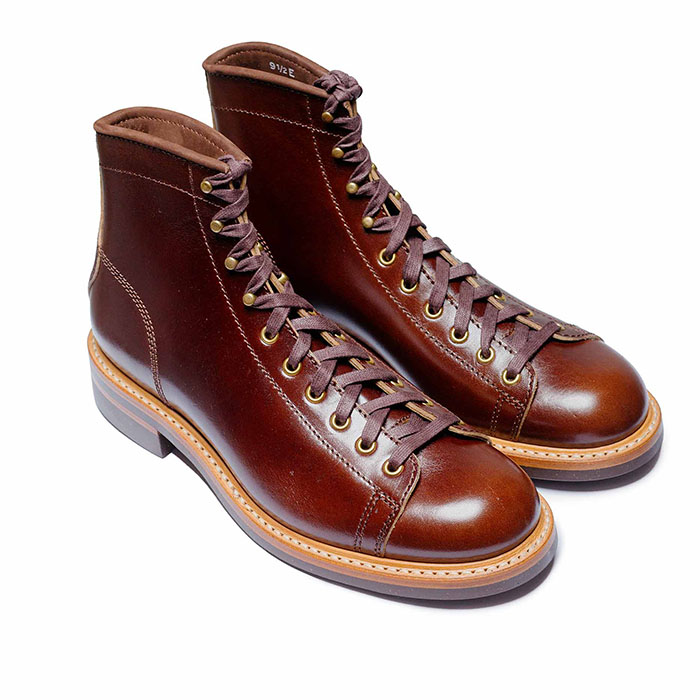 John Lofgren Monkey Boots Shinki Horsebuttt - $1,136 The classic monkey boot silhouette in an incredibly rich Shinki russet horse leather.
 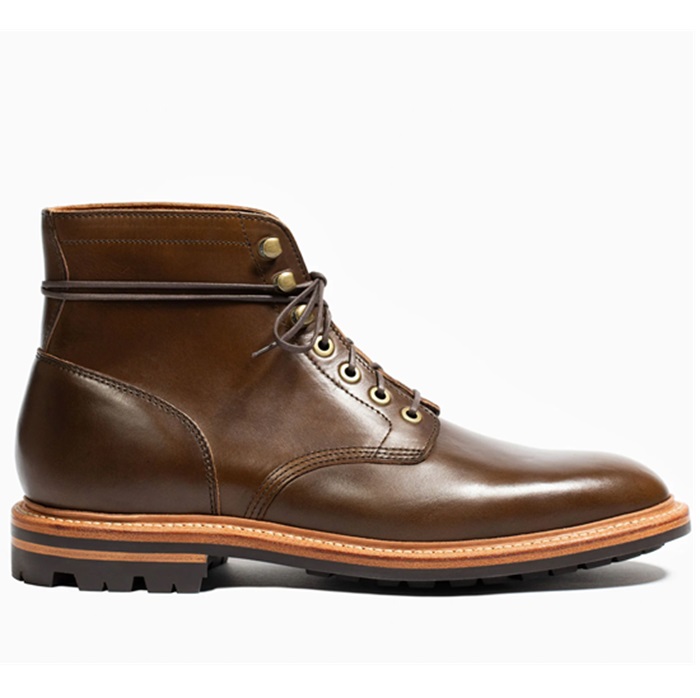 Grant Stone Diesel Boot Dark Olive Chromexcel - $395 Goodyear welted, Horween Chromexcel, classic good looks.
 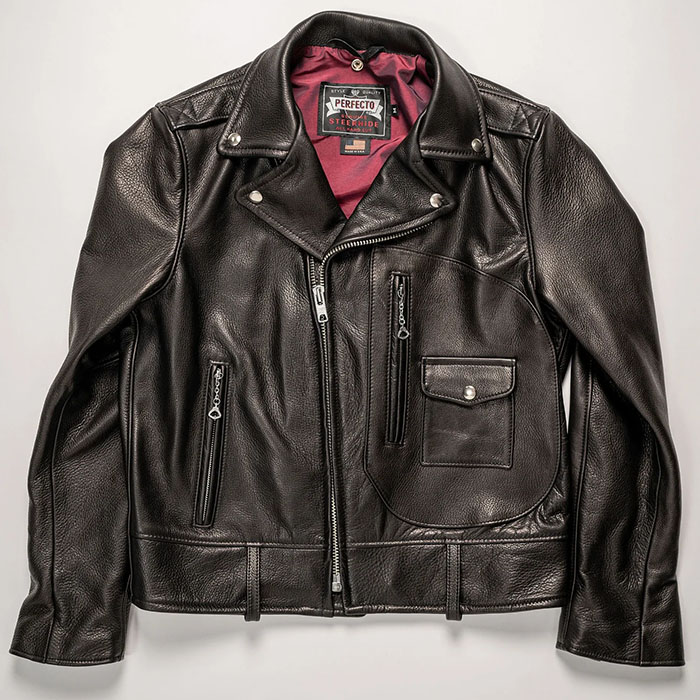 Schott 568 Vandals Jacket - $1,250 The classic Perfecto motorcycle jacket, in a very special limited-edition Schott double rider style.

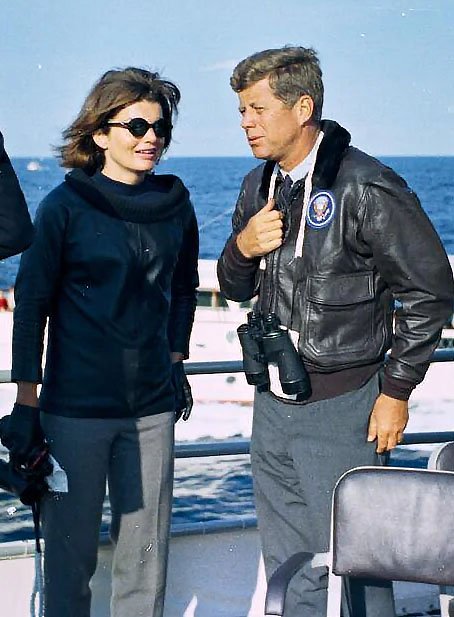
about the pockets of the cockpit being inaccurate...one of JFK's 2 govt issued G-1s shown here is that very style. not the most prevalent pocket style, but they were made (with the more cut off bottom corner and slightly smaller pocket). Kennedy had two of them, not sure if this is the Foster or Ralph Edwards, but both were actual govt made from the govt contract.Ok, so I'd like to start off this thread with a simple notice... This is only a comparison between two difference G-1 Jackets here. I'm NOT trying to suggest one is better than another, nor that one is more "authentic" than the other (although one is an actual issued jacket that was indeed issued to me at NAS Pensacola, FL back in 2002, while the other is NOT an issued jacket at all). Again, this is merely a comparison. It can be used for people to base personal decisions from, and likewise, I'll be injecting a few personal opinions of my own. Moving on...
I - like some others on this forum - am very well versed in flight jackets. I was literally born and raised in the US military to a family with a history in military aviation. When I was old enough, I too joined and entered the world of aviation. I admired my fathers G-1 leather flight jacket growing up as the symbol of pride it was, and practically living with the squadrons (as the 1980's was practically the golden era of the modern US military), all the guys wore their jackets on a regular and routine basis. Taking my first flight in an aircraft at the age of three, and the first I can actually remember a few years later, I was hooked on the history of it all... thus I grew to enjoy learning of the history of flight clothing on my own.
The G-1 (originally the M422, then the "A", then the AN6552, then the ANJ3A, then the legendary 55J14 of the lat 40's) has become the coveted hallmark of exceptionalism in the world of aviation, and is treasured and coveted by those who earn them, perhaps more so often than the very wings first pinned upon their chest (regardless of gold or silver. Mine started off gold, then after changing branches years later, I was awarded silver ones and only allowed to wear those from then on). However, alas, times change, and with it, the general "look and feel" and "style" of the make of these jackets has changed too (for better or worse is often subjective, and sometimes argumentatively a statement of fact).
So to end this introduction, I'd start by arguing that there exist pro's and con's to both these modern era productions... So let's begin...
-- --
PART 1
-- --
Pictured below are two modern G-1 Flight Jackets, Spec: MIL-J-7823E (AS)
The one on the left is a brand new Cockpit USA Mil-Spec G-1, Color: Brown (Seal), Size: 40R, Leather: Goatskin, Collar: Real Mouton, Zipper: Brass
The one on the right is my USN 2002 issued DSCP (Defense Supply Center Philadelphia, now DLA) Excelled Sheepskin and Leather G-1, Color: Brown (Seal), Size: 40R, Leather: Cowhide (with Goatskin impression), Collar: Synthetic, Zipper: Brass
View attachment 80791
For all intensive purposes, these jackets are a LOT alike. But before we get to the similarities, let's do a side-by-side comparison between the two. I first laid them both down flat and zipped them up.
View attachment 80792
The very first thing that stuck out to me was the slight difference in shade of color. My Excelled jacket is a slightly lighter shade of Seal Brown than the Cockpit. Now... this could be a difference in dye color used, or it could simply be a lighter shade after years of wear, I can't say for certain, but it's only really noticeable in direct sunlight. Either way, neither color shade is "wrong", and in all honesty, my fathers jacket is a VERY light shade of brown with a jet-black synthetic collar (issued in the 70's), and yet to me, some of the best looking G-1's I've ever seen throughout my life were very dark seal brown with lighter sun-bleached, blond collars... So it's up to you to decide what you like better really...
View attachment 80793
Looking further down the sleeves to the cuffs and you can notice a very distinguishing difference in leather. On the left is the Excelled. It is made of Cowhide with a "Goatskin" press to give it a "pebble grain" look... This jacket was issued to me in 2002... So it was probably made in maybe 2001 and stocked until handed to me. I've also worn this jacket regularly over the years... On the flight line, while flying in helicopters and fixed-wing aircraft alike, and yes, even on a few 1000+ mile-long motorcycle trips... This jacket SHOULD look broken in like the BRAND NEW Cockpit jacket on the right, which is made of actual Goatskin...
View attachment 80794
Now I will say that the knits are both the same for each jacket. The only difference between the two is time. The knits on my Excelled (left) once looked exactly like the knits on the new Cockpit (right), and over the years they loosened up perfectly - exactly the way I like them to both look and feel... However, there is a noticeable difference in stitching as you can see. Not in stitch spacing (so many per inch, quality, and uniformity are the same), but in placement.
Next comes something of a massive debate across G-1 historians and lovers alike...
View attachment 80797
Take a look at the Excelled above... See that stitch line that cuts straight across from the waist band over to the zipper? It is typical of nearly every historical G-1 issued from the earliest days right through to the late 80's, and then again from the late 90's till today.... Some would argue it is one of several tell-tale signs of a REAL "G-1". In the leather communities, it would also count as a sign of REAL "leather" (any time you find large swaths of "leather" without any sewing, it's more often than not fake. Real leather comes from animals, duh, and each piece is only so big. Think about it... Also, now is a good time to note the placement of the outer pockets on the issued Excelled are not the same. The right side pocket was actually sewn just a bit higher up the body than the left.). This was actually designated in the manufacturing requirements the Navy issued to makers. The body was made of separate panels of leather, and then the pieces that extended down to the waist to accommodate the zipper were added. The two pieces of leather joined together results in this line, but look now at the Cockpit below...
View attachment 80798
Now, I'm NOT going to suggest that the Cockpit jacket is not actually made of real goatskin, but instead that the absence of the line doesn't necessarily disqualify the jacket as a "real" G-1 either. In fact, it was around the late 80's to early 90's when Cooper Sportswear (Cooper USA, now no longer in business) was awarded a single contract by the Navy that this "one-piece" style popped up for the first time. Yes, these were issued then too, so some issued jackets of that early 90's era with this style were indeed walking and flying around in uniform. Today, issued jackets have returned to the same style as previous, but also today, there's many companies who produce "mil-spec" G-1's (as much as I purely detest and despise that term in civilian marketing... "mil-spec"... ohhhh how I hate that term and it's pure ignorance...) of the single piece design like above. US Wings is another good example, though I'm not fond of their massively oversized - fat-man's overcoat - cuts...
And since I brought up the pockets in passing note earlier... Let's move on to the pockets, shall we?
With the Excelled on the left and the Cockpit on the right, I would make the argument that the Excelled most certainly got the G-1 pockets "correct" and the Cockpit missed the mark...
View attachment 80800
Besides the notable size difference (remember both these jackets are the same size and same measurements too, but we'll get to that), the shape is also different. The typical "G-1" pocket shape is large and squared, with minimalist diagonally cut corners, placed up off the waste band seam but still very low on the body (usually within an inch of the waist band seam), and with a gracefully curved flap... Cockpit seemed to interpret this as "whatever, we'll do what we want!" opportunity... The pocket is significantly smaller in size, seems to be floating up and away from the waist, the flap is quite square, and the corners are comically over-embellished to say the least... This is perhaps my least favorite thing about this jacket, and I'd love to give the designer a piece of my mind for thinking this was a good idea...
Next up, the wind flap...
One of those "marks" of a true, issued G-1, is the storm flap. Now, there's not really a "standard" when it comes to this thing, but there are indeed preferences! I prefer the "USN" punch to be the vertical style "punch" rather than the horizontal style "drill". Here's my Excelled:
View attachment 80803
And here's the Cockpit:
View attachment 80804
The Excelled is the perfect example of how it should be done in my mind. The "USN" is punched into the leather, centered (from top to bottom), and aligned vertically. To me, this is "proper", however, I have seen a few older issued examples of "drilled" styles like the Cockpit example. The thing I don't like about the Cockpit example is that they didn't even bother to "center" it. The "USN" drill holes are further up near the top half of the wind flap. I don't know if this is by design or not, but it's certainly not up to the de-facto standard of most makers...
To be continued in Part 2...