Want to buy or sell something? Check the classifieds
  • The Fedora Lounge is supported in part by commission earning affiliate links sitewide. Please support us by using them. You may learn more here.

Toppers Unite

Messages
19,926
Location
Nederland
The main attraction was this one and it's something I haven't seen before.
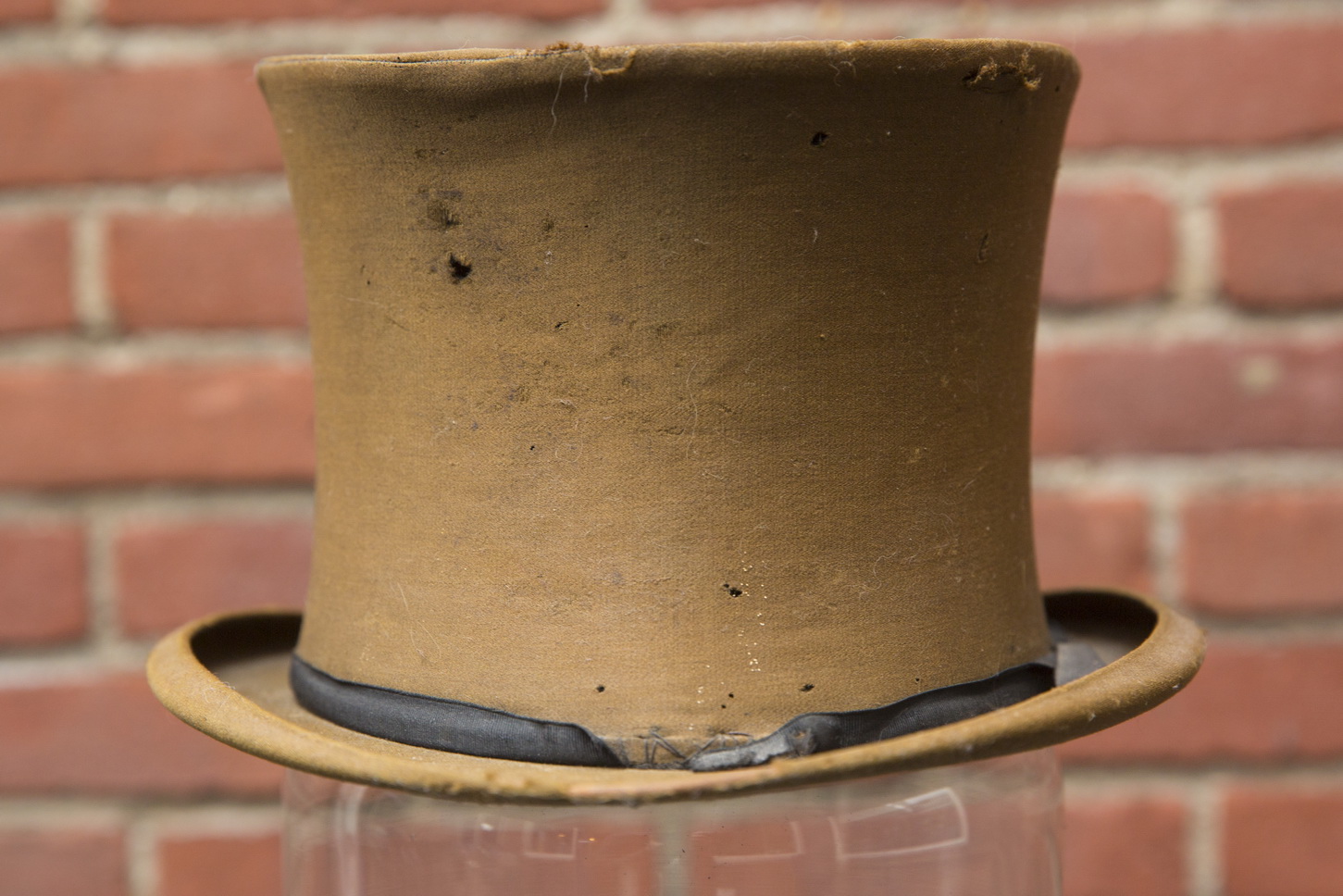
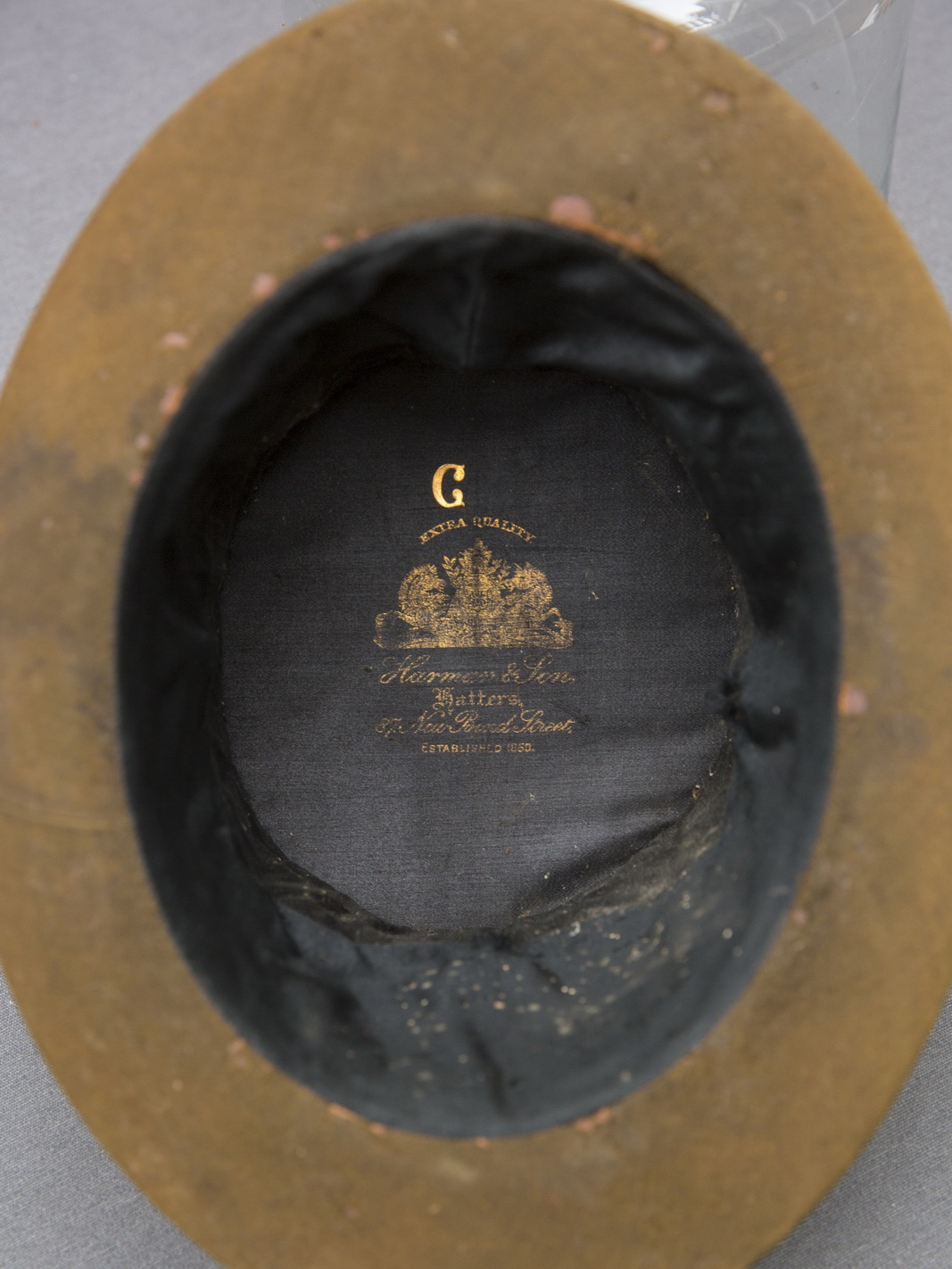
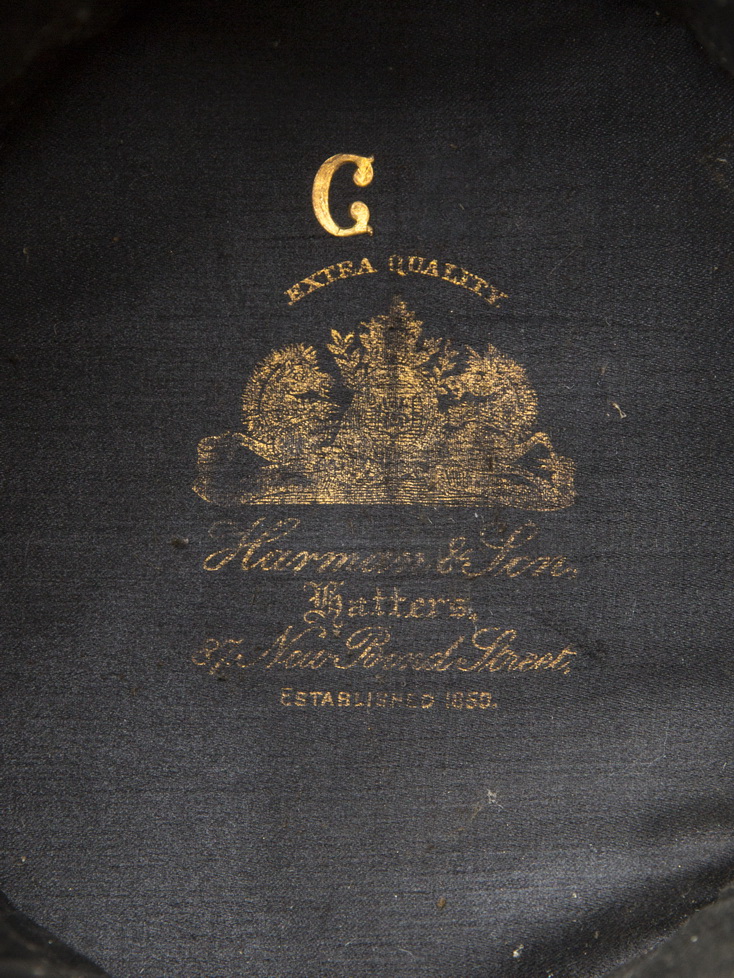
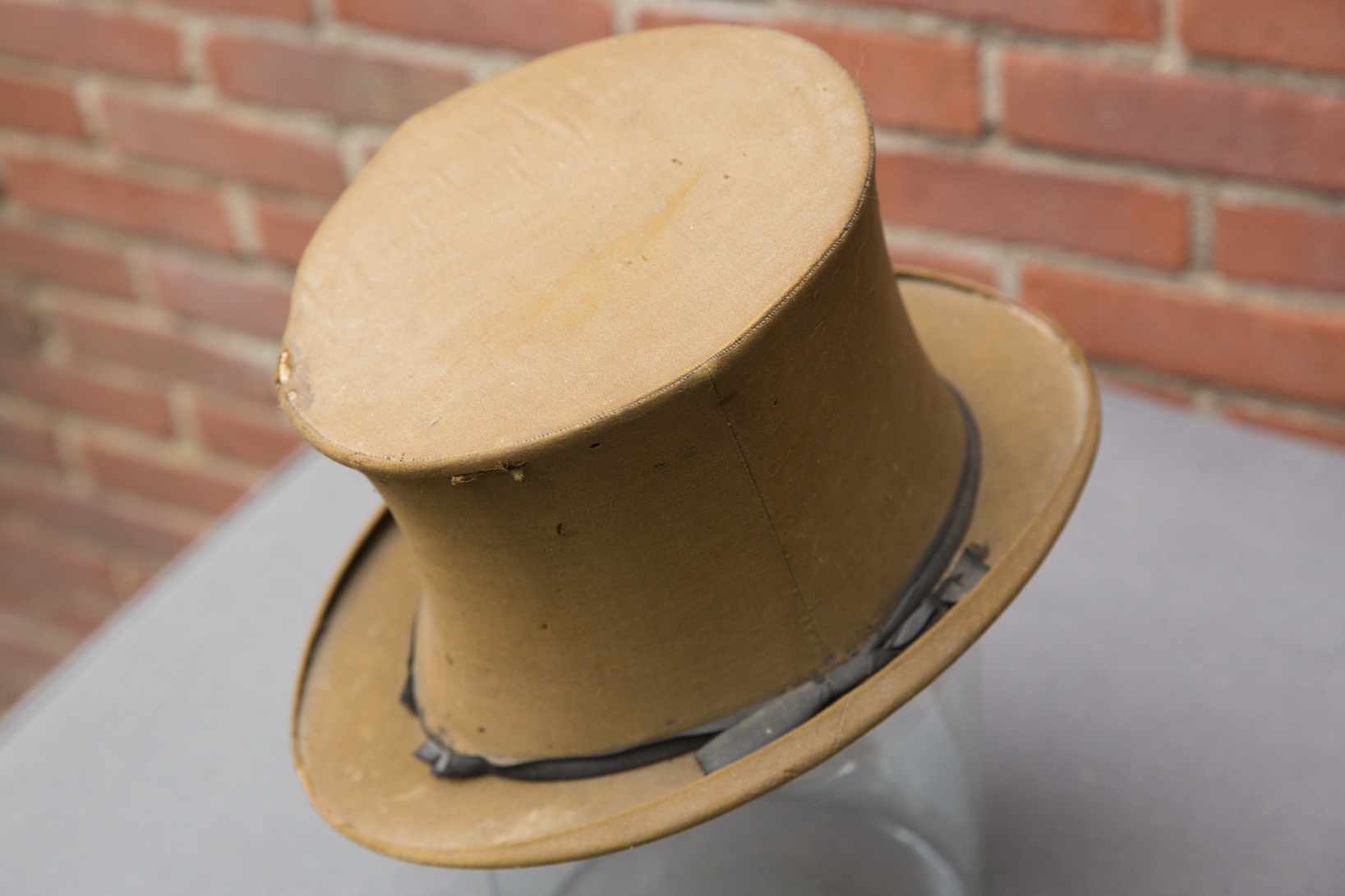
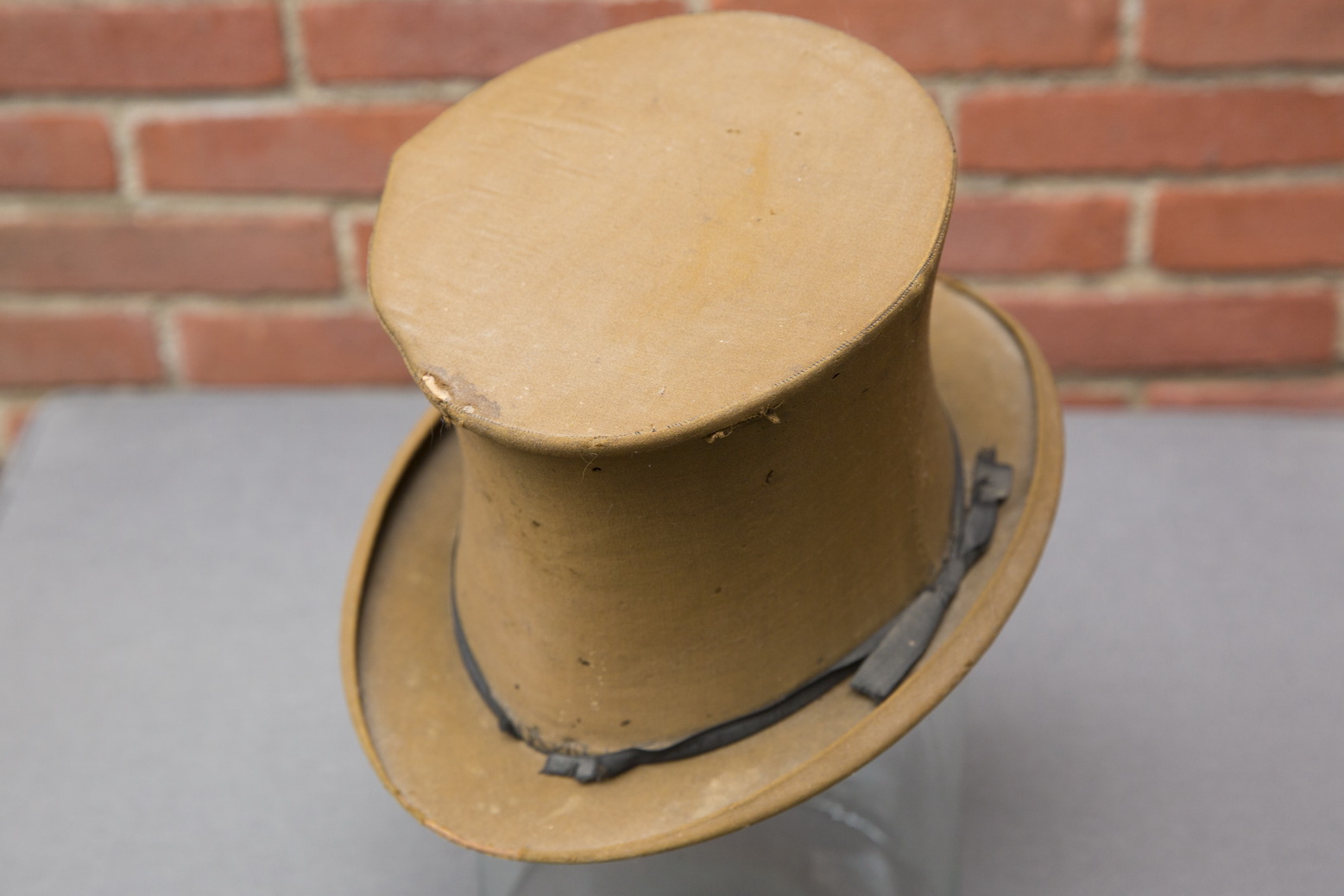
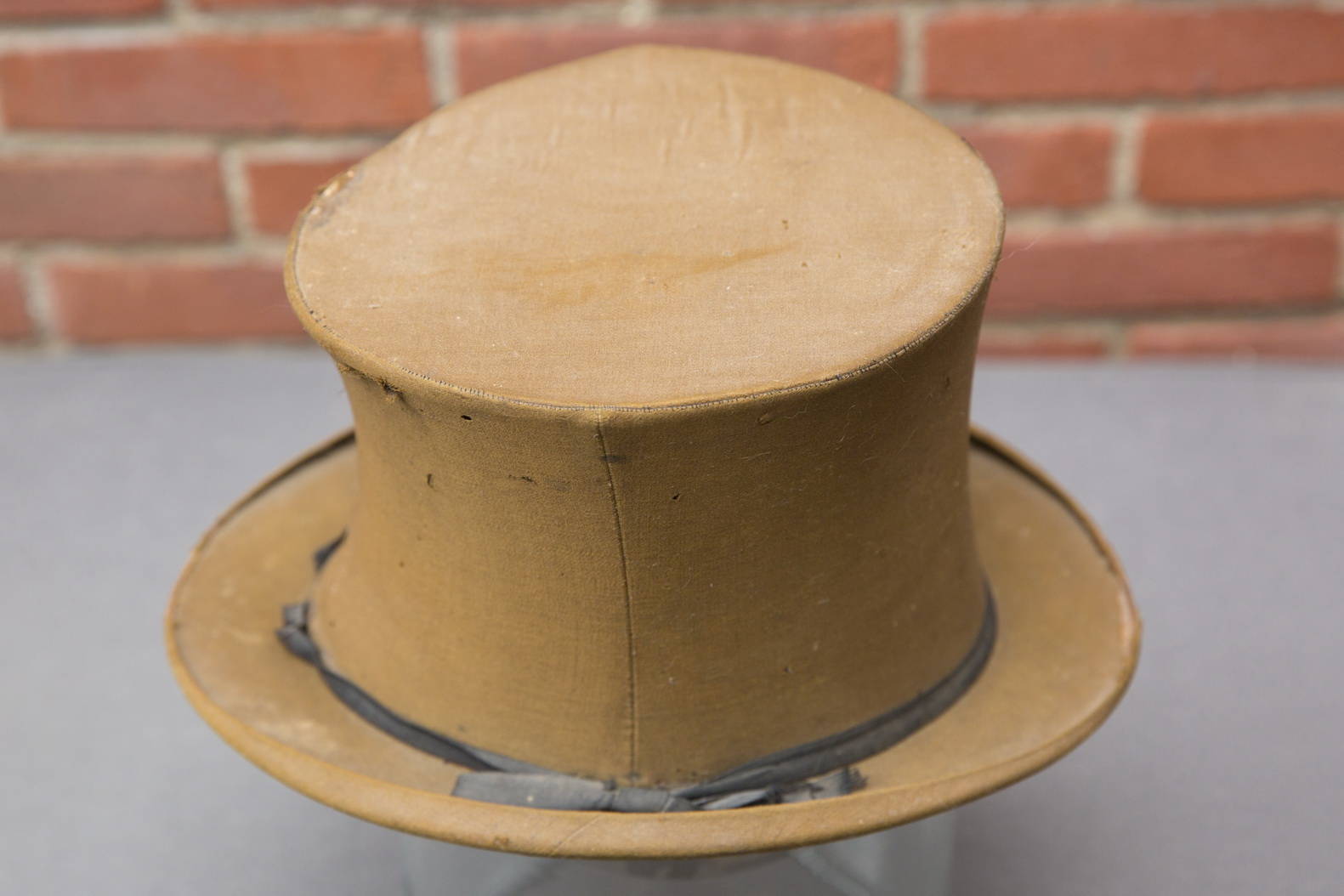
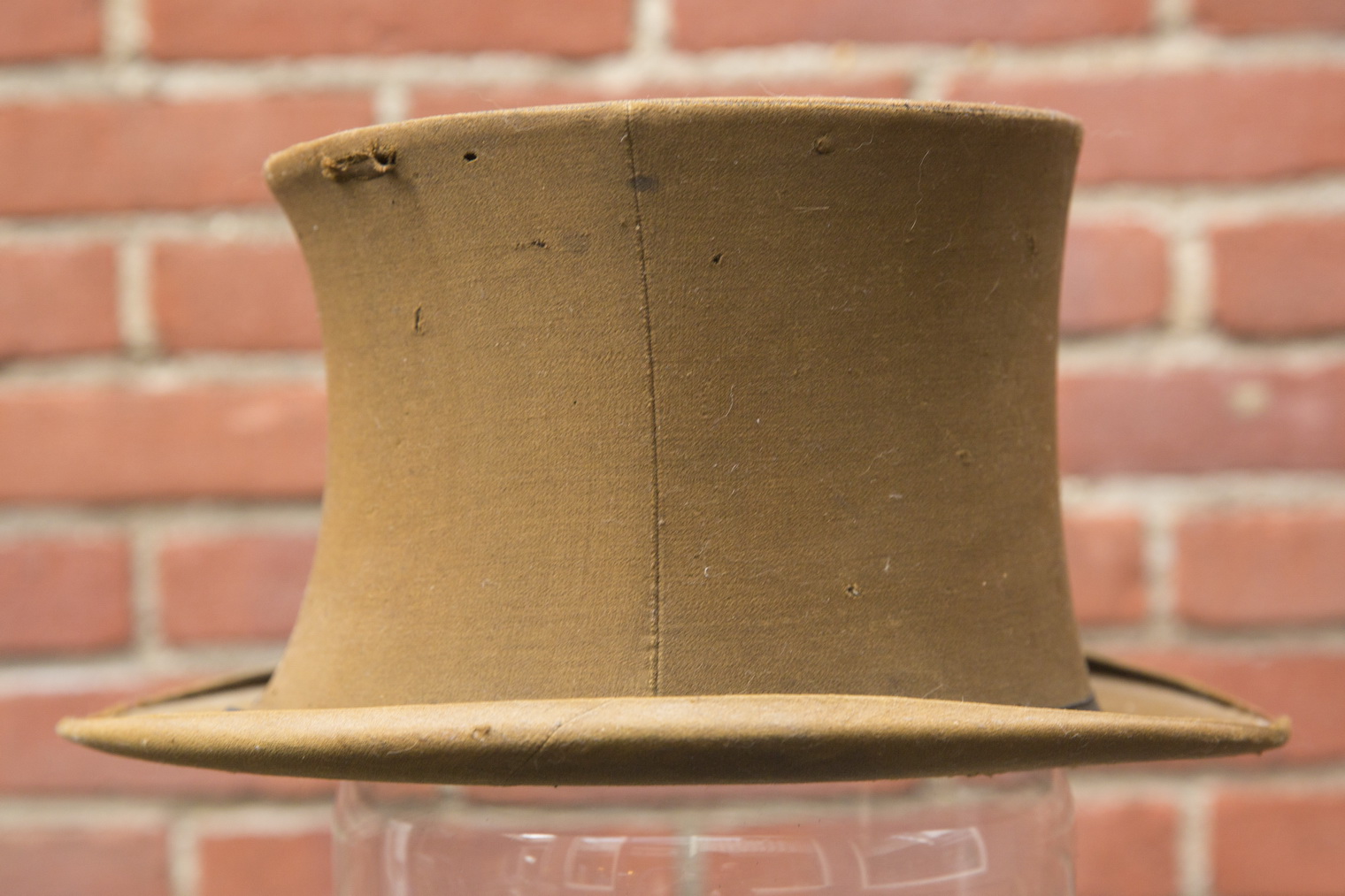
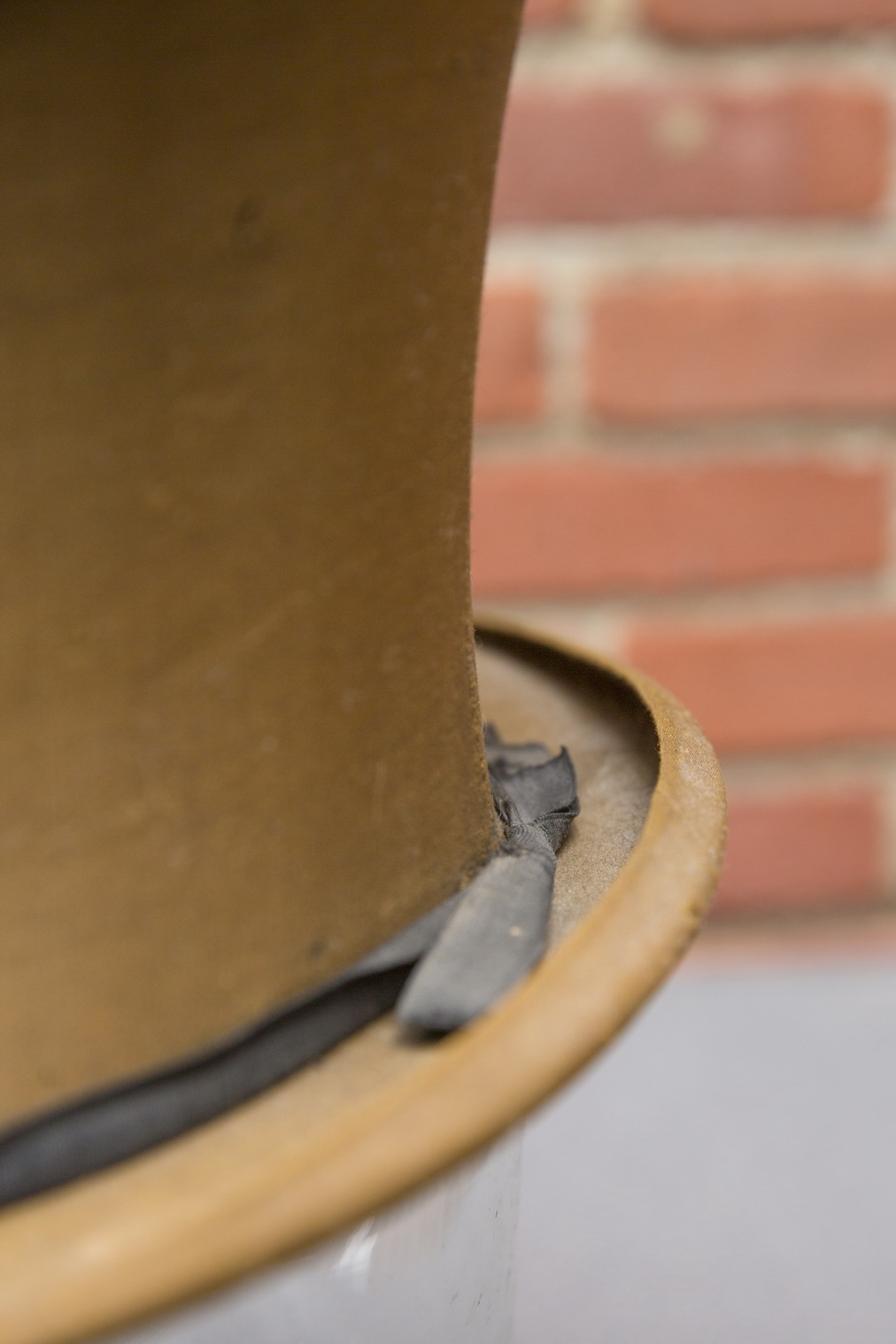
A chapeau claque Extra Quality by Harman&Son of New Bond Street, London in brown. Size 56 again with the bound brim at 5cm and the crown at 13cm or thereabouts. Also in poor condition but very interesting from a hat history point of view. We know from publications that toppers were made in various colours, but we very rarely find an older one in any other colour than black. The insides were done in a high quality, so for this one too I'm thinking this is early. Likely late 1800 or early 1900's.
harmantop_1.jpg


harmantop_2.jpg


harmantop_3.jpg


harmantop_4.jpg


harmantop_5.jpg


harmantop_6.jpg


harmantop_7.jpg


harmantop_8.jpg


harmantop_9.jpg
 

VintageEveryday

A-List Customer
Messages
407
Location
Woodside, NY
The main attraction was this one and it's something I haven't seen before.
A chapeau claque Extra Quality by Harman&Son of New Bond Street, London in brown. Size 56 again with the bound brim at 5cm and the crown at 13cm or thereabouts. Also in poor condition but very interesting from a hat history point of view. We know from publications that toppers were made in various colours, but we very rarely find an older one in any other colour than black. The insides were done in a high quality, so for this one too I'm thinking this is early. Likely late 1800 or early 1900's.
harmantop_1.jpg


harmantop_2.jpg


harmantop_3.jpg


harmantop_4.jpg


harmantop_5.jpg


harmantop_6.jpg


harmantop_7.jpg


harmantop_8.jpg


harmantop_9.jpg
I don't have photos, but one of my friends has an almost identical one in a slightly more green ish gold colour. Why were they made?
 

Steve1857

I'll Lock Up
Messages
9,378
Location
Denmark
I don't have photos, but one of my friends has an almost identical one in a slightly more green ish gold colour. Why were they made?
I would really like to see photos of that one if ever you can take some.

As to why other colours were made, I'd say it was a fashion choice. Stick out from the crowd, go your own way thing.

Remember too that original Top Hats were made of beaver felt which weren't black. So a brown colour would relate back to the early days of the Topper, thereby suggesting a beaver felt even though it wasn't: especially if it was an opera hat, which would be a form of satin.
 

CraigEster

New in Town
Messages
43
Location
Tampa, FL
I don't have photos, but one of my friends has an almost identical one in a slightly more green ish gold colour. Why were they made?
Black is the absence of light, and building up a good black color involves adding coloring materials of different types. In traditional dyeing, it's common to make a black by combining naturally deep dyes like iron-tannin pigments with secondary dyes that "fill in" the base color. When these hats were made, we didn't have carefully formulated single-step synthetic dyes; textile dyeing was an art.

One of the most common forms of aging in top hats is the fading of the wool under the brim from black to a greenish color. I've seen one other woolen collapsible top hat that was severely "greened". This green color comes from the red component of the dye in the wool fading, leaving only the green component.

Often this fading is from sunlight, but sometimes a pigment is simply chemically unstable. A lot of common iron-based black dyes degrade over time, essentially rusting in the material until all that is left is a light reddish color and a lot of damage. The yellowish-brown of this hat looks a lot like the secondary dyes I use to adjust a dark foundational dye to a truer black. Pulling apart the hat and inspecting parts that have not been touched by sunlight won't help because the degradation, when this even, is likely from exposure to air or an inherent instability in the material.

This is just one alternative possibility, and it would correlate with the hatband being black as well as the liner. However, a greenish color is far more common and I can't think of any instance where black wool has faded to such a light brown.

I would put more stock in the theory this hat was originally brown, perhaps an even lighter brown which has darkened with age. Note that this hat doesn't even have brim binding nor does it have the holes for it. This is an extremely cheap hat by 19th century standards; the brim material is a bias-cut rectangle of wool which has been sewn into a loop and pulled over the brim before curling. That's a lot of work to save some cloth, and very exact and careful work at that. I think this was a very casual hat, perhaps just another daily-wear type of hat matched with an outfit.

Black trimming on another color is very common in the top hat world and it's one of the common colors seen on grey hats. It doesn't neither confirms or denies that the hat was originally black like, say, a brown hatband would. Alas, wool and silk are dyed differently so the trimming cannot be used as an indicator of degradation or storage conditions by color alone.

In the photo of the liner, one of the seams is stitched with a thread of the same or nearly same color as the outside of the hat. Either someone used the wrong machine or thread to sew the liner (they would use such a thread for the outer material's seams) or the thread has degraded. I think they just slipped up a bit when making the hat. It is also likely that the thickness of the liner waist seam was closer to the thickness of the outer seams, and thus the same machine (which would be set up with the stitch spacing and thread tension to accommodate thicker materials) was used for this waist stitch and the outer stitches.

This lack of attention to detail, if the liner stitch theory has merit, may indicate that this hat was made in a factory with the machines set up to the material/stitch type and the thread was set to match the hat's outer covering. In black hats this wouldn't matter, but in hats of other colors it would be the sort of thing a 19th century foreman would notice. This may indicate that not many hats were made in these off-colors or that they were seen as so cheap as to not be worth the time it takes to switch from colored to black thread.

All of this is just spitballing from my experience working with old machines, and repairing and studying these hats. I've hand-sewn liners like the one pictured back together and noticed the peculiarities that pop up a lot.
 

Mean Eyed Matt

One Too Many
Messages
1,235
Location
Germany
The main attraction was this one and it's something I haven't seen before.
A chapeau claque Extra Quality by Harman&Son of New Bond Street, London in brown. Size 56 again with the bound brim at 5cm and the crown at 13cm or thereabouts. Also in poor condition but very interesting from a hat history point of view. We know from publications that toppers were made in various colours, but we very rarely find an older one in any other colour than black. The insides were done in a high quality, so for this one too I'm thinking this is early. Likely late 1800 or early 1900's.
harmantop_1.jpg


harmantop_2.jpg


harmantop_3.jpg


harmantop_4.jpg


harmantop_5.jpg


harmantop_6.jpg


harmantop_7.jpg


harmantop_8.jpg


harmantop_9.jpg
I'm also familiar with faded black fabrics and felt, but I find that highly unlikely in this example.

This would be only the third antique opera hat in a color other than black that I've seen so far, and also the most unusual: The other two were white and silver, respectively, which certainly characterizes them as part of a stage outfit entirely in white or silver (including tails, trousers, shoes, etc.) – but still evening wear. Brown, on the other hand, is a color that (at least according to everything I've ever learned) doesn't fit with that, which brings me to the conclusion that this hat must have been worn during the day – but that, again, doesn't fit with my understanding of the opera hat: this one only in the evening, the silk top hat during the day. Does anyone have any indication that (apart from 'exceptions prove the rule') this 'rule' didn't actually exist?

Truly fascinating.
 

CraigEster

New in Town
Messages
43
Location
Tampa, FL
I'm also familiar with faded black fabrics and felt, but I find that highly unlikely in this example.

This would be only the third antique opera hat in a color other than black that I've seen so far, and also the most unusual: The other two were white and silver, respectively, which certainly characterizes them as part of a stage outfit entirely in white or silver (including tails, trousers, shoes, etc.) – but still evening wear. Brown, on the other hand, is a color that (at least according to everything I've ever learned) doesn't fit with that, which brings me to the conclusion that this hat must have been worn during the day – but that, again, doesn't fit with my understanding of the opera hat: this one only in the evening, the silk top hat during the day. Does anyone have any indication that (apart from 'exceptions prove the rule') this 'rule' didn't actually exist?

Truly fascinating.
This is only the second wool-covered collapsible top hat I've seen. I don't even know why such a hat would be made from wool instead of some kind of silk like grosgrain or satin.

The construction is typical of late 19th century hats and likely dates to no earlier than the 1870s. I've read about salesmen commissioning special outfits to get attention, such as morning dress but in a wild color. Perhaps this was the hat of some salesman or showman. The only other hat I've seen made like this one, and I must say the construction is very similar, was produced by Lock.

The hat being sold on New Bond Street might indicate a high fashion inclination; maybe this was some kind of avant-garde day-wear hat for a brown-obsessed nouveau riche Londoner.

As for this style being strictly formal, I have my doubts. Opera hats were used as traveling hats as well as breathable alternatives to stiff plush hats. There was also a class association and I recall reading somewhere that a Labor MP around the turn of the 19th century wore a collapsible hat to some party or function as a middle-ground that met the dress requirements while not forsaking their laboring constituents, indicating that the hats were seen as formal enough but not ostentatious or elitist. These attitudes were quite fickle and are notably inconsistent across the years.

Ironically, a lot of paintings of European operas show men in stiff silk hats. Opera boxes commonly have space set aside or even a private room behind the box where outerwear could be stored, saving a trip to the coat check. One of the perks of having a box was skipping the line and getting to the bar, restaurant, etc. sooner. Many people still wore plush hats to the opera and just left them at the coat check as well. I suspect that the association with the opera is more to do with how the hats first came about than their primary use case; people still call toppers beaver hats even though that's almost as far from the truth as saying they're wool. I've now seen more wool top hats than beaver ones.

It's not beyond reason that these woolen collapsibles were worn in the daytime with more casual clothing. There is also the possibility that this was part of some kind of uniform. Just as an opera hat could be folded up and tucked into a cloak pocket or simply held more easily, perhaps hotel or house staff of some kind wore these and stashed them quickly as they made their way indoors. The convenience would be a necessity with constant trips. This hat was clearly used a lot, as the tip edge is not only worn but bent from constant use. I see a lot of collapsible hats with broken arms but not many with bent rings. That kind of damage comes from pressing the hat with the fingers and not an open palm, and it takes many times to get to this point.

The woolen covering despite the hat being from the late 19th century or later would fit with the uniform theory. Service staff had to stand out from those being served, even if they had the cheapest German schappe silk grosgrain collapsible hat. I'll need to keep an eye out when I look into institutional top hats next.

Also, apologies for the long replies. I'm thinking as I write. The black wool collapsible topper I've seen was enough to have me writing to a few hatters in the industry and none had seen a hat like it. I thought it may have been used by a funeral director, perhaps being more convenient than a plush hat with a wide mourning band. These wool hats are not mentioned in any source I can recall, nor do they seem to fit in Victorian or Edwardian society without some creative interpretation.
 

Steve1857

I'll Lock Up
Messages
9,378
Location
Denmark
This is only the second wool-covered collapsible top hat I've seen. I don't even know why such a hat would be made from wool instead of some kind of silk like grosgrain or satin.

The construction is typical of late 19th century hats and likely dates to no earlier than the 1870s. I've read about salesmen commissioning special outfits to get attention, such as morning dress but in a wild color. Perhaps this was the hat of some salesman or showman. The only other hat I've seen made like this one, and I must say the construction is very similar, was produced by Lock.

The hat being sold on New Bond Street might indicate a high fashion inclination; maybe this was some kind of avant-garde day-wear hat for a brown-obsessed nouveau riche Londoner.

As for this style being strictly formal, I have my doubts. Opera hats were used as traveling hats as well as breathable alternatives to stiff plush hats. There was also a class association and I recall reading somewhere that a Labor MP around the turn of the 19th century wore a collapsible hat to some party or function as a middle-ground that met the dress requirements while not forsaking their laboring constituents, indicating that the hats were seen as formal enough but not ostentatious or elitist. These attitudes were quite fickle and are notably inconsistent across the years.

Ironically, a lot of paintings of European operas show men in stiff silk hats. Opera boxes commonly have space set aside or even a private room behind the box where outerwear could be stored, saving a trip to the coat check. One of the perks of having a box was skipping the line and getting to the bar, restaurant, etc. sooner. Many people still wore plush hats to the opera and just left them at the coat check as well. I suspect that the association with the opera is more to do with how the hats first came about than their primary use case; people still call toppers beaver hats even though that's almost as far from the truth as saying they're wool. I've now seen more wool top hats than beaver ones.

It's not beyond reason that these woolen collapsibles were worn in the daytime with more casual clothing. There is also the possibility that this was part of some kind of uniform. Just as an opera hat could be folded up and tucked into a cloak pocket or simply held more easily, perhaps hotel or house staff of some kind wore these and stashed them quickly as they made their way indoors. The convenience would be a necessity with constant trips. This hat was clearly used a lot, as the tip edge is not only worn but bent from constant use. I see a lot of collapsible hats with broken arms but not many with bent rings. That kind of damage comes from pressing the hat with the fingers and not an open palm, and it takes many times to get to this point.

The woolen covering despite the hat being from the late 19th century or later would fit with the uniform theory. Service staff had to stand out from those being served, even if they had the cheapest German schappe silk grosgrain collapsible hat. I'll need to keep an eye out when I look into institutional top hats next.

Also, apologies for the long replies. I'm thinking as I write. The black wool collapsible topper I've seen was enough to have me writing to a few hatters in the industry and none had seen a hat like it. I thought it may have been used by a funeral director, perhaps being more convenient than a plush hat with a wide mourning band. These wool hats are not mentioned in any source I can recall, nor do they seem to fit in Victorian or Edwardian society without some creative interpretation.
Craig, thanks for your comments.

what makes you think this collapsible Top Hat is made of wool?

Nothing by the look of it suggests it is wool. Nor does Stefan say it is so, or have I missed something.

How would a collapsible/chapeau claque/Opera Hat work if it was made of wool?

What references do you have?
 

CraigEster

New in Town
Messages
43
Location
Tampa, FL
Craig, thanks for your comments.

what makes you think this collapsible Top Hat is made of wool?

Nothing by the look of it suggests it is wool. Nor does Stefan say it is so, or have I missed something.

How would a collapsible/chapeau claque/Opera Hat work if it was made of wool?

What references do you have?
By wool I mean woven wool cloth.

I talked a friend of mine into buying a hat like this but in a faded black some weeks ago. The hat is covered in the same type of "merino" used to face the underside of plush topper brims. The weave used to make that cloth was a typical "suiting" weave in the 19th century and was made in many colors, although black was the most common.

You can tell the wool apart from other materials by the matte surface of the cloth. The wool yarn used is usually a one or two-ply lightweight merino, and the cloth is a weft-faced twill. The warp was thicker but covered completely by the finer yarn. The effect is that you get a very smooth and clean surface but characteristic lines running perpendicular to the weft. 19th century wool was very good but it wasn't as even as modern wool yarn. Also, there's a tendency for the cloth to have slight horizontal stripes formed by the change in texture. This is the result of the weft yarn varying slightly in thickness due to spinning irregularity. As the shuttle moved on the loom and the weft was woven into the cloth, slight shifts in yarn thickness form horizontal stripes of finer and thicker face yarn. The thinner areas look less full than the thick areas, often rippling slightly or gaping. All of this is very slight but is best appreciated under a jeweler's loupe.

I have researched wool for a long time in my pursuit of better top hat repair. The "merino" used by the people in London is inferior to the original stock. In fact, the name itself is referential to the weave and not just the type of wool used, although this is a peculiarity that hasn't survived the 20th century. Hatter's "merino" is not any old merino suiting. The most common cloth used today is a suiting twill, which is not as smooth as the original cloth.

A collapsible hat made with wool would work the same as one made from silk charmeuse, satin, or grosgrain. Wool is a bit more stretchy, although this wouldn't negatively affect a topper unless the crown were poorly constructed. Based on the alignment of the weave to the side seam, I think the maker just used the same pattern they'd have used with a silk hat.

Another indicator that wool was used would be the moth holes. Moths will eat silk, although they love wool and make quicker work of it.

As for references, learning about wool was more hands-on than my hat research. I called a bunch of mills in the UK, New Zealand, and the US. I did some reading but since the wool industry is still a living thing, unlike silk hatting, I largely relied on human contacts. There's a weaving subreddit I visited and I follow a few weavers on Instagram now. As for professional contacts, I contacted the likes of Holland & Sherry, Alfred Brown, JH Clissold, etc. The UK mills are very knowledgeable and generally wonderful to work with. On the flip side, it's terrifying when they tell you that they've never even heard of what you're looking for. I've also sent microscope pics to the University of North Carolina's textile school, and a contact at FIT in New York who may even do a limited run of this weave for historical study purposes.
 

Steve1857

I'll Lock Up
Messages
9,378
Location
Denmark
The Léon black Top Hat and the brown Harman & Son collapsible Topper arrived last week.

Thanks again to Stefan @steur for enabling these two to be a part of my Top Hat collection.

The Harman & Son brown collapsible definitely looks like a wool weave under my jeweller's magnifying glass. So well done for spotting that Craig @CraigEster. Most unusual to see an antique wool weave Topper, especially a collapsible one

Screenshot_20251028_220849_Chrome.jpg


The mechanism still works despite it being some 125 plus years old

20251025_154847.jpg


Sadly one of the top springs was loose and fell off

20251025_154923.jpg


However, as luck would have it, it revealed the mark P. Paris

20251025_155100.jpg


I believe the P. Paris to mean Poissy Paris. Poissy was the area in Paris were Antoine Gibus had his factory. So the mechanism, if not the hat itself, was most likely made in the Gibus workshop at the end of the 1800s or the turn of the 1900s.

Battered, worn, and bruised as it is, this Topper is making me smile and my two daughters' eyes role :)
 

jeffgarf

One Too Many
Messages
1,156
Location
Jerusalem, Israel
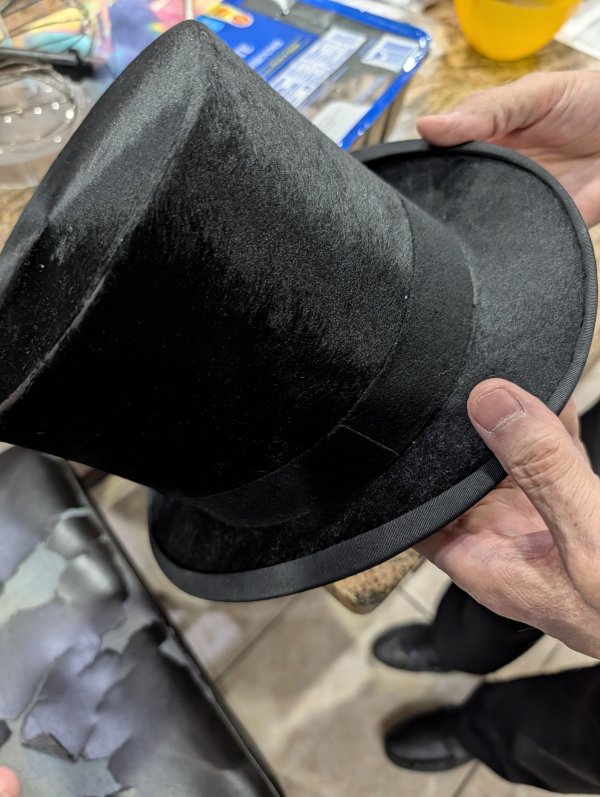
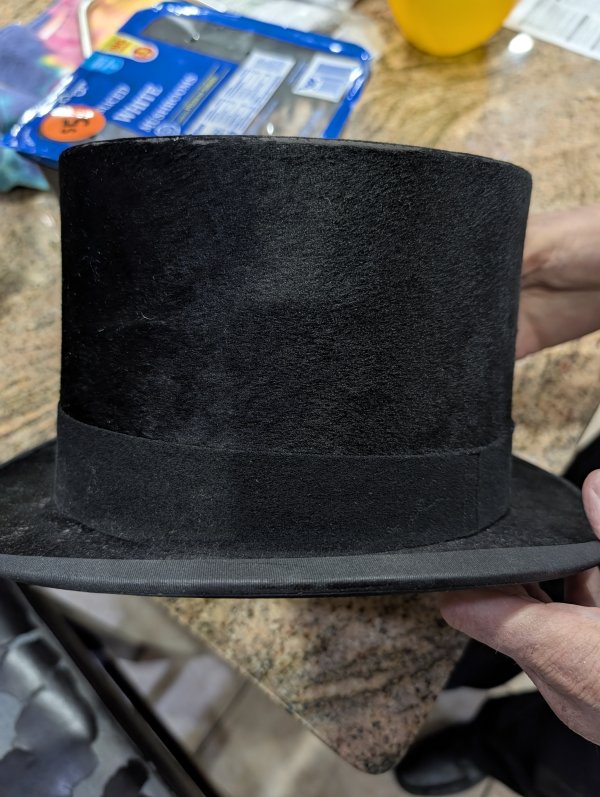
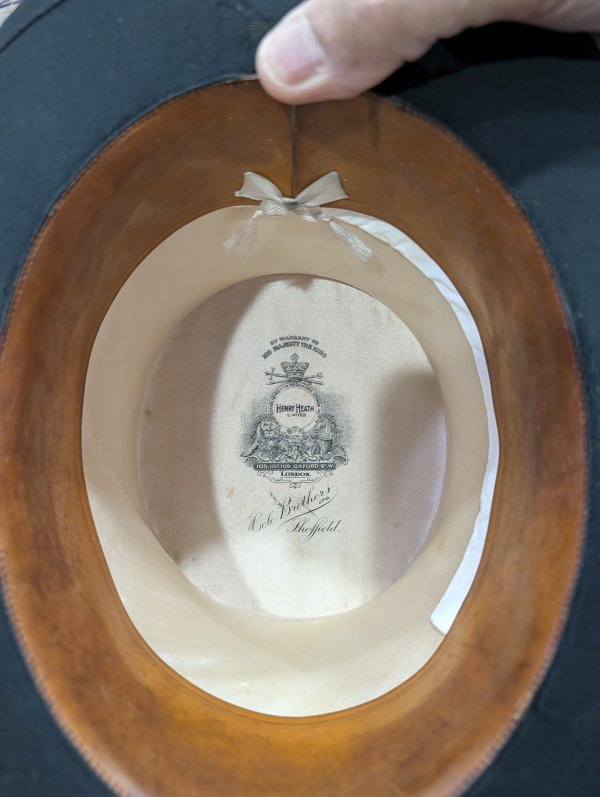
So this is a thread that I never figured I'd contribute to, but I had the fortune to be at a friend's house discussing hats for a second. He is about 80 years old and I know that he wears a top hat once a year (on a particular Jewish holiday - long story)and he said he'd show me the hat he got from his uncle who passed away in South London, years ago. I present the Henry Heath Hatters hat he showed me. Well over 100 years old, I had assumed it was beaver felt, but the smoothness of it feels unlike any beaver I'd ever touched. They thought perhaps seal? If anyone has any insights on whether these hats used anything other than beaver, I would be very curious.

PXL_20251031_160818294.jpg PXL_20251031_160813361.jpg PXL_20251031_160806804.jpg
 
Messages
19,926
Location
Nederland
So this is a thread that I never figured I'd contribute to, but I had the fortune to be at a friend's house discussing hats for a second. He is about 80 years old and I know that he wears a top hat once a year (on a particular Jewish holiday - long story)and he said he'd show me the hat he got from his uncle who passed away in South London, years ago. I present the Henry Heath Hatters hat he showed me. Well over 100 years old, I had assumed it was beaver felt, but the smoothness of it feels unlike any beaver I'd ever touched. They thought perhaps seal? If anyone has any insights on whether these hats used anything other than beaver, I would be very curious.

View attachment 743380 View attachment 743379 View attachment 743378
Beautiful topper, Jeff. Top hats of that period were made with silk plush, as it was far cheaper than beaver felt.
 

CraigEster

New in Town
Messages
43
Location
Tampa, FL
Did silk plush give it that fur look and feel?
The silk started out as an alternative to beaver. Starting in the 1800s or 1810s, hatters would cover hat shells made from a cheaper felt with thin sheets of beaver. These hats looked mostly the same but they were much cheaper. Someone realized that hats could be covered in a silk velvet instead of beaver, saving even more money. The earliest source I can pin down is George Dunnage. I was first made aware of Mr. Dunnage by Mr. Simpson at Ascot Top Hats. Dunnage has a patent from 1794 which describes covering a hat in silk "in imitation of beaver-hats".

Beaver at this time was not valued because it was a good, durable felt. People wanted beaver because it could be made glossy. While the pure beaver hats were still considered better, the veneered ones are spoken about most in sources from the first third of the 19th century.

The earliest use of silk is attributed not to Mr. Dunnage but to a strange collection of slightly exotic sources. The older sources either give credit to Venice or Spain, the former being a center of high fashion and the latter having a similar practice of covering hats in silk cloth which came long before silk toppers. Whatever the case, the silk covering was refined and took over the market. The 1830s is considered the point at which the market flipped from being beaver to silk focused, although like any transition the switch was gradual.

The silk, now called hatter's plush, was refined until it reached the pinnacle of excellence in the late 1860s. By this point, the gloss, smoothness, and color of the silk was far superior to any beaver. The silk also allowed for the creation of lighter hats. The practice of making the hat shell from a cheaper felt had also changed; now hat shells were made from stiffened and laminated cloth called "gossamer". These gossamer top hats are extremely light relative to their size, while possessing superior gloss.

The "silk hat" became a staple of formal dress codes and business attire, and as such didn't need to be as resilient as fur. Much of the damage seen actually comes from ironing the hat and poor storage. These hats were polished with special conformal irons that hugged the hyperboloid shape of the crown. the tip edge of the crown is most liable to be worn, especially as the edge was ironed more during the "tipping" procedure to sharpen the edge of the crown. Poor storage also accounts for much of the wear, as does excessive polishing. These hats came with velvet pads to touch up the surface if the hat were scuffed, and some period books describe characters obsessively buffing their hats.

Silk toppers are no longer made on account of the silk hatter's plush being no longer made. That said, the hat plush declined in quality over the course of the 20th century. The hats also got shorter and the trimming quality became poorer. The hat pictured is a good example, with most of the plush intact and silk on the brim as well (later hats would use as little silk as possible, which gives a bad look). The hat has its original sheepskin sweatband, which is hand-sewn into the original "merino". The liner also looks to be in great shape with no visible holes. The thin silk of the side of the liner tends to break down and get eaten by bugs. The tip edge plush loss is unfortunate but it's not a lot. Overall this is a very nice hat.
 

Steve1857

I'll Lock Up
Messages
9,378
Location
Denmark
The main attraction was this one and it's something I haven't seen before.
A chapeau claque Extra Quality by Harman&Son of New Bond Street, London in brown. Size 56 again with the bound brim at 5cm and the crown at 13cm or thereabouts. Also in poor condition but very interesting from a hat history point of view. We know from publications that toppers were made in various colours, but we very rarely find an older one in any other colour than black. The insides were done in a high quality, so for this one too I'm thinking this is early. Likely late 1800 or early 1900's.
harmantop_1.jpg


harmantop_2.jpg


harmantop_3.jpg


harmantop_4.jpg


harmantop_5.jpg


harmantop_6.jpg


harmantop_7.jpg

My best guess is that they were made for less formal occasions, where status was still signalled, but black wasn't expected.

Black is the absence of light, and building up a good black color involves adding coloring materials of different types. In traditional dyeing, it's common to make a black by combining naturally deep dyes like iron-tannin pigments with secondary dyes that "fill in" the base color. When these hats were made, we didn't have carefully formulated single-step synthetic dyes; textile dyeing was an art.

One of the most common forms of aging in top hats is the fading of the wool under the brim from black to a greenish color. I've seen one other woolen collapsible top hat that was severely "greened". This green color comes from the red component of the dye in the wool fading, leaving only the green component.

Often this fading is from sunlight, but sometimes a pigment is simply chemically unstable. A lot of common iron-based black dyes degrade over time, essentially rusting in the material until all that is left is a light reddish color and a lot of damage. The yellowish-brown of this hat looks a lot like the secondary dyes I use to adjust a dark foundational dye to a truer black. Pulling apart the hat and inspecting parts that have not been touched by sunlight won't help because the degradation, when this even, is likely from exposure to air or an inherent instability in the material.

This is just one alternative possibility, and it would correlate with the hatband being black as well as the liner. However, a greenish color is far more common and I can't think of any instance where black wool has faded to such a light brown.

I would put more stock in the theory this hat was originally brown, perhaps an even lighter brown which has darkened with age. Note that this hat doesn't even have brim binding nor does it have the holes for it. This is an extremely cheap hat by 19th century standards; the brim material is a bias-cut rectangle of wool which has been sewn into a loop and pulled over the brim before curling. That's a lot of work to save some cloth, and very exact and careful work at that. I think this was a very casual hat, perhaps just another daily-wear type of hat matched with an outfit.

Black trimming on another color is very common in the top hat world and it's one of the common colors seen on grey hats. It doesn't neither confirms or denies that the hat was originally black like, say, a brown hatband would. Alas, wool and silk are dyed differently so the trimming cannot be used as an indicator of degradation or storage conditions by color alone.

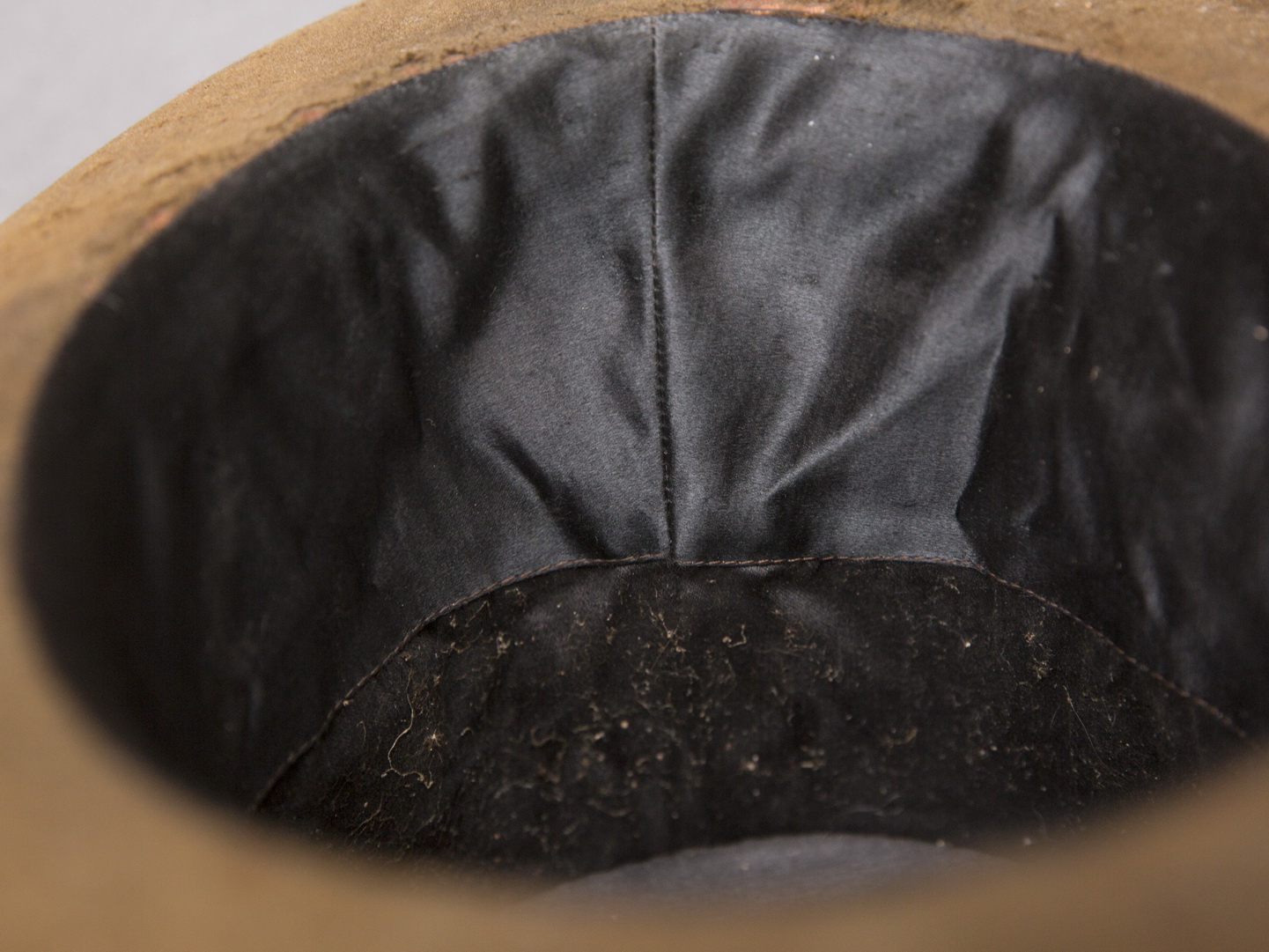
In the photo of the liner, one of the seams is stitched with a thread of the same or nearly same color as the outside of the hat. Either someone used the wrong machine or thread to sew the liner (they would use such a thread for the outer material's seams) or the thread has degraded. I think they just slipped up a bit when making the hat. It is also likely that the thickness of the liner waist seam was closer to the thickness of the outer seams, and thus the same machine (which would be set up with the stitch spacing and thread tension to accommodate thicker materials) was used for this waist stitch and the outer stitches.

This lack of attention to detail, if the liner stitch theory has merit, may indicate that this hat was made in a factory with the machines set up to the material/stitch type and the thread was set to match the hat's outer covering. In black hats this wouldn't matter, but in hats of other colors it would be the sort of thing a 19th century foreman would notice. This may indicate that not many hats were made in these off-colors or that they were seen as so cheap as to not be worth the time it takes to switch from colored to black thread.

All of this is just spitballing from my experience working with old machines, and repairing and studying these hats. I've hand-sewn liners like the one pictured back together and noticed the peculiarities that pop up a lot.

I'm also familiar with faded black fabrics and felt, but I find that highly unlikely in this example.

This would be only the third antique opera hat in a color other than black that I've seen so far, and also the most unusual: The other two were white and silver, respectively, which certainly characterizes them as part of a stage outfit entirely in white or silver (including tails, trousers, shoes, etc.) – but still evening wear. Brown, on the other hand, is a color that (at least according to everything I've ever learned) doesn't fit with that, which brings me to the conclusion that this hat must have been worn during the day – but that, again, doesn't fit with my understanding of the opera hat: this one only in the evening, the silk top hat during the day. Does anyone have any indication that (apart from 'exceptions prove the rule') this 'rule' didn't actually exist?

Truly fascinating.

This is only the second wool-covered collapsible top hat I've seen. I don't even know why such a hat would be made from wool instead of some kind of silk like grosgrain or satin.

The construction is typical of late 19th century hats and likely dates to no earlier than the 1870s. I've read about salesmen commissioning special outfits to get attention, such as morning dress but in a wild color. Perhaps this was the hat of some salesman or showman. The only other hat I've seen made like this one, and I must say the construction is very similar, was produced by Lock.

The hat being sold on New Bond Street might indicate a high fashion inclination; maybe this was some kind of avant-garde day-wear hat for a brown-obsessed nouveau riche Londoner.

As for this style being strictly formal, I have my doubts. Opera hats were used as traveling hats as well as breathable alternatives to stiff plush hats. There was also a class association and I recall reading somewhere that a Labor MP around the turn of the 19th century wore a collapsible hat to some party or function as a middle-ground that met the dress requirements while not forsaking their laboring constituents, indicating that the hats were seen as formal enough but not ostentatious or elitist. These attitudes were quite fickle and are notably inconsistent across the years.

Ironically, a lot of paintings of European operas show men in stiff silk hats. Opera boxes commonly have space set aside or even a private room behind the box where outerwear could be stored, saving a trip to the coat check. One of the perks of having a box was skipping the line and getting to the bar, restaurant, etc. sooner. Many people still wore plush hats to the opera and just left them at the coat check as well. I suspect that the association with the opera is more to do with how the hats first came about than their primary use case; people still call toppers beaver hats even though that's almost as far from the truth as saying they're wool. I've now seen more wool top hats than beaver ones.

It's not beyond reason that these woolen collapsibles were worn in the daytime with more casual clothing. There is also the possibility that this was part of some kind of uniform. Just as an opera hat could be folded up and tucked into a cloak pocket or simply held more easily, perhaps hotel or house staff of some kind wore these and stashed them quickly as they made their way indoors. The convenience would be a necessity with constant trips. This hat was clearly used a lot, as the tip edge is not only worn but bent from constant use. I see a lot of collapsible hats with broken arms but not many with bent rings. That kind of damage comes from pressing the hat with the fingers and not an open palm, and it takes many times to get to this

I think the answer to the anomaly of this particular brown, woven wool felt collapsible Top Hat lies in the probable possibility that it was a coachman's hat.

Top Hats weren't just the reserve of the rich and nobility, though their Toppers would be of a more higher quality.

As Craig @CraigEster points out, service personnel wore these hats, too. A particular example are doormen at expensive hotels as still seen today.

In Denmark, Top Hats are known as hats worn by chimney sweeps and vagabonds of old.

So, like Bowlers, they were not exclusively worn by nor made for the higher echelons of society.
 

jeffgarf

One Too Many
Messages
1,156
Location
Jerusalem, Israel
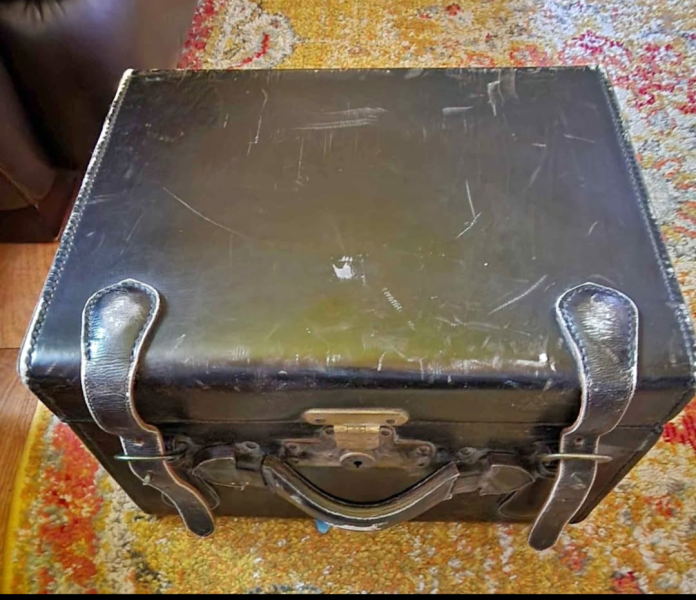
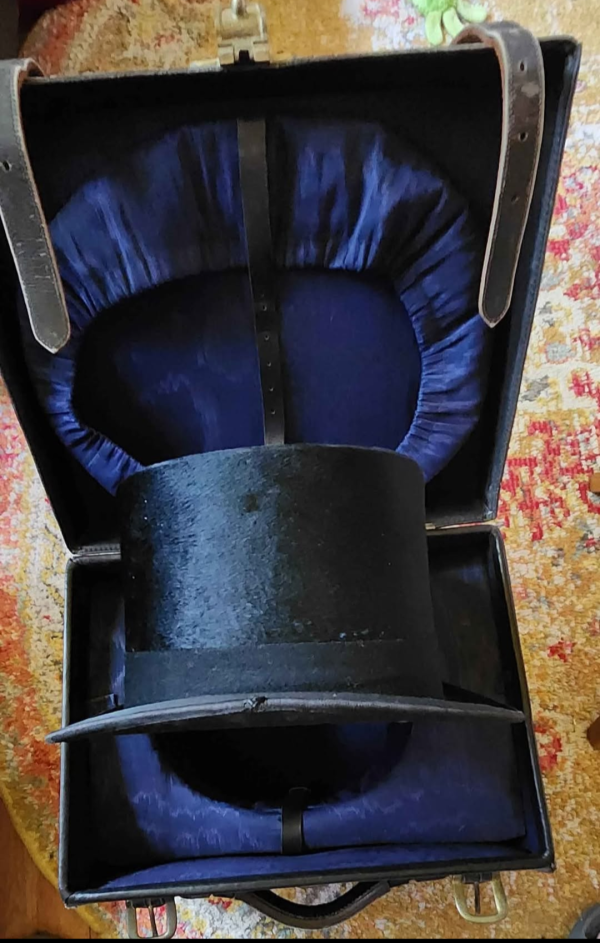
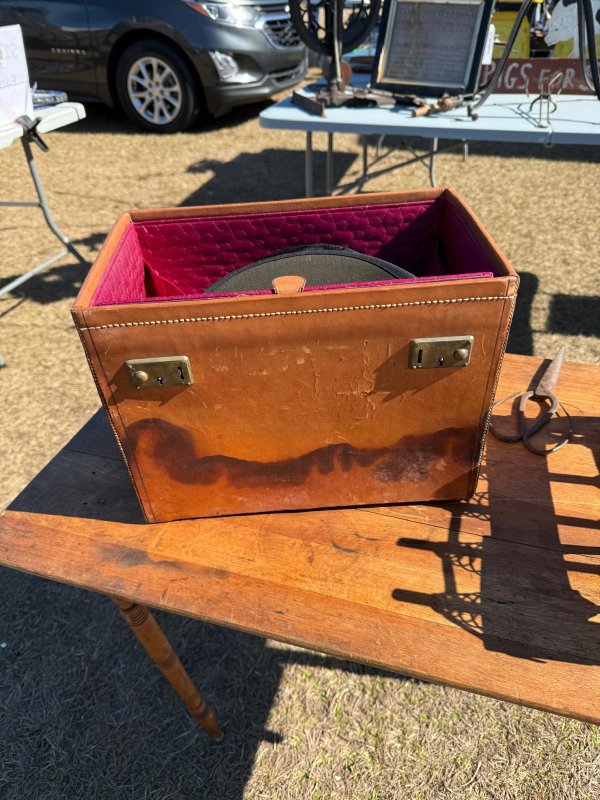
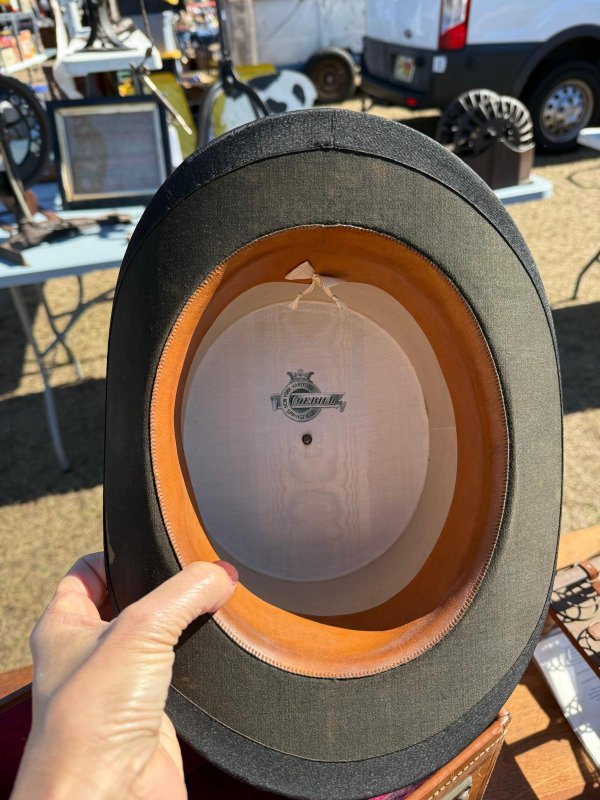
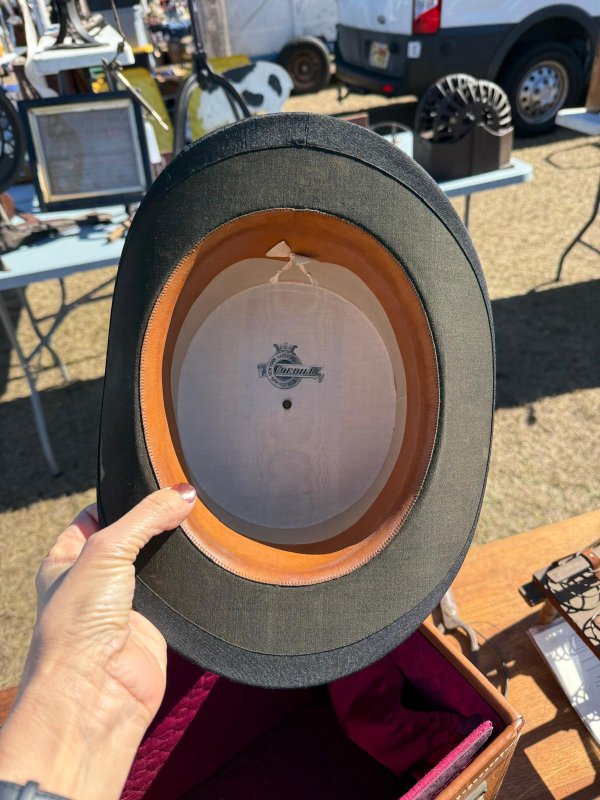
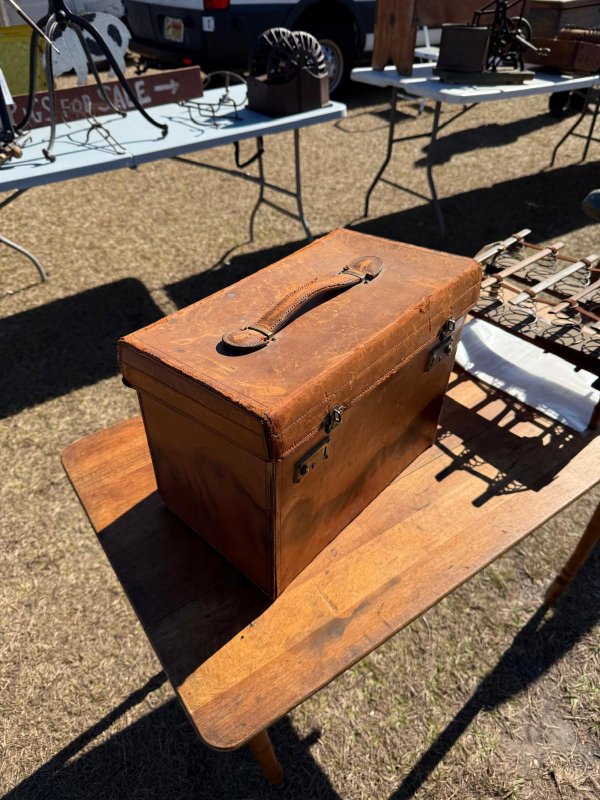
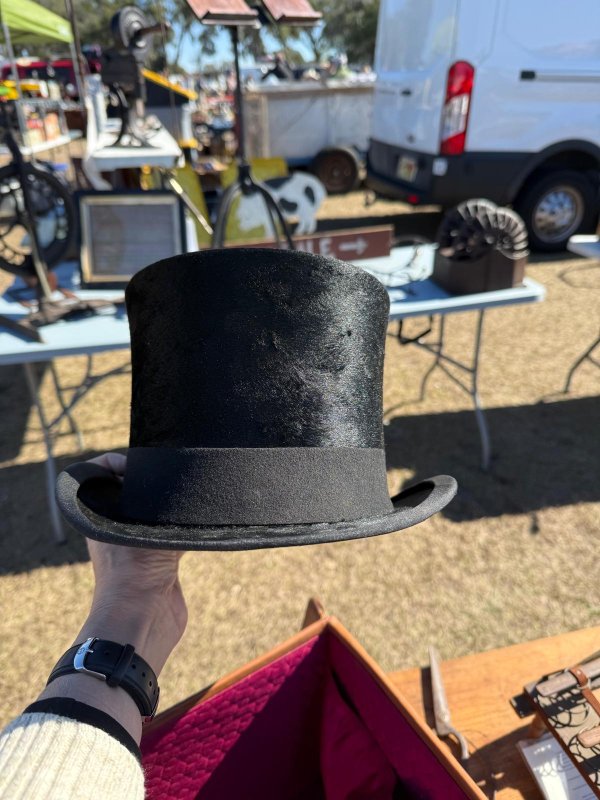
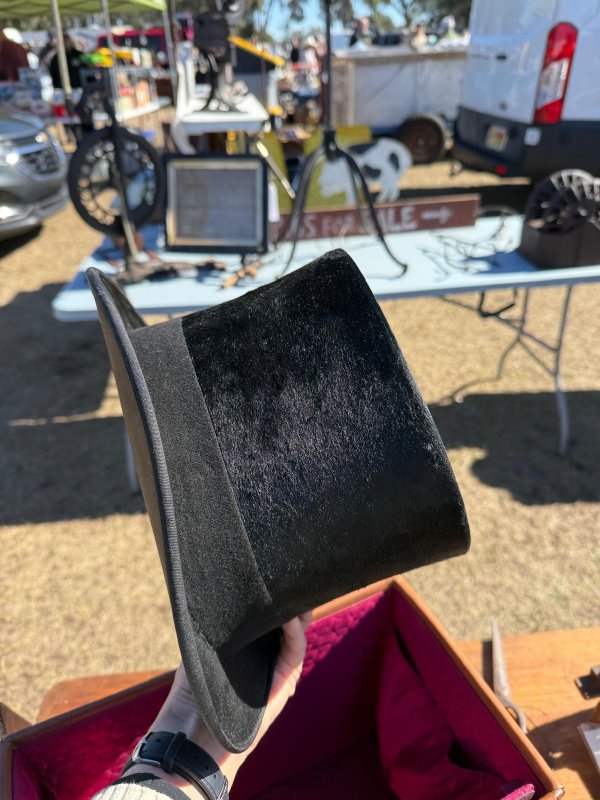
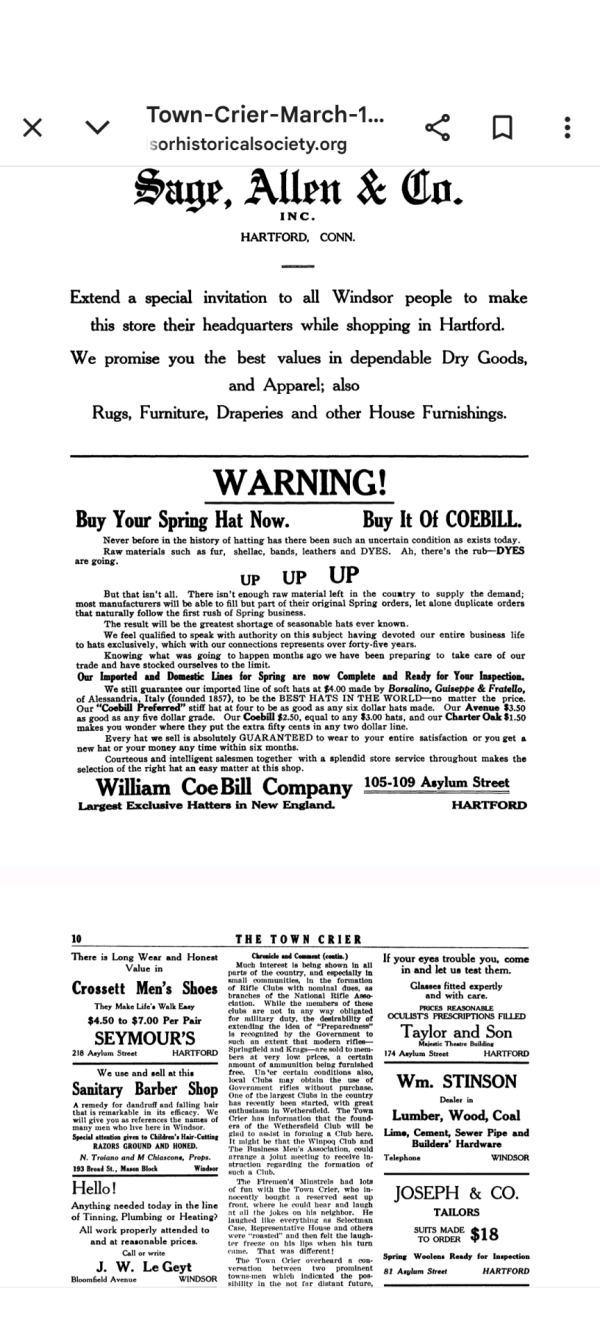
I posted several months ago about how I couldn't believe I was posting in this thread. Well, my next post is about a hat coming to me shortly with its case. From the Coebill Hat store of Hartford, CT. The owner selling it says it is beaver. My sister-in-law is bringing it in 10 days. We shall see.
IMG-20260119-WA0011.jpg IMG-20260119-WA0010.jpg IMG-20260119-WA0008.jpg IMG-20260119-WA0005.jpg IMG-20260119-WA0006.jpg IMG-20260119-WA0007.jpg Screenshot_20260119-122550.png
 
Last edited:

Steve1857

I'll Lock Up
Messages
9,378
Location
Denmark
I posted several months ago about how I couldn't believe I was posting in this thread. Well, my next post is about a hat coming to me shortly with it's case. From the Coebill Hat store of Hartford, CT. The owner selling it says it is beaver. My sister-in-law is bringing it in 10 days. We shall see.
View attachment 763659 View attachment 763660 View attachment 763661 View attachment 763662 View attachment 763663 View attachment 763664 View attachment 763665
Nice find, Jeff, especially with the box.

I doubt very much that it is beaver. It's more a silk plush moleskin treatment.

Still a nice buy though.
 

jeffgarf

One Too Many
Messages
1,156
Location
Jerusalem, Israel
Nice find, Jeff, especially with the box.

I doubt very much that it is beaver. It's more a silk plush moleskin treatment.

Still a nice buy though.
I would think so too. But regardless of the composition, a real topper and a case isn't something I could pass on. My sister-in-law, a vintage thrifter, loves looking for hats for me and, every once in a while, she scores.
 

Forum statistics

Threads
114,451
Messages
3,174,918
Members
58,296
Latest member
Surowiak
Top